Plant Overview
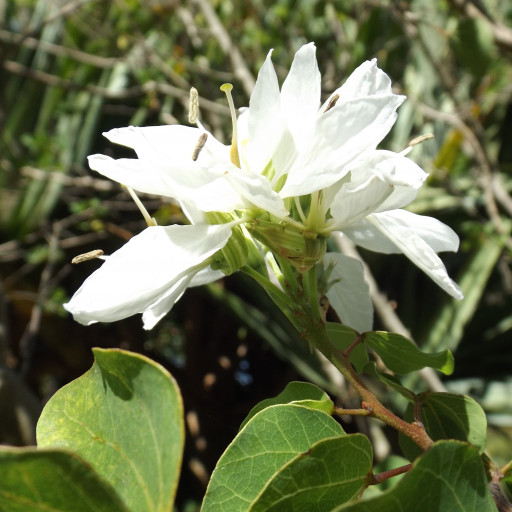
Often called the Anacacho Orchid Tree, this native gem is a master of disguise. It looks like an exotic tropical orchid escaped into the wild, but it is actually a rugged, drought-tolerant survivor native to the limestone hills of Texas and Mexico. Its delicate white blossoms and signature "butterfly" leaves make it a favorite for those wanting a high-end look without a high-maintenance water bill.
🔍 How to Identify
- 🍃 The Butterfly Leaf: The foliage is distinctively split down the middle, creating two rounded lobes that look exactly like the wings of a small green butterfly.
- 🌸 Orchid-like Blooms: In the spring, it produces clusters of snow-white or very pale pink flowers. Each flower features long, wispy stamens that give it a delicate, airy appearance.
- 🪵 Multi-Trunk Form: It typically grows as a large shrub or a small, multi-trunked tree with smooth, silver-gray bark that adds architectural interest to the winter landscape.
🏡 In Your Garden
- 🏔️ Rock Lover: This tree evolved in rocky, alkaline environments. It is happiest in well-drained limestone soil and will struggle in heavy clay that stays soggy. If your garden has "poor" rocky soil, this plant will feel right at home.
- 🛡️ Tough but Graceful: While it looks fragile, it is remarkably heat-hardy and wind-resistant. Because it has a deep taproot, it is difficult to move once established, so choose its "forever home" carefully to avoid transplant shock.
⚠️ Safety & Toxicity
- ✅ Generally Safe: The Anacacho Orchid Tree is not known to be toxic to humans, cats, or dogs.
- 👶 Family Friendly: Unlike many desert-adapted plants, it lacks thorns or prickly bits, making it a perfect choice for planting near walkways, patios, or children’s play areas.
✨ Fun Fact
The species name Lunarioides translates to "moon-like." This is a poetic nod to the way the pale white flowers seem to glow under the moonlight, and to the rounded, crescent-like shapes of its unique twin-lobed leaves.

Detailed Care Instructions
To successfully grow Bauhinia Lunarioides (Anacacho orchid tree), follow these steps:
- Climate and Soil: This plant thrives in warm and dry climates, so make sure you are in USDA zones 8-11. It prefers well-draining soil with a slightly acidic to neutral pH level.
- Planting Location: Choose a spot that receives full sun, as the plant requires at least 6 hours of direct sunlight daily.
- Propagation: You can propagate Bauhinia Lunarioides from seeds or cuttings. If using seeds, scarify them by soaking in hot water for 24 hours before planting. For cuttings, take 6-8 inch (15-20 cm) long stem cuttings from a healthy plant and root them in well-draining soil.
- Planting Process: Dig a hole that is slightly larger than the root ball of the plant. Place the plant in the hole, ensuring that the top of the root ball is level with or just slightly above the soil surface. Backfill the hole gently, firming the soil around the base of the plant.
- Watering: Water the newly planted Bauhinia Lunarioides regularly for the first few weeks until it establishes its root system. After that, you can reduce the frequency of watering. However, during periods of drought, water deeply to ensure the plant's survival.
- Pruning: Prune the plant in late winter or early spring to shape it and remove any dead or diseased branches. This will promote new growth and a more compact shape.
- Mulching and Fertilizing: Apply a layer of organic mulch, such as wood chips or compost, around the base of the plant to retain moisture and suppress weed growth. Fertilize with a balanced slow-release fertilizer in early spring and again in late summer, following the manufacturer's instructions.
- Pests and Diseases: Bauhinia Lunarioides is generally resistant to pests and diseases. However, keep an eye out for common garden pests like aphids or caterpillars. If necessary, treat with appropriate insecticides or organic pest control methods.
Remember, regular care and maintenance coupled with adequate sunlight and watering should help your Bauhinia Lunarioides plant thrive and grow.
Bauhinia Lunarioides plant should be watered regularly, but not over-watered. It is important to allow the soil to dry out slightly before watering again. The plant prefers well-draining soil and should be watered deeply until the water runs out of the bottom of the pot or into the ground. Avoid getting the leaves wet as this can lead to fungus or other diseases. During the winter months, the plant may require less water. Monitor the soil and adjust the watering schedule accordingly.
To fertilize Bauhinia Lunarioides plant, use a balanced slow-release fertilizer with equal amounts of nitrogen, phosphorus, and potassium. Apply the fertilizer during the growing season, typically in early spring and summer.
- Dilute the fertilizer according to the manufacturer's instructions.
- Water the plant thoroughly before applying the fertilizer to ensure the soil is moist.
- Sprinkle the diluted fertilizer around the base of the plant, avoiding direct contact with the stems or leaves.
- Gently work the fertilizer into the top layer of soil using a garden fork or cultivator.
- Water the plant again to allow the fertilizer to penetrate the soil and reach the plant's roots.
- Repeat the process every 4-6 weeks during the active growing season, but avoid over-fertilizing as it can lead to plant stress or burn the roots.
Remember to always follow the specific instructions provided by the fertilizer manufacturer, as different products may have varying application rates and guidelines.
The ideal soil for this particular plant is well-draining, with a pH level that ranges from slightly acidic to neutral. The soil should be rich in organic matter, such as compost or peat moss, and should be able to retain moisture without becoming waterlogged. It is also recommended to mix in some sand or perlite for additional drainage. Additionally, this plant prefers soil that is nutrient-rich, so adding fertilizers or plant food can be beneficial. Overall, using a high-quality, nutrient-rich soil mixture is essential for the proper growth and development of this plant.
Propagation of Bauhinia Lunarioides can be achieved through various methods, one of which is by using seeds. To start, it is important to collect mature seeds from a healthy parent plant. These seeds can then be soaked in water for a few hours to help soften the outer seed coat and promote germination. After soaking, the seeds should be scarified by gently nicking or filing the seed coat to further enhance germination.
Once scarified, the seeds can be sown in a well-draining potting mix that is moistened beforehand. It is advisable to place the pot in a warm and brightly lit location, such as near a window or under grow lights. The seeds should be covered with a thin layer of soil and lightly tamped down. Mist the soil and cover the pot with a plastic bag or plastic wrap to create a controlled environment that retains moisture.
Regular monitoring of the soil moisture is essential to ensure it remains slightly damp but not overly wet. In approximately two to eight weeks, germination should occur, and seedlings will emerge. Once the seedlings have developed a few sets of true leaves, they can be transplanted into individual pots filled with a well-draining potting soil mixture.
Another method of propagation is through vegetative means, such as stem cuttings. Select a healthy stem from the parent plant and make a clean cut just below a leaf node. Remove any excess leaves from the lower portion of the cutting, leaving a few leaves at the top intact. Dip the cut end of the stem in rooting hormone powder to encourage root development.
Place the cutting in a pot filled with a well-draining potting mix, and ensure that the bottom one-third of the cutting is buried in the soil. Mist the cutting to increase humidity and cover the pot with a plastic bag to create a mini greenhouse-like environment. Position the pot in a bright location with indirect sunlight and maintain consistent moisture in the soil.
Roots should develop within several weeks, and once the cutting has established a sufficient root system, it can be transplanted into an individual pot using a well-draining potting mix. Provide proper care and maintenance, including regular watering and fertilizing, to ensure the successful growth and development of the propagated plant.








