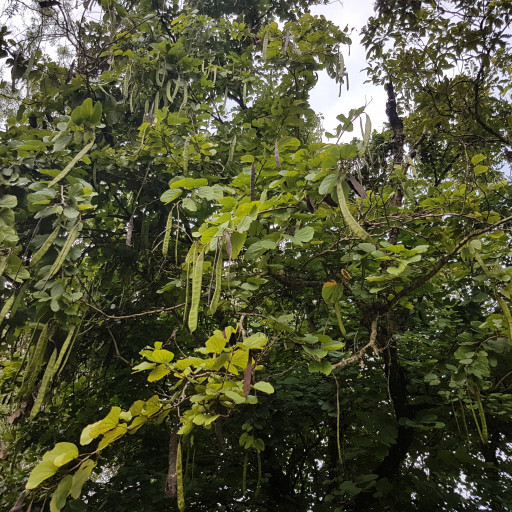
Plant Overview
Often called the Purple Orchid Tree or the Butterfly Tree, this tropical beauty is famous for its stunning, fragrant blossoms that look remarkably like wild orchids. Originating from Southeast Asia, it adds a touch of exotic elegance to any landscape, especially when its distinct "ox-hoof" leaves begin to sway in the breeze. It is a favorite for those who want a dramatic floral display during the cooler months when other trees go dormant.
🔍 How to Identify
- 🍃 The Leaves: The most recognizable feature is the twin-lobed leaf, which is deeply notched at the tip, making it look exactly like a cloven hoof or a butterfly’s wings.
- 🌸 The Flowers: Large, five-petaled blooms in vibrant shades of magenta, purple, and lavender. Unlike some hybrids, these petals are narrow and slightly spaced apart, revealing prominent stamens.
- 🫛 The Pods: After the flowers fade, the tree produces long, flat, strap-like green pods (resembling pea pods) that eventually turn dark brown and woody before splitting open.
🏡 In Your Garden
- 🌳 Space & Shelter: This tree grows quickly and develops a wide, spreading canopy. It is perfect for providing light shade, but be mindful of its wood, which can be somewhat brittle; it prefers a spot protected from heavy, gusty winds.
- 🍂 The "Messy" Factor: While beautiful, it is a deciduous tree that drops both its unique leaves and its large seed pods. It is best planted away from swimming pools or pristine patios where the debris might become a chore to clear.
- 🌱 Root Sensitivity: It develops a deep taproot early on. This makes the tree quite drought-tolerant once it is established, but it also means it hates being moved—pick its "forever home" carefully!
⚠️ Safety & Toxicity
- ✅ Status: Generally considered non-toxic to humans and common household pets like cats and dogs.
- 🐾 Details: While the plant isn't poisonous, the fallen seed pods can be a choking hazard for curious dogs. If large amounts of the pods are ingested, they might cause minor stomach upset due to the high fiber content.
✨ Fun Fact
🍲 Edible Beauty: In many parts of India and Nepal, the flower buds of the Bauhinia purpurea are more than just a garden ornament—they are a seasonal delicacy! Known as Kachnar, the buds are often pickled or sautéed with spices to make traditional savory curries.

Detailed Care Instructions
To grow a Bauhinia purpurea plant, also known as a purple orchid tree or butterfly tree, follow these steps:
- Climate and location: Bauhinia purpurea plants thrive in tropical and subtropical climates. They require full sun exposure, so choose a location that receives at least 6-8 hours of direct sunlight daily.
- Soil: The plant prefers well-draining soil with a neutral pH (around 6.0-7.0). Make sure the soil is rich in organic matter. If your soil is heavy or clayey, consider adding compost or coco peat to improve drainage.
- Planting: Dig a hole that is twice as wide and deep as the root ball of the plant. Gently place the plant into the hole and backfill with soil, firming it gently around the base. Water thoroughly after planting to help settle the soil.
- Watering: Water the plant regularly, especially during the dry periods or when planting it for the first time. Avoid overwatering, as it can lead to root rot. Water deeply, allowing the soil to partially dry out between watering sessions.
- Fertilization: Apply a balanced slow-release fertilizer during the growing season, usually in springtime. Follow the manufacturer's instructions for dosage and frequency. Additionally, you can supplement with organic fertilizer or compost to enrich the soil.
- Pruning: Prune the Bauhinia purpurea plant in early spring to shape it and remove any dead, damaged, or crossing branches. Pruning can also encourage better flowering and maintain its size.
- Pest and disease control: Monitor the plant regularly for pests like aphids, mealybugs, or caterpillars. Treat any pest infestations promptly using organic or chemical solutions. Likewise, keep an eye out for common diseases like root rot or leaf spot, and take appropriate action if needed.
- Support: As the plant grows, it may benefit from staking or a trellis to support its branches, especially if you want it to grow in a specific direction.
Remember to research any specific regional considerations for growing this plant, as optimal cultivation methods can differ slightly depending on your location.

Place in a window with dappled sun or a spot in the middle of a room. Or directly in a window facing west or east.

Bauhinia Purpurea plant should be watered regularly, ideally once or twice per week depending on environmental conditions such as temperature and humidity. The soil should be moist but not waterlogged, so it is important not to overwater the plant. Keep the surface of the soil slightly dry before watering the plant. Use lukewarm water to minimize temperature shock to the plant. Water the plant at the base to avoid getting the leaves wet, as wet leaves can increase the risk of disease. If the plant is in a container, ensure that there is proper drainage to avoid waterlogging.
To fertilize this plant, use a balanced fertilizer with a ratio of 10-10-10 or 20-20-20. Apply the fertilizer once a month during the growing season, which is typically from spring to fall. Be sure to follow the instructions on the fertilizer packaging for the correct application rate. Water the plant thoroughly after fertilizing to ensure the nutrients are absorbed properly. Avoid over-fertilizing as it can lead to leaf scorch and damage to the plant.
Bauhinia Purpurea prefers to grow in a well-draining soil that is rich in nutrients. It is important for the soil to have a pH level that is slightly acidic to neutral. The recommended soil type should be loamy, sandy, or clayey. The plant thrives in soil that is moist, but not waterlogged. It is suggested to add organic matter to the soil to improve its quality, such as compost or aged manure. It is important to avoid using soil that has been contaminated with chemicals or pesticides, as this can harm the plant. Before planting, it is also recommended to loosen the soil and remove any weeds or rocks that may hinder growth.
Bauhinia Purpurea is a plant species that can be propagated through different methods such as seed propagation, stem cuttings, air layering, and division. Here are some detailed steps on how to propagate Bauhinia Purpurea without using its common names:
- Seed propagation: Harvest seeds from a mature plant and remove the outer coat by rubbing them gently with sandpaper. Soak the seeds overnight, then sow them about 1 cm deep in a well-draining potting mix. Keep the soil moist and place the pot in a warm, bright location. Germination should occur within 2-4 weeks.
- Stem cuttings: Take a stem cutting from a mature plant, about 10-15 cm long, with a few leaves intact. Remove any leaves from the lower half of the stem and dip the cut end in rooting hormone powder. Insert the stem into a potting mix made of equal parts of sand and peat moss. Keep the soil moist and place the pot in a shaded area. The cutting should root within 4-6 weeks.
- Air layering: Choose a healthy, mature stem that is about 1 cm in diameter. Make a small cut just below a leaf node and wrap some damp sphagnum moss around the cut. Cover the moss with plastic wrap and secure it with a rubber band. Keep the moss moist and in a shaded spot. Roots should appear in 4-6 weeks. Once rooted, cut the stem below the air layer and plant it in a well-draining potting mix.
- Division: If you have a mature plant with multiple stems, carefully remove it from its pot and gently separate the stems. Each stem should have a healthy root system and a few leaves. Plant each stem in a well-draining potting mix and keep the soil moist. Place the pots in a shaded area until new growth appears.
Regardless of the propagation method you choose, regular watering and fertilization will help the new plants establish themselves and grow healthy and strong.
Common pests of the orchid tree include Spider mites, thrips, whiteflies, larvae. Make a habit of checking your orchid tree frequently for pests so that any infestations can be caught and managed early.








