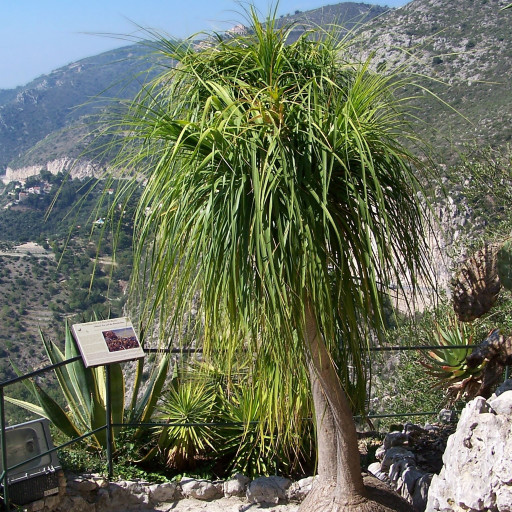
Plant Overview
Known as the "Ponytail Palm" or the "Elephant’s Foot," this charismatic plant isn't actually a palm at all—it is a succulent member of the Asparagus family. Hailing from the arid regions of Eastern Mexico, it has become a beloved houseplant thanks to its gravity-defying foliage and its remarkably forgiving nature. It is the perfect companion for the "forgetful gardener," as it essentially carries its own water canteen within its trunk.
🔍 How to Identify
- 🐘 The Caudex: A distinctively swollen, bulbous base that resembles an elephant's foot or a weathered boulder. This serves as its primary water reservoir.
- 🍃 The Foliage: Long, narrow, ribbon-like leaves that cascade downward from the top of the stem like a green fountain or a messy ponytail.
- 🪵 The Texture: The gray-brown bark on the trunk is corky and deeply fissured, giving it a rugged, prehistoric aesthetic.
🏡 In Your Garden
- 💧 Storage Strategy: Because that thick trunk stores water, this plant hates "wet feet." It thrives when the soil dries out completely between waterings. If you notice the trunk shrinking or wrinkling, it's finally time for a drink.
- ☀️ Light Sensitivity: While it is famous for surviving in low-light offices, it truly prefers bright, indirect light or even full sun. More light results in faster growth and a more pronounced curl to the leaves.
- 🪴 Slow & Steady: This is a very slow-growing species. It won’t outgrow its corner or require frequent repotting, making it an excellent long-term architectural piece for your home.
⚠️ Safety & Toxicity
- ✅ Pet Friendly: The Ponytail Palm is considered non-toxic to cats, dogs, and horses, making it a safe choice for multi-pet households.
- ✂️ Serrated Edges: While chemically safe, the leaf edges can be surprisingly sharp. They have tiny serrations that can cause minor "paper cuts" if handled roughly, so keep it away from high-traffic hallways where people might brush against it.
✨ Fun Fact
In its native Mexican habitat, some specimens of Beaucarnea recurvata are estimated to be over 350 years old! While it stays a manageable size in a pot, these "living fossils" can reach heights of 30 feet when planted in the ground in the wild.

Detailed Care Instructions
| Color | Creamy White |
| Soil Ph | 6.5 To 7.5 (Neutral) |
| Humidity | Normal |
| Lighting | Full Sun |
| Toxicity | Non-Toxic |
| Soil Type | Sandy, Well-Draining Soil |
| Bloom Time | Seasonal Bloomer |
| Difficulty | Easy |
| Plant Type | Broadleaf Evergreen Shrub/ Tree |
| Hibernation | Cold Period |
| Mature Size | 6 To 8 Feet Tall; 3- To 5-Foot Spread (Up To 30 Feet Tall When Planted Outdoors) |
| Native Area | Semi-Desert Areas Of Central America |
| Temperature | 10°C - 24°C |
| Sun Exposure | Full Sun |
| Hardiness Zones | 10-11 |
To grow Beaucarnea Recurvata, also known as the Ponytail Palm or Elephant Foot, follow these steps:
- Start with a healthy plant: Purchase a mature Ponytail Palm from a reputable nursery or garden center. Make sure it is free from pests and diseases.
- Choose a suitable pot: Select a pot with good drainage holes, as Beaucarnea Recurvata is sensitive to overwatering. The pot should be large enough to accommodate the root system and allow for growth.
- Soil and planting: Use a well-draining cactus or succulent soil mix. Plant the Ponytail Palm at the same depth it was in its original container. Gently firm the soil around the base of the plant.
- Location: Place the plant in a spot that receives bright, indirect sunlight. Beaucarnea Recurvata can tolerate lower light conditions but grows best in bright, filtered light.
- Watering: Allow the soil to dry out partially between waterings. Water thoroughly and then let excess water drain away. Avoid overwatering, as it can lead to root rot. During the winter months, reduce watering frequency.
- Fertilization: Apply a balanced, slow-release fertilizer specifically formulated for cacti and succulents once or twice a year during the growing season. Follow the package instructions for dosage.
- Temperature and humidity: Beaucarnea Recurvata prefers average room temperatures between 65-80°F (18-27°C). It can tolerate lower temperatures, but protect it from freezing conditions. It adapts well to average household humidity.
- Pruning: Remove any dead or yellowing leaves by gently pulling them off. Trim any dried-out or brown tips of the foliage using sharp, clean scissors or pruning shears.
- Repotting: Ponytail Palms prefer to be slightly root-bound, so repotting should only be done every two to three years or when the pot becomes too small. Use fresh soil and a slightly larger pot during repotting.
- Pest control: Beaucarnea Recurvata is generally pest-resistant, but occasional infestations of pests like mealybugs, scale insects, or spider mites may occur. Inspect the plant regularly, and if pests are detected, treat them with appropriate insecticides or natural remedies.
With proper care and attention, your Beaucarnea Recurvata plant can thrive and grow into an impressive specimen.

Place in a bright room that is sun drenched almost all day. Or directly in a south-facing window.

To water this plant, you should first assess the soil's moisture level by inserting your finger about one inch deep into the soil. If it feels dry, it's time to water. When watering, do so thoroughly, making sure that all parts of the soil are moistened. It's important not to let the plant sit in standing water, so be sure to drain any excess water from the container or saucer. How often you need to water will depend on a variety of factors, including the plant's size, the time of year, and the conditions in your home. However, in general, it's better to underwater than to overwater this plant, so err on the side of caution and wait until the soil feels dry before watering again.
To fertilize this plant, start by choosing a balanced liquid fertilizer with equal amounts of nitrogen, phosphorus, and potassium. Dilute the fertilizer in water according to the instructions on the package. During the growing season, apply the fertilizer every two weeks. Water the plant well before applying the fertilizer to prevent burning the roots. Alternatively, you can use slow-release fertilizer pellets sprinkled on top of the soil every three months. Do not over-fertilize as this can lead to salt build-up in the soil and harm the plant.
The type of soil that is ideal for the plant in question is one that is well-draining and loamy. It should have a pH level between 6.0 and 7.0, which means it is slightly acidic to neutral. A mix of peat moss, perlite, sand, and loam has been found to work well for this plant. It is important to avoid soil that is too dense or heavy, as this can lead to waterlogging and root rot. It is also recommended to add some organic matter, such as compost or aged manure, to the soil to provide nutrients for the plant. It is important to regularly check the moisture level of the soil and only water when it is dry to the touch, as overwatering can be detrimental to the plant's health.
One way to propagate this plant is through offsets. Carefully remove the offsets from the parent plant using a sterilized knife or scissors. Allow the offsets to dry and form calluses before planting them in a well-draining potting mix. Keep the soil moist, but not overly watered, and place the pot in a warm, bright location. Once the offsets have rooted and begun to grow, they can be transplanted into larger pots or directly into the ground. Another way to propagate this plant is through seed. Collect the seeds from the mature plant and sow them in a potting mix. Keep the soil moist and in a warm, bright location until the seeds germinate and begin to grow. Transplant the seedlings into larger pots or directly into the ground once they have grown a few inches tall.
Common pests of the ponytail palm include Scale insect, mealybugs. Make a habit of checking your ponytail palm frequently for pests so that any infestations can be caught and managed early.








