Plant Overview
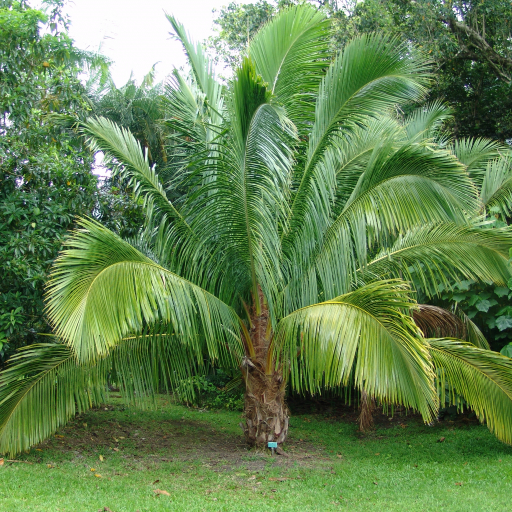
Often called the Giant Windowsill Palm or the Manarano Palm, this Madagascar native is a botanical treasure that was once thought to be nearly extinct in the wild. It looks remarkably like a Coconut Palm but is far hardier, earning it a legendary status among palm enthusiasts who live just outside the true tropics. Its dramatic, stiff fronds and prehistoric silhouette make it a true "holy grail" for collectors looking to add a touch of the exotic to their landscape.
🔍 How to Identify
- 🌿 "Windowsill" Foliage: In its juvenile stage, the leaflets are often fused together with distinct gaps or "windows" near the base, a unique trait that gives the plant its common name.
- 🥥 Coconut Lookalike: As it matures, it develops massive, graceful pinnate (feather-like) fronds that mimic the classic tropical Coconut Palm, but with a more robust and symmetrical crown.
- 🧶 Fibrous Base: The trunk is often wrapped in a thick, woven-looking brown fiber at the base of the leaf stalks, providing a rugged, textured appearance that persists for years.
🏡 In Your Garden
- 🏺 The Taproot Trap: This palm develops a very deep, sensitive taproot early in its life. It famously hates having its roots disturbed, so it is best to plant it in its "forever home" while young or use extra caution when uprooting from a pot.
- ☀️ Light Transitions: While young plants thrive in filtered light or "bright shade," mature specimens crave full, direct sun to maintain their sturdy, upright shape. If kept in too much shade as an adult, the fronds may become overly elongated and prone to wind damage.
⚠️ Safety & Toxicity
- ✅ Safe & Non-Toxic: The Beccariophoenix is generally considered non-toxic to cats, dogs, and humans, making it an excellent choice for family-friendly gardens.
- ⚔️ Mechanical Injury: While not poisonous, the leaflets are incredibly stiff and can be quite sharp at the tips. Avoid planting it directly next to narrow walkways where people might accidentally brush against the foliage.
✨ Fun Fact
Until the late 1980s, this palm was known to science from only a single surviving wild specimen! Thanks to dedicated conservation efforts and seed distribution to nurseries, it has made a miraculous comeback and is now grown in gardens across the globe.

Detailed Care Instructions
To grow Beccariophoenix Madagascariensis, also known as the Madagascar coconut palm, follow these steps:
- Climate: Ensure that you are living in a suitable climate for this plant. It thrives in warm and tropical regions. It prefers consistently warm temperatures between 70-90°F (21-32°C) throughout the year.
- Soil: Plant the Beccariophoenix Madagascariensis in well-draining soil. It prefers sandy or loamy soil that is rich in organic matter. You can amend the soil with compost or peat moss to improve drainage and fertility.
- Planting: Dig a hole that is approximately twice the width of the plant's root ball and slightly shallower than the depth of the container it came in. Gently place the plant in the hole and backfill with soil, lightly firming it around the base of the palm.
- Watering: Provide regular and deep watering to establish the plant. Water deeply once or twice a week, ensuring that the soil remains moist but not waterlogged. Reduce watering during the winter months, allowing the soil to dry out slightly between waterings.
- Sunlight: Beccariophoenix Madagascariensis requires full sun to thrive. Place the plant in a location where it receives at least 6-8 hours of direct sunlight daily.
- Fertilizing: Periodically feed the plant with a balanced slow-release palm fertilizer. Apply the fertilizer according to the manufacturer's instructions, usually in early spring and midsummer. Avoid over-fertilizing, as it can be detrimental to the plant.
- Mulching: Apply a layer of organic mulch around the base of the plant to help retain moisture, regulate soil temperature, and suppress weeds. Maintain a distance of a few inches between the trunk and mulch to prevent rotting.
- Pruning: Remove any dead or unhealthy fronds by cutting them at the base of the plant. This helps to maintain cleanliness and prevent the spread of diseases.
- Protection: Provide protection from strong winds and cold temperatures, especially when the plant is young and more vulnerable. You can use windbreaks or plant it near a building or larger trees to shield it.
- Patience: Beccariophoenix Madagascariensis is a slow-growing palm, and results may take time to be visible. With proper care and patience, it will gradually develop into an impressive specimen.
Remember to regularly monitor the plant's health, watch for signs of any pests or diseases, and adjust care accordingly.

Place in a window with dappled sun or a spot in the middle of a room. Or directly in a window facing west or east.

The Beccariophoenix Madagascariensis plant requires a sufficient amount of water to thrive. Here are some tips on watering this particular plant:
1. Observe the soil: Before watering the plant, examine the soil's moisture level. Stick your finger or a moisture meter about an inch or so into the soil to assess if it is dry or moist.
2. Watering frequency: Water this plant regularly, ensuring that the soil remains consistently moist but not excessively soggy. However, avoid letting the plant sit in stagnant water, as it can lead to root rot.
3. Watering amount: When watering, provide enough water so that it reaches the plant's root zone. Water thoroughly until the excess starts to drain out from the bottom of the pot. This ensures that the roots receive an adequate water supply.
4. Watering method: Use a watering can or a gentle shower attachment on a hose to water the plant. This helps to distribute the water evenly and avoid disturbing the plant's delicate roots.
5. Seasonal adjustments: During the plant's active growing period, which is usually in spring and summer, you may need to increase the frequency and amount of watering to accommodate its growth. In winter when the plant is dormant, reduce watering but still monitor the soil's moisture level.
6. Environmental factors: Consider the temperature, humidity levels, and sunlight exposure when determining the watering needs of the plant. Higher temperatures and lower humidity may require more frequent watering to prevent dehydration of the plant.
7. Leaf moisture: While watering, it's best to avoid excessively wetting the leaves, as it can lead to fungal diseases. Direct the water towards the soil at the base of the plant to ensure proper absorption.
Remember, these guidelines are specific to the Beccariophoenix Madagascariensis plant, so it's essential to adapt the watering routine based on your plant's specific needs and environmental factors.
Beccariophoenix Madagascariensis is a tropical plant native to Madagascar. Here are some fertilizing instructions for this plant:
- Nutrient requirements: Beccariophoenix Madagascariensis plants benefit from a balanced fertilizer that includes macronutrients such as nitrogen (N), phosphorus (P), and potassium (K), as well as micronutrients like iron (Fe), magnesium (Mg), and calcium (Ca).
- Fertilizer type: Use a slow-release or granular fertilizer designed for tropical plants. This will provide a steady supply of nutrients over time, minimizing the risk of over-fertilization.
- Fertilizing frequency: Apply fertilizer every three to four months during the growing season, which typically spans from spring to early fall. Avoid fertilizing during the winter months when the plant is dormant.
- Application method: Sprinkle the granular fertilizer evenly around the base of the plant, ensuring it does not come in direct contact with the trunk. Alternatively, you can dissolve water-soluble fertilizer in water according to the package instructions and apply it directly to the soil.
- Amount to use: Follow the instructions on the fertilizer package for the correct dosage based on your plant's size. Generally, it's better to under-fertilize than over-fertilize, as excessive amounts can cause nutrient burn and damage the roots.
- Watering after fertilizing: After applying fertilizer, thoroughly water the plant to help the nutrients penetrate the soil and reach the roots. This will also prevent the accumulation of excess salts from the fertilizer.
- Observing plant response: Pay attention to how the plant responds to the fertilizer. If the leaves become yellow or brown, or if growth seems stunted, it may indicate over-fertilization. In such cases, flush the soil with water to remove excess nutrients.
Remember to read and follow the instructions provided by the fertilizer manufacturer, as specific brands may have different recommendations.
Beccariophoenix madagascariensis is a species of plant that is native to the island of Madagascar. It belongs to the Arecaceae family and is commonly cultivated for its attractive appearance. When selecting soil for this plant, there are a few important factors to consider:
- Well-draining: Beccariophoenix madagascariensis prefers soil that allows excess water to drain away quickly. Standing water can lead to root rot and other issues, so using a well-draining soil mix is essential.
- Organic content: The soil should have a good amount of organic matter to provide essential nutrients for the plant's growth. Organic matter helps retain moisture while promoting aeration in the soil.
- pH level: Beccariophoenix madagascariensis thrives in slightly acidic to neutral soil. Ideally, the pH level should be around 6.0-7.0. Testing the soil's pH and adjusting it if necessary can help ensure optimal conditions for the plant.
- Nutrient-rich: This plant benefits from a soil mix that is rich in nutrients. Adding a balanced fertilizer or incorporating organic amendments, such as compost or well-rotted manure, can help provide the necessary nutrients for healthy growth.
- Soil texture: The ideal soil texture for Beccariophoenix madagascariensis is loamy or sandy loam. It should be loose and crumbly, allowing the roots to penetrate easily and promoting good drainage.
- Moisture retention: While well-draining soil is important, it should still retain some moisture to avoid rapid drying out. Sandy loam soil usually strikes a good balance between drainage and moisture retention.
It is worth noting that selecting the right soil is just one aspect of caring for Beccariophoenix madagascariensis. Proper watering, lighting, and temperature conditions are also important factors for the plant's overall health and growth.
Beccariophoenix madagascariensis is a tropical palm plant native to Madagascar. Here is a detailed explanation on how to propagate this plant:
- Seeds: The most common method of propagating Beccariophoenix madagascariensis is by using seeds. Follow these steps:
a. Collect fresh seeds from a mature plant. The seeds are usually contained within small, round fruits.
b. Clean the fruit pulp off the seeds by soaking them in water and gently scrubbing them with a soft brush.
c. Fill a seed tray or pot with a well-draining potting mix or a mixture of perlite and vermiculite.
d. Plant the seeds about 1 inch deep in the soil mixture, ensuring they are evenly spaced.
e. Water the soil thoroughly, but avoid overwatering to prevent seed rot.
f. Place the tray or pot in a warm, humid environment, maintaining a temperature around 80-90°F (27-32°C).
g. Keep the soil consistently moist by misting it regularly.
h. Germination usually occurs within 2-3 months, but it can take longer.
i. Once the seedlings have developed several leaves, carefully transplant them into individual pots until they are large enough to be planted in their permanent location.
- Offsets: Beccariophoenix madagascariensis can also produce offsets, or suckers, which can be separated and propagated. Follow these steps:
a. Identify a healthy and mature plant with established offsets.
b. Gently dig around the base of the parent plant to expose the root system and the attached offsets.
c. Carefully remove the offsets from the parent plant, ensuring they have some roots attached.
d. If necessary, trim any damaged or excess roots using clean, sharp tools.
e. Plant the offsets in a well-draining soil mixture or a mixture of sand and peat moss.
f. Water the offsets thoroughly and place them in a location with bright, indirect light.
g. Keep the soil slightly moist, but avoid overwatering to prevent rot.
h. Once the offsets have established roots and started growing, transplant them into larger pots or their permanent location.
Remember, propagating Beccariophoenix madagascariensis requires patience and attention to detail. Providing the appropriate growing conditions will increase the chances of successful propagation.








