Plant Overview
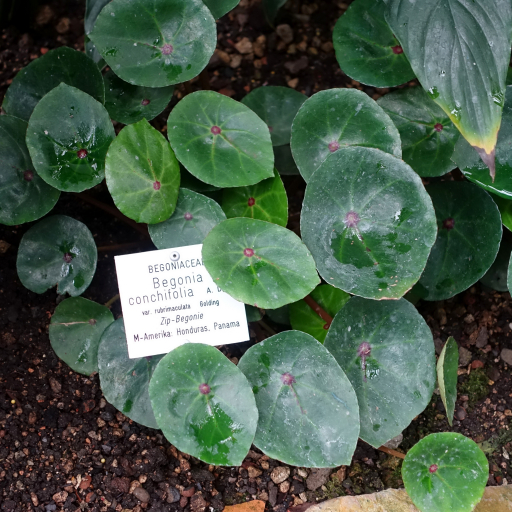
Known as the Shell Leaf Begonia or the Bull’s-Eye Begonia, this Central American gem is a favorite among indoor gardeners for its sculptural, minimalist foliage. Native to the rainforests of Costa Rica and Panama, it is a "rhizomatous" begonia, meaning it grows from thick, creeping stems that hug the soil. Its most striking feature is the tiny red "button" at the center of every leaf, making it look like a collection of living targets.
🔍 How to Identify
- 🐚 Leaf Shape: Perfectly rounded or slightly teardrop-shaped leaves that curve inward, mimicking the shape of a seashell.
- 🎯 The Bull's-Eye: A prominent, bright red spot located exactly where the stem (petiole) meets the leaf blade.
- 🌸 Bloom Style: Tiny, airy clusters of white or pale pink flowers that hover high above the foliage on tall, thin stalks during late winter and spring.
🏡 In Your Garden
- ☁️ Humidity is Key: Because of its tropical origins, this begonia craves moisture in the air. If the edges of the "shells" start to turn brown and crispy, it’s likely asking for a pebble tray or a humidifier.
- 🌱 Surface Dwellers: Unlike many plants, this one grows from a horizontal rhizome. When potting, ensure the thick, fuzzy stem is resting on top of the soil rather than buried deep, or it may succumb to rot.
⚠️ Safety & Toxicity
- 🐾 Toxic to Pets: Begonia conchifolia contains calcium oxalate crystals, which are toxic to cats and dogs.
- 👄 Irritant: If chewed, the plant can cause intense oral irritation, drooling, and swelling of the throat. It is best kept on high shelves or in hanging baskets away from curious pets and toddlers.
✨ Fun Fact
The "Bull's-Eye" isn't just for show! In the dim light of the rainforest floor, some scientists believe these contrasting spots and peltate (shield-shaped) leaves help the plant maximize light absorption and may even play a role in directing water runoff toward the roots.

Detailed Care Instructions
To grow Begonia Conchifolia, follow these steps:
- Lighting: Place the plant in a location with bright, indirect sunlight. Avoid direct sunlight as it can scorch the leaves.
- Temperature: Maintain a temperature between 65-75°F (18-24°C). Avoid extreme temperature fluctuations.
- Watering: Water the plant thoroughly when the top inch of soil feels dry. Begonia Conchifolia prefers evenly moist soil, but be careful not to overwater as it can cause root rot. Ensure proper drainage to prevent waterlogging.
- Humidity: This plant thrives in high humidity levels. You can increase humidity by placing a tray of water near the plant or placing the pot on a pebble tray filled with water. Misting the leaves occasionally also helps.
- Soil: Use well-draining, rich soil that retains moisture but doesn't become waterlogged. A mix of peat moss, perlite, and potting soil can work well.
- Fertilizer: Feed Begonia Conchifolia with a balanced, water-soluble fertilizer diluted to half strength every 2-4 weeks during the growing season (spring and summer). Reduce fertilizer frequency during winter.
- Pruning: Regularly remove any dead or yellow leaves. You can also pinch back the stems to encourage bushier growth.
- Propagation: Begonia Conchifolia can be propagated through seeds or stem cuttings. Stem cuttings are the most common method. Simply take a stem cutting with a few leaves below the node, and place it in a well-draining potting mix. Keep the soil consistently moist until roots develop.
- Repotting: Repot the plant every 1-2 years to refresh the soil and provide additional space for growth. Choose a pot only slightly larger than the current one to prevent excessive soil moisture retention.
- Pests and Diseases: Keep an eye out for common Begonia pests like aphids, mealybugs, and spider mites. Treat any infestations promptly with insecticidal soap or neem oil. Ensure good airflow around the plant to prevent fungal diseases.
By following these guidelines, you can successfully grow Begonia Conchifolia and enjoy its attractive foliage.

Place in a window with dappled sun or a spot in the middle of a room. Or directly in a window facing west or east.

When watering this plant, it's important to make sure that the soil is evenly moist throughout the root zone. Before watering, check the top inch of soil with your finger. If it feels dry, it's time to water. Use a watering can or hose with a gentle flow, being careful not to splash water on the foliage. Water until you see moisture beginning to drain out of the bottom of the pot. Let the excess water drain away, and then return the plant to its usual spot. Avoid allowing the soil to become too wet or dry, as this can lead to root rot or drought stress. Be mindful of the plant's environment, as warmer temperatures and brighter light may increase the plant's water needs.
To fertilize Begonia Conchifolia, use a balanced, water-soluble fertilizer with equal amounts of nitrogen, phosphorus, and potassium, such as a 10-10-10 or 20-20-20 blend. Dilute the fertilizer according to the package instructions, typically using 1 teaspoon per gallon of water.
Apply the diluted fertilizer to the soil around the base of the plant, avoiding direct contact with the leaves. Water the plant thoroughly after fertilizing to help the nutrients penetrate the soil.
During active growth periods, fertilize Begonia Conchifolia every 2-4 weeks. In colder months or when the plant is dormant, reduce fertilization to once a month or suspend fertilization altogether. Additionally, it is important to monitor the plant for any signs of nutrient deficiency or excess, such as yellowing leaves or leaf burn, adjusting the fertilization frequency or strength accordingly.
The soil recommended for this plant should have excellent drainage to prevent waterlogging. The pH level should be slightly acidic between 5.0 and 6.0. It should also be able to hold moisture to allow for retention of water without waterlogging. It is recommended to use a well-draining potting mix that includes perlite, vermiculite, or sand to increase porosity and reduce water retention. Additionally, adding organic matter like compost will help provide nutrients to the plant. The soil should not be compacted as it may cause root rot.
Propagation of this plant can be achieved through several methods. One popular way is by stem cuttings. Take stem cuttings from the mother plant, ensuring that each cutting has one or two nodes. The node is the point on the stem where the leaves emerge. Remove the lower leaves and dip the cut end into rooting hormone. Place each stem cutting into a pot filled with well-draining soil and water it thoroughly. Cover the pot with plastic wrap to maintain moisture and place it in a warm, brightly lit area. After four to six weeks, the cuttings should develop roots and new foliage.
Another method is to propagate the plant through division. This involves separating the parent plant into smaller sections and replanting them. Carefully remove the plant from its pot, and then gently separate the roots into smaller sections, ensuring each section has at least one shoot or leaf. Replant the sections into separate pots with fresh soil.
Finally, Begonia Conchifolia can also be propagated through seed. Collect the seeds from the parent plant and sow them in a seed tray filled with potting soil. Cover the tray with plastic wrap to maintain moisture and place it in a warm, bright spot. The seeds should germinate in 1-2 weeks. After the seedlings have grown a few inches tall, transplant them carefully into individual pots.








