Plant Overview
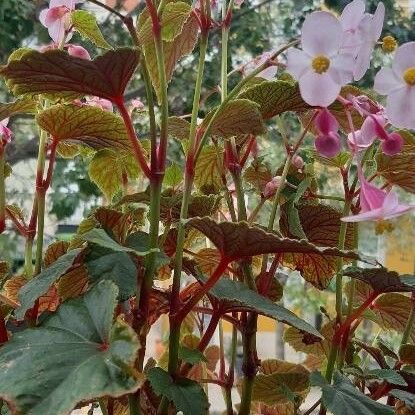
Often called the Formosa Begonia, this lush perennial is a botanical treasure hidden in the misty, high-altitude mountain forests of Taiwan. With its striking asymmetrical leaves and subtle silvery patterns, it brings an air of exotic mystery to any indoor collection. It is a favorite among plant collectors who appreciate the delicate balance between wild forest textures and refined, architectural elegance.
🔍 How to Identify
- 🍃 The Leaf Shape: Features heart-shaped but famously asymmetrical foliage, resembling a lopsided wing with jagged, saw-toothed edges.
- 🎨 Surface Texture: The deep green leaves are often adorned with irregular silvery-white splashes or spots that catch the light, while the undersides frequently reveal a pale, translucent green.
- 🌸 Delicate Blooms: During the growing season, it produces clusters of soft pink or white four-petaled flowers that dangle gracefully on fleshy, reddish stalks.
🏡 In Your Garden
- 💧 The Humidity Factor: As a cloud-forest native, this plant craves high humidity. If the leaf edges start to crisp like parchment, it is signaling a need for a pebble tray or a dedicated humidifier to mimic its tropical home.
- ⛰️ Root Sensitivity: It grows from thick rhizomes that store water, meaning it prefers "thirst" over "flooding." It hates transplanting and "wet feet," so use a chunky, airy potting mix to ensure oxygen reaches the roots.
- 🌥️ Shadow Play: In nature, it lives under a thick forest canopy. Harsh, direct afternoon sun will bleach the beautiful patterns right off its leaves; it thrives best in the soft, dappled light of an east-facing window.
⚠️ Safety & Toxicity
- 🚫 Toxic Status: Like most members of the Begonia family, Begonia formosana contains insoluble calcium oxalate crystals.
- 🐾 Pet & Child Risk: These crystals are highly irritating if chewed. Ingestion can cause immediate mouth swelling, drooling, and digestive distress in cats, dogs, and small children. It is best displayed on a high shelf or in a hanging planter.
✨ Fun Fact
In its native Taiwan, the Begonia formosana is so well-adapted to damp environments that it can often be found growing vertically on mossy rock faces near waterfalls, literally clinging to the stone to catch the cool mountain spray!

Detailed Care Instructions
To grow Begonia Formosana, also known as the Iron Cross Begonia, follow these steps:
- Choose a suitable location: Begonia Formosana prefers bright, indirect sunlight. It can also tolerate some shade. Avoid direct sunlight as it can scorch the leaves of the plant.
- Planting medium: Choose a well-draining soil mixture that is rich in organic matter. You can also add some perlite or sand to improve the drainage.
- Propagation: Begonia Formosana can be propagated from stem cuttings or by dividing the rhizome. Using a sharp, sterile knife or shears, cut a healthy stem just below a leaf node. Remove the lower leaves to expose a node. Plant the cutting in a pot filled with moist soil mixture and keep it warm and humid. Alternatively, you can divide the rhizome with a sharp knife and plant each division in a separate container.
- Watering: Keep the soil consistently moist but not waterlogged. Allow the top inch of soil to dry out slightly before watering again. Avoid overwatering as it can lead to root rot.
- Humidity: Begonia Formosana prefers high humidity levels. You can increase humidity by placing a tray of water near the plant or using a humidifier. Grouping plants together also helps to create a humid microclimate.
- Fertilizer: Feed the plant with a balanced, water-soluble fertilizer every 4-6 weeks during the growing season (spring and summer). Follow the manufacturer's instructions for the correct dosage.
- Pruning: Prune the plant to maintain its shape and encourage bushier growth. You can pinch back the stems or remove any leggy growth. Pruning also helps to remove any dead or diseased foliage.
- Pests and diseases: Watch out for common pests like aphids, spider mites, and mealybugs. Treat any infestations promptly using an appropriate insecticide or insecticidal soap. Make sure to inspect the plant regularly for signs of disease such as fungal infections, and remove any affected parts immediately.
- Temperature: Begonia Formosana prefers temperatures between 60-75°F (15-24°C). It is not tolerant of extreme cold or heat, so keep it away from drafty windows or heat sources.
- Repotting: As the plant grows, you may need to repot it into a larger container. Do this in spring when the plant is actively growing. Use a fresh soil mixture and ensure the new pot has good drainage.
By following these steps, you can successfully grow Begonia Formosana and enjoy its beautiful foliage.

Place in a window with dappled sun or a spot in the middle of a room. Or directly in a window facing west or east.

As a general guideline, Begonia Formosana plants prefer to be kept moist but not waterlogged. It is important to allow the soil to dry slightly between waterings to avoid overwatering, which can lead to root rot.
When watering, pour water slowly and evenly around the base of the plant, avoiding the leaves and stem to prevent water damage and disease. Use room temperature water to avoid shocking the plant.
The frequency of watering will depend on factors such as the plant's size, pot size, and the temperature and humidity levels of its environment. It is best to check the moisture level of the soil regularly by sticking a finger into the soil up to the second knuckle. If the soil feels dry at that depth, it's time to water the plant.
During the winter months, when the plant is in its dormant phase, watering should be reduced to avoid overwatering. It is also important to ensure proper drainage to avoid water pooling at the bottom of the pot, which can lead to root rot. If the soil is not draining well, consider repotting the plant with fresh, well-draining soil.
The Begonia Formosana plant should be fertilized every two weeks during the growing season with a balanced, water-soluble fertilizer. Dilute the fertilizer according to the manufacturer's instructions and apply it to the soil around the base of the plant. Avoid getting fertilizer on the leaves or flowers, as this can cause damage. During the winter months, fertilize the plant every four to six weeks. Over-fertilization can lead to burned roots and other problems, so be careful not to apply too much fertilizer at once. Always water the plant before fertilizing to help distribute the nutrients evenly throughout the soil.
The ideal soil for Begonia Formosana should be well-draining, loose, and humus-rich. It also should have a slightly acidic pH level. A mixture of peat moss, perlite, and vermiculite is a good option for this plant. The soil should be kept moist, but not waterlogged, to prevent root rot. Adding organic matter, such as compost or leaf mold, can also help improve the soil quality and support healthy growth of the plant.
To propagate this plant, you will need to take stem cuttings from the mother plant. Select a healthy stem that is about 4-6 inches in length. Using a sharp, clean pair of scissors or a knife, cut the stem at a 45-degree angle just below a node (where a leaf meets the stem).
Remove any leaves from the bottom 1-2 inches of the stem. If there are any flowers or buds, pinch them off as they can divert energy away from root formation.
Dip the cut end of the stem into rooting hormone powder to encourage root growth. Then insert the stem into a pot filled with a well-draining potting mix, making sure the cut end is buried about 1 inch deep.
Water the cutting well, and cover the pot with a clear plastic bag or a plastic dome to create a mini greenhouse. This will help to maintain humidity around the cutting and promote root growth. Place the pot in a bright, indirect light location.
Check the cutting regularly to make sure the soil is moist but not waterlogged. After about 4-6 weeks, you should start to see new growth and roots forming. At this point, you can remove the plastic bag/dome and treat the new plant as you would the mother plant.








