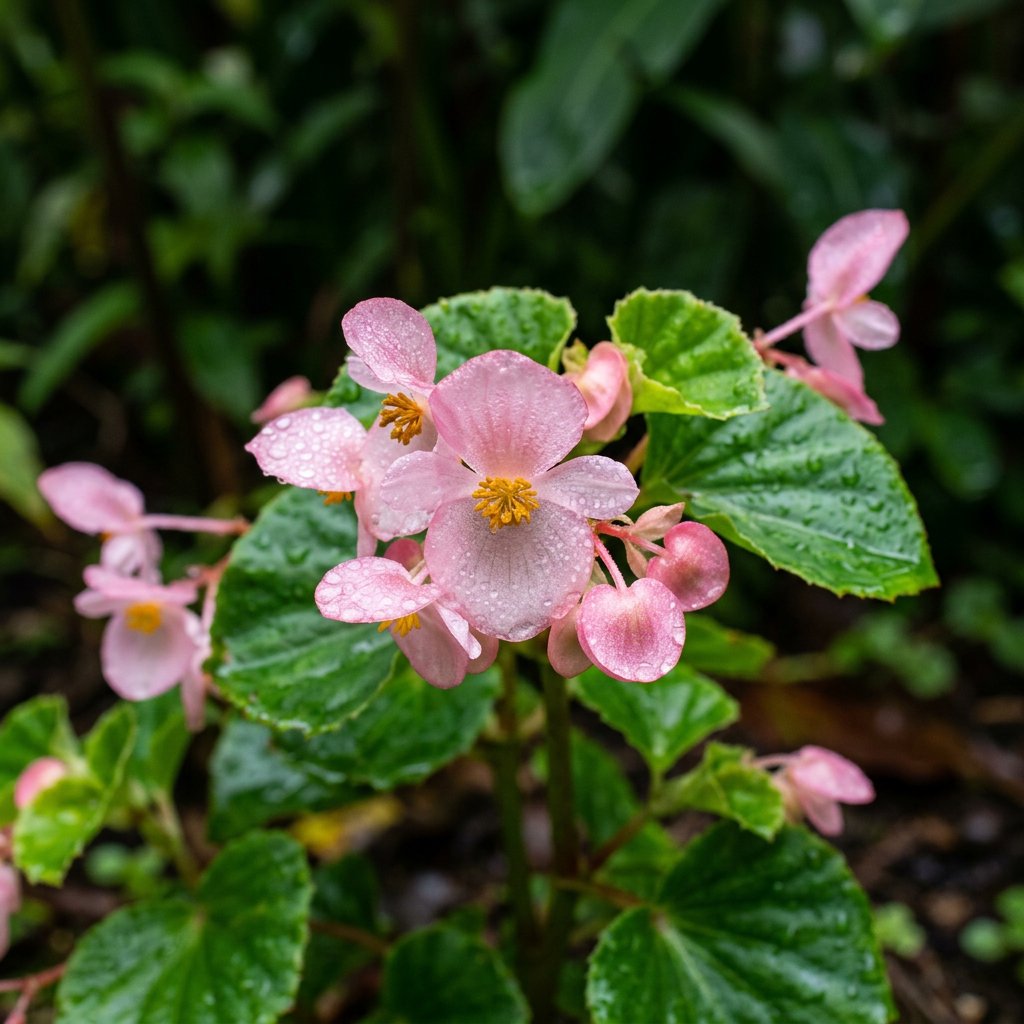
Plant Overview
Often called the Wax Begonia due to its lustrous, polished leaves, this plant is a staple of Victorian-style flower beds and modern hanging baskets alike. Native to Brazil, it earned the name semperflorens (meaning "always flowering") because, under the right conditions, it simply never stops blooming. It’s a reliable, cheerful companion that bridges the gap between a sturdy outdoor bedding plant and a low-maintenance indoor resident.
🔍 How to Identify
- 🍃 The Leaves: Fleshy, rounded, and remarkably glossy as if they’ve been buffed with wax. They typically come in two distinct colors: a bright apple green or a deep, moody bronze-maroon.
- 🌸 The Blooms: Small, four-petaled flowers that grow in delicate clusters. You'll usually see them in shades of candy-apple red, soft pink, or pure white, often accented by a bright yellow "button" of pollen in the center.
- 🌱 The Stems: Thick, succulent-like, and slightly translucent. These stems are brittle and snap easily, as they are designed to store water for the plant during lean times.
🏡 In Your Garden
- 🎭 Sun Sensitivity: The leaf color tells a story! Bronze-leafed varieties are the "sun-worshippers" of the family and can handle direct light, while green-leafed types prefer the protection of dappled shade to avoid "leaf scorch."
- 💧 The Rot Factor: Because these plants are semi-succulent, their biggest enemy is overwatering. They prefer "boutique" watering—letting the soil dry out significantly between drinks to prevent the stems from turning to mush.
- ✂️ Low Maintenance: One of the best traits of the Wax Begonia is that it is "self-cleaning." It naturally drops its old, faded flowers, so you don't have to spend your weekends deadheading to keep it looking tidy.
⚠️ Safety & Toxicity
- 🐾 Pet Alert: Wax Begonias contain calcium oxalate crystals. While the entire plant is toxic to cats and dogs, the roots and tubers are the most dangerous parts. Ingestion can lead to intense oral irritation, drooling, and vomiting.
- 👶 Human Safety: Touching the plant is perfectly safe for gardeners. However, it should be kept out of reach of small children who might be tempted by the bright, "candy-like" flowers, as ingestion can cause a painful burning sensation in the mouth.
✨ Fun Fact
In some culinary circles, Wax Begonia flowers are considered a gourmet garnish! They have a surprisingly tart, citrus-like crunch, similar to a lemon-flavored apple. However, you should only ever taste them if you’ve grown them yourself without the use of chemical pesticides.

Detailed Care Instructions
To grow Begonia Semperflorens plant, also known as wax begonia, you can follow these steps:
- Choose the right location: Begonia Semperflorens plants prefer bright indirect sunlight. Find a location that receives morning sunlight and afternoon shade or filtered light. They can also tolerate full shade but may have fewer blooms.
- Prepare the soil: Begonia Semperflorens plants thrive in well-draining soil. Amend the soil with organic matter like compost to improve drainage and nutrient content.
- Planting: Dig a hole in the prepared soil large enough to accommodate the root ball of the plant. Place the plant in the hole, ensuring it is at the same depth it was in its nursery container. Gently pat the soil around the plant to secure it in place.
- Watering: After planting, thoroughly water the plant to help it establish its roots. Water regularly, keeping the soil evenly moist but not waterlogged. Avoid overwatering as it can cause root rot.
- Fertilizing: Apply a balanced, slow-release fertilizer or a water-soluble fertilizer every 4-6 weeks during the growing season. Follow the instructions on the fertilizer packaging for proper application.
- Maintenance: Pinch or prune the plant regularly to promote bushier growth and increase the number of blooms. Remove any dead or damaged leaves and flowers, as they can be a breeding ground for pests and diseases.
- Pests and diseases: Watch out for common pests like aphids, mealybugs, and spider mites. Treat any infestations promptly using appropriate insecticides or by manual removal. Ensure good air circulation around the plants to help prevent fungal diseases.
- Overwintering: In areas with cold winters, Begonia Semperflorens plants are usually cultivated as annuals. However, you can try overwintering them indoors by bringing them inside before the first frost. Place them in a bright location away from drafts, reduce watering, and let them go dormant. Resume regular care in the spring.
By following these guidelines, you can grow and enjoy the beautiful blooms of Begonia Semperflorens plant.

Place in a window with dappled sun or a spot in the middle of a room. Or directly in a window facing west or east.

1. Choose a well-draining container or pot with drainage holes in the bottom to prevent waterlogging and root rot.
2. Fill the container with a high-quality potting mix that is rich in nutrients and organic matter.
3. Water the soil thoroughly until it is evenly moist, but not soaking wet. Allow the excess water to drain away from the container.
4. Check the soil moisture level regularly by inserting your finger into the soil about 1 inch deep. If the soil feels dry, it's time to water again.
5. Water the plant early in the morning or late in the evening when it is cooler and there is less chance of water evaporation or scorching the leaves.
6. Avoid getting water on the leaves or flowers of the plant as it can promote fungal diseases and damage to the foliage.
7. Use room temperature, distilled, or rainwater to avoid damaging the roots with chlorine and other chemicals found in tap water.
8. Reduce watering frequency during periods of low light, cool temperatures, or dormancy in winter to prevent overwatering and root rot.
To fertilize this plant, use a water-soluble fertilizer with a balanced N-P-K ratio (such as 20-20-20) once a month during the growing season (spring and summer). Mix the fertilizer with water according to the package instructions and apply it to the soil around the plant, being careful not to get any on the leaves. Avoid over-fertilizing, as it can lead to burnt roots and stunted growth. Additionally, make sure to water the plant thoroughly before and after fertilizing to avoid stressing the roots.
The ideal soil for Begonia Semperflorens plants should be loose, well-draining, and slightly acidic with a pH range of 5.5 to 6.5. It should also contain a good amount of organic matter and nutrients such as nitrogen, phosphorus, and potassium. A mixture of peat moss, perlite, and vermiculite is recommended to provide adequate drainage and aeration for the roots. It is also important to avoid using heavy, compacted soils or soils that are high in clay content, as they may not provide enough oxygen or drainage for the plant to thrive.
To propagate this plant, you will need to take a stem or leaf cutting from a mature plant. Ideally, choose a healthy and vigorous plant that is not currently flowering.
- First, prepare a sterile, well-draining potting mix. You can use a mixture of peat moss, perlite, and vermiculite, or purchase a commercial seed-starting mix.
- Using a clean, sharp knife or scissors, carefully remove a stem or leaf cutting from the main plant. Make sure the cutting is at least 2-3 inches long and has several leaves.
- Remove any leaves from the lower part of the cutting, leaving only a few at the top.
- Dip the bottom of the cutting in rooting hormone powder, which will help it develop roots more quickly.
- Use a small stick or your finger to create a hole in the soil, and then gently plant the cutting into the hole.
- Water the cutting thoroughly, and then cover it with a plastic bag or container to create a humid environment. Keep the container in a warm, bright place out of direct sunlight.
- Within a few weeks, you should begin to see new growth on the cutting, which is a sign that it has taken root. At this point, you can remove the plastic cover and begin to gradually acclimate the plant to normal conditions.
- Once the new plant has grown to a sufficient size, you can transplant it into a larger container or into your garden. Be sure to keep the soil consistently moist and provide plenty of light, but avoid direct sunlight, which can scorch the delicate leaves.
Common pests of the wax begonia include Mealybugs, spider mites, aphids, whiteflies. Make a habit of checking your wax begonia frequently for pests so that any infestations can be caught and managed early.







