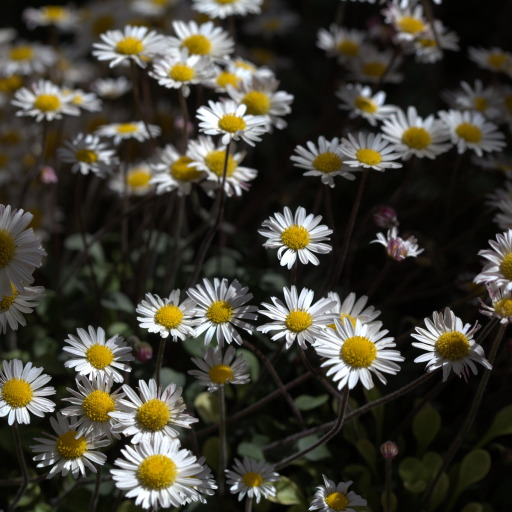
Plant Overview
Known as the False Daisy or Thick-leaved Bellium, this charming little perennial is a native of the rocky Mediterranean coastlines, particularly the Balearic Islands. While it looks remarkably like the common lawn daisy at first glance, it is actually a much hardier, succulent-like specialist that thrives where other plants wither. It is often celebrated in rock gardening for its ability to create "miniature alpine meadows" in the smallest of crevices.
🔍 How to Identify
- 🍃 Fleshy Foliage: The leaves are spatulate (spoon-shaped) and noticeably thick or "succulent," growing in tight, attractive rosettes close to the ground.
- 🌼 Dainty Blooms: It produces small, solitary flowers with white outer petals and a bright sunny-yellow center, held aloft on thin, leafless stems.
- 📏 Prostrate Habit: It rarely grows taller than 4 inches, instead spreading horizontally to form a dense, green mat that hugs the soil or stone.
🏡 In Your Garden
- 🪨 The Limestone Lover: This plant is a "calcicole," meaning it craves lime-rich or alkaline soils. In a garden setting, it performs best in rockeries or between paving stones where drainage is sharp and the soil is gritty.
- ☀️ Coastal Resilience: Because it evolved on Mediterranean cliffs, it is highly resistant to salt spray and intense sun. It "breathes" through its thick leaves, allowing it to withstand periods of drought that would shrivel a standard daisy.
- 🌱 Low Competition: It is a slow-grower that doesn't like being crowded out. Give it its own dedicated pocket of gravel or a small trough to let its delicate structure shine.
⚠️ Safety & Toxicity
- ✅ Status: Generally considered non-toxic and safe for home gardens.
- 🐾 Details: There are no recorded reports of toxicity toward cats, dogs, or horses. However, as with any ornamental plant, it is best to discourage pets from grazing on it to avoid minor stomach upset.
✨ Fun Fact
The species name crassifolium literally translates from Latin as "thick leaf." This is a clever evolutionary survival tactic; those chubby leaves act as tiny water reservoirs, allowing the plant to survive on sun-baked cliffs where soil is almost non-existent!

Detailed Care Instructions
To grow Bellium Crassifolium, also known as bellium daisy or dwarf mountain daisy, follow these steps:
- Choose a suitable location: Select a spot in your garden that receives full sun or partial shade. Bellium Crassifolium prefers cool temperatures and can tolerate light frost.
- Prepare the soil: Ensure that the soil is well-draining and slightly acidic with a pH of 5.5 to 6.5. Improve the soil by adding organic matter like compost or well-rotted manure.
- Sow the seeds: Bellium Crassifolium can be grown from seeds. Sow the seeds directly into the prepared soil in early spring after the last frost. Lightly cover the seeds with a thin layer of soil. Space the seeds about 6 to 8 inches apart.
- Watering: Keep the soil consistently moist but not waterlogged. Water the plants regularly, especially during dry spells. Avoid overwatering to prevent root rot.
- Fertilization: Bellium Crassifolium doesn't require heavy fertilization. However, you can provide a light application of a balanced, all-purpose fertilizer once or twice during the growing season to promote healthy growth.
- Pruning: Prune back the plant after blooming to encourage bushier growth. You can also deadhead spent flowers to promote continuous blooming.
- Mulching: Mulch around the base of the plants to prevent weed growth, retain moisture, and regulate soil temperature.
- Pests and diseases: Bellium Crassifolium is relatively resistant to pests and diseases. However, keep an eye out for common garden pests like aphids or slugs and treat them accordingly.
- Winter care: In colder regions, Bellium Crassifolium may require protection during winter. Mulch around the plants with a layer of straw or leaves to provide insulation.
By following these steps, you can successfully grow Bellium Crassifolium and enjoy its charming daisy-like flowers.

Place in a bright room that is sun drenched almost all day. Or directly in a south-facing window.

Bellium Crassifolium is a type of plant that needs to be watered properly to grow well. Here are some tips on how to water it:
1. Soil condition: The soil must remain moist, but not overly wet, as it can lead to root rot. Make sure the soil has good drainage so the water doesn't accumulate in the pot or ground.
2. Watering frequency: Watering frequency depends on the climate, humidity, and sunlight exposure. In general, it needs to be watered once a week during the growing season and less frequently during the dormant period.
3. Time of day: Watering in the early morning or in the evening is best. Watering midday can cause the water to evaporate quickly, not allowing enough time for the plant to absorb it.
4. Watering method: Water the soil, not the leaves or flowers. Use a watering can or hose with a gentle flow to avoid overwatering and damaging the plant.
5. Amount of water: Water the plant sufficiently until the water drains out of the bottom of the pot or ground. Ensure that the roots are well moistened, but again, no standing water.
By following these watering guidelines, you can keep your Bellium Crassifolium healthy and vibrant.
For optimal growth and health of this plant, it is important to provide it with proper fertilization. During its active growing season, which is typically in the spring and summer months, add a balanced fertilizer with equal parts of nitrogen, phosphorus, and potassium every two weeks. Be sure to follow the manufacturer's instructions on how much to apply. Avoid over-fertilizing, as this can lead to excessive growth and weaken the plant. During the dormant season, reduce or stop fertilization altogether to allow the plant to rest.
For optimal growth, it is recommended to use a well-draining soil mixture that is rich in organic matter. A combination of peat moss, perlite, and coarse sand is ideal, as this will provide good aeration and ensure excess moisture doesn't accumulate around the roots. The pH of the soil should be slightly acidic, between 6.0-6.5, which can be achieved by adding sulfur or composted pine needles to the mix. It is important to avoid using heavy soils or those that are prone to compaction, as this can hinder root development. Additionally, adding a slow-release fertilizer to the soil mixture can help provide the necessary nutrients for optimal growth.
To propagate this plant, you can take stem cuttings and root them in a well-draining soil mix. Take a cutting that is around 4-6 inches long and remove the lower leaves. Dip the cut end in rooting hormone and plant it in a pot filled with the soil mix. Keep the soil moist and place the pot in a warm and bright spot, but out of direct sunlight. In about 2-3 weeks, the cutting should root and you will see new growth. Once the roots are established, you can transplant the new plant into a larger pot or into your garden.








