Plant Overview
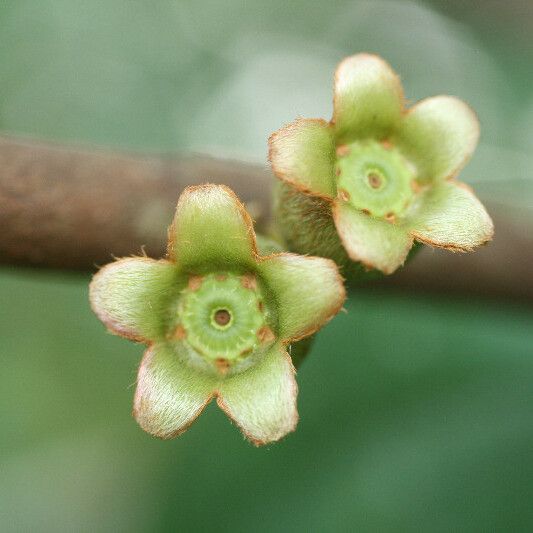
Often called the Mess Apple or Guava of the Woods, Bellucia grossularioides is a resilient pioneer tree native to the lush Amazon rainforest and Central America. It is famous for its "cauliflorous" blooming habit—where waxy flowers erupt directly from the older woody branches—and its sweet, yellow fruits. In its native lands, this tree is a symbol of forest regeneration, often being the first to reclaim cleared land and provide shade for the next generation of the jungle.
🔍 How to Identify
- 🍃 Ribbed Foliage: The large, leathery leaves feature 3 to 5 prominent longitudinal veins that arch from the base to the tip, a signature look of the Melastome family.
- 🌸 Woody Blooms: Look for clusters of white to pinkish-white flowers with thick, fleshy petals growing directly from the trunk or thick branches rather than among the leaves.
- 🟡 "Soldier's Cap" Fruit: The round, yellow berries (roughly 1-2 inches wide) are crowned with a persistent, star-shaped rim at the bottom, resembling a tiny decorative cap.
🏡 In Your Garden
- 🌱 The Light-Seeker: This is a "pioneer species," meaning it thrives in full sun and disturbed soils. In a garden setting, it needs plenty of vertical space and bright light to mimic the forest clearings it calls home.
- 🦜 Biodiversity Hub: If you are gardening for wildlife, this tree is a goldmine. The sweet, pulpy fruit is a primary food source for tropical birds, monkeys, and bats, who act as the tree’s personal seed-delivery service.
⚠️ Safety & Toxicity
- ✅ Safe & Edible: The fruit is non-toxic and widely consumed by indigenous populations. It has a sweet, slightly acidic flavor often compared to a mix of guava and gooseberry.
- 🐾 General Precaution: While the fruit is safe for humans and wildlife, the high tannin content in the bark and older leaves might cause mild stomach upset if ingested in large quantities by curious pets.
✨ Fun Fact
The specific epithet grossularioides translates to "resembling a gooseberry." This is why it’s often nicknamed the Brazilian Gooseberry, even though it is biologically closer to a Meadow Beauty or a Princess Flower than a true gooseberry!

Detailed Care Instructions
To grow Bellucia grossularioides, also known as the sour cherry plant or wild coffee, follow these steps:
- Choose a suitable location: Bellucia grossularioides prefers partial shade to full sun. Select a location in your garden that receives dappled sunlight or at least 4-6 hours of direct sunlight per day.
- Prepare the soil: The plant prefers well-draining soil. Incorporate organic matter like compost or well-rotted manure into the soil to improve its fertility, structure, and drainage.
- Plant the seeds or cuttings: Bellucia grossularioides can be propagated from both seeds and cuttings. If using seeds, sow them directly into the soil, 1-2 inches deep. If using cuttings, take a 6-8 inch long stem cutting from a healthy plant and remove the leaves from the lower half. Dip the cut end in rooting hormone and plant it in a pot filled with moist potting mix.
- Watering: Water the plant deeply after planting and ensure that the soil remains consistently moist but not waterlogged. Don't let the soil dry out completely between waterings.
- Fertilization: Apply a balanced slow-release fertilizer during the growing season to provide essential nutrients to the plants. Follow the instructions on the fertilizer packaging for proper dosage and application.
- Pruning: Regular pruning helps maintain the shape and size of the plant and promotes better growth. Prune any dead, damaged, or overgrown branches. You can also prune to promote bushier growth.
- Mulching: Apply a layer of organic mulch around the plant to retain moisture, suppress weeds, and keep the soil temperature stable. However, keep the mulch about 2-3 inches away from the base of the plant to prevent rot.
- Protection from extreme weather conditions: Bellucia grossularioides is sensitive to frost. If you live in an area with freezing temperatures, protect the plant by covering it with a frost cloth or moving it indoors during winter.
- Pests and diseases: Monitor the plant regularly for any signs of pests like aphids or diseases like powdery mildew. If detected, treat them with appropriate organic insecticides or fungicides.
- Harvesting: Bellucia grossularioides produces small, red fruits that resemble cherries, which can be harvested for culinary use when fully ripe. Wait until the fruit turns red and soft before picking them.
By following these steps, you should be able to successfully grow Bellucia grossularioides in your garden. Remember to provide proper care, and you can enjoy its attractive foliage and delicious fruits.
To water this plant, check the soil moisture level before watering. Stick your finger about an inch into the soil to feel if it is dry or moist. Water thoroughly when the top inch of soil feels dry to the touch. Avoid overwatering, as this plant prefers well-drained soil. Allow excess water to drain out of the bottom of the pot or container and empty any standing water to prevent root rot. Water more frequently during warmer months and less frequently in colder months. Consider using room-temperature water, as water that is too cold or too hot can shock the plant. Use a watering can or a gentle stream of water to avoid damaging the plant's foliage or roots.
To fertilize this plant, mix a balanced, all-purpose fertilizer with water according to the instructions on the package. Apply the fertilizer to the soil around the base of the plant, avoiding contact with the leaves or stem. Water the plant thoroughly after fertilizing. Repeat this process every 2-3 months during the growing season.
Bellucia Grossularioides plant thrives when planted in loose and well-draining soil that has a slightly acidic pH level. The ideal soil type for this plant is loamy soil, which is a mixture of sand, silt, and clay. This type of soil provides the plant with the right balance of drainage, aeration, and moisture. Additionally, the soil should be high in organic matter, which helps to improve soil structure and fertility. It is important to avoid compacted soils, as they can inhibit root growth and make it difficult for the plant to absorb water and nutrients. For best results, consider adding compost or other organic matter to the soil before planting.
To propagate this plant, you will need to gather mature and healthy stems from the parent plant. Cut the stem at a 45-degree angle with a sharp and sterilized pruning shear. Make sure that the stem cutting is about 4-6 inches long.
Next, prepare a soil mix that is well-draining and rich in organic matter. You can use a mix of peat moss and perlite or vermiculite. Fill a pot with the soil mix and moisten it.
Remove the leaves from the bottom half of the stem cutting and dip the cut end into rooting hormone powder. Then, insert the stem cutting into the potting mix, ensuring that the bottom half of the stem is buried in the soil and the top half is exposed.
Cover the pot with a clear plastic bag to create a humid environment and place it in a bright and warm location, but away from direct sunlight. Keep the soil moist but not waterlogged.
After 4-6 weeks, the stem cutting should develop roots and new growth. You can then remove the plastic bag and transplant the new plant into a larger pot or directly into the ground.








