Plant Overview
Often referred to as the Integerrima Barberry, this resilient shrub is a master of defense and decoration. Originating from the rugged terrains of Central Asia and Iran, it is cherished for its ability to thrive where other plants might falter. With its arching branches and vibrant clusters of fruit, it’s a plant that tells a story of survival and utility.
🔍 How to Identify
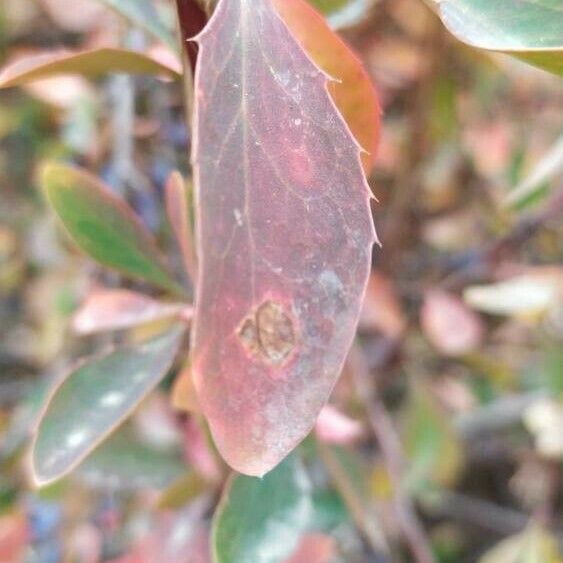
- 🍃 The Leaves: The leaves are typically oval or "obovate" and are characterized by being "entire"—meaning their edges are smooth rather than jagged or toothy like many other barberry species.
- 🌼 The Flowers: In late spring, the shrub drips with small, pale yellow flowers that hang in dense, pendulous clusters (racemes), attracting a variety of early-season pollinators.
- 🔴 The Fruit: By late summer, the plant is decorated with oblong, bright red berries that often persist into the winter, providing a pop of color against the snow.
- ⚔️ The Spines: Watch your fingers! The stems are armed with sharp, three-branched thorns that sit at the base of the leaf clusters, making the plant nearly impenetrable.
🏡 In Your Garden
- 🧱 Tough as Nails: This barberry is exceptionally drought-tolerant and handles poor, rocky soil with ease. It is often used as a "living fence" or security hedge because its thorns are a natural deterrent for intruders and stray animals.
- ☀️ Light & Color: To get the most vibrant berry production and healthy foliage, plant it in a spot that receives full sun. While it can handle partial shade, the growth will be less dense and the berry crop will be thinner.
- ✂️ Pruning Strategy: Because it blooms on the previous year's growth, avoid heavy pruning in early spring if you want to see flowers and fruit. It’s best to shape the plant immediately after the berries fall or in late winter.
⚠️ Safety & Toxicity
- 🐾 Physical Hazard: The most immediate danger is the thorns. They are stiff and sharp, capable of causing painful punctures or skin irritation. Wear heavy-duty gloves when handling.
- 🧪 Chemical Profile: The ripe berries are generally considered edible (often used in traditional Persian cooking for their tart flavor), but the rest of the plant—roots, bark, and leaves—contains berberine.
- 🤢 Ingestion: While berberine has medicinal uses, consuming large quantities of the non-fruit parts can cause upset stomachs, lethargy, or skin flushing in pets and small children.
✨ Fun Fact
The specific epithet integerrima comes from the Latin word for "whole" or "undivided." It refers to the plant's smooth leaf margins, which distinguish it from the "toothed" leaves of its famous cousin, the Common Barberry (Berberis vulgaris).

Detailed Care Instructions
Growing Berberis integerrima, often known as Indian barberry or cruel barberry, can be a rewarding gardening endeavor. This deciduous shrub is known for its attractive foliage and bright yellow flowers. Here are some guidelines to help you successfully grow Berberis integerrima:
1. Climate and Hardiness
- Berberis integerrima is hardy in USDA zones 5 to 8. It prefers temperate climates, so ensure that your local climate is suitable.
2. Soil Requirements
- The plant prefers well-draining soil with a pH between 6.0 and 7.5. Sandy or loamy soil types are ideal. If your soil is heavy clay, consider amending it with organic matter or choosing a raised bed.
3. Sunlight Requirements
- Berberis integerrima thrives in full sun to partial shade. Ideally, provide at least 6 hours of direct sunlight daily for optimal growth.
4. Watering
- While establishing, ensure the plant receives regular watering, but avoid waterlogging. Once established, Berberis integerrima is quite drought-tolerant.
5. Planting
- Timing: Plant in early spring or fall when temperatures are moderate.
- Spacing: Space plants approximately 3 to 5 feet apart, as they can grow quite wide.
- Depth: Dig a hole that is twice the width of the root ball and just as deep. Place the plant in the hole and fill in with soil, ensuring the top of the root ball is level with the soil surface.
6. Fertilization
- Fertilize sparingly. You can apply a balanced fertilizer in spring to promote growth, but avoid over-fertilizing, as this can lead to excessive leaf growth rather than healthy flowering.
7. Pruning
- Pruning should be done in late winter or early spring to maintain shape and encourage bushiness. Remove dead or damaged branches and thin out crowded sections.
8. Pests and Diseases
- Berberis integerrima is relatively resistant to pests and diseases, but keep an eye out for aphids or powdery mildew. Treat any infestations with appropriate organic insecticides or fungicides.
9. Harvesting
- If you’re interested in the plant for its berries or medicinal qualities, note that the fruits typically appear in late summer to fall. Harvest them when ripe.
10. Companion Planting
- Consider planting Berberis integerrima with other drought-tolerant plants, ground covers, or ornamental grasses to create a diverse garden bed.
By following these guidelines, you should be on your way to successfully growing Berberis integerrima. Be patient, as it may take some time to establish, but with proper care, it can be a beautiful addition to your landscape.
Watering a Berberis integerrima, a hardy shrub known for its robust structure and tolerance to various climates, requires attention to a few key factors:
- Soil Consideration: Ensure that the soil is well-draining. This species prefers loamy or sandy soils and can suffer from root rot if the soil retains too much moisture. Conduct a soil moisture test if possible.
- Watering Schedule: During the establishment phase (the first year after planting), frequent watering is crucial. Water the plant deeply about once a week, or more often in very hot or dry conditions. Once established, the plant is more drought-resistant and typically requires less frequent watering, around every 2-3 weeks, adjusting based on rainfall.
- Deep Watering Technique: Apply water directly at the base of the plant rather than overhead. This encourages deep root growth. Use a soaker hose or drip irrigation system if available. If watering manually, aim to apply water until it penetrates at least 6-12 inches into the soil.
- Signs of Under or Overwatering: Monitor the plant for signs of distress. Yellowing leaves might indicate overwatering, while wilting or browning leaf edges can suggest underwatering. Adjust your watering frequency accordingly.
- Seasonal Adjustments: In colder months, reduce watering frequency as the plant enters dormancy. In the spring and summer, increase watering based on temperature and rainfall levels, ensuring not to let the soil dry out completely during prolonged dry spells.
- Mulching: Consider applying a layer of organic mulch around the base of the shrub. This helps retain soil moisture, regulate temperature, and suppress weeds, thereby reducing the need for frequent watering.
By following these guidelines, you can effectively water the Berberis integerrima and help it thrive in your garden or landscape setting.
To fertilize Berberis integerrima effectively, follow these instructions:
- Timing: Fertilize in spring, just as new growth begins. A second application can be made in mid-summer if necessary.
- Type of Fertilizer: Use a balanced, slow-release fertilizer with an N-P-K ratio of approximately 10-10-10 or a similar formulation. Alternatively, an organic fertilizer can also be beneficial.
- Application Rate: Follow the manufacturer's recommendations for application rates, typically around 1 to 2 cups per plant, depending on its size.
- Method of Application:
- Evenly distribute the fertilizer around the base of the plant, avoiding direct contact with the stems to prevent burning.
- Work it into the top layer of soil lightly with a rake or by hand.
- Evenly distribute the fertilizer around the base of the plant, avoiding direct contact with the stems to prevent burning.
- Watering: After applying the fertilizer, water the plant thoroughly to help the nutrients penetrate the root zone.
- Additional Tips: Monitor the plant for signs of nutrient deficiencies or excesses, such as yellowing leaves or stunted growth. Adjust fertilization accordingly in future seasons based on the plant's response and soil fertility.
- Soil Testing: Consider conducting a soil test every few years to determine nutrient levels and pH, allowing for tailored fertilization based on the specific needs of the plant.
By following these guidelines, you can promote healthy growth and vibrant foliage for Berberis integerrima.
Berberis integerrima thrives in well-drained soil that is moderately fertile. The ideal soil type is sandy to loamy, which provides adequate drainage while retaining some moisture and nutrients. The soil pH should be slightly acidic to neutral, ideally in the range of 6.0 to 7.0.
To enhance soil quality, you can incorporate organic matter such as compost or well-rotted leaf mulch, which improves drainage and nutrient content. It's important to ensure that the soil is not overly compacted, as this can impede root development and water infiltration. If you are using potting soil, look for a mix designed for shrubs or general-purpose use that includes components for aeration.
When planting, avoid waterlogged conditions, as excessive moisture can lead to root rot. A mix that balances moisture retention with drainage will provide a suitable environment for healthy growth.
To propagate Berberis integerrima, a methodical approach can be taken using both seeds and cuttings. Below are the details for each propagation method:
Propagation by Seeds
- Seed Collection:
- Collect ripe seeds from mature fruits, typically in late summer or early fall.
- Ensure the seeds are fully dried before storage.
- Collect ripe seeds from mature fruits, typically in late summer or early fall.
- Stratification:
- To improve germination rates, seeds benefit from a cold stratification period. This mimics winter conditions.
- Place seeds in a moist substrate (e.g., sand or peat moss) and store them in a refrigerator for about 30-60 days.
- To improve germination rates, seeds benefit from a cold stratification period. This mimics winter conditions.
- Sowing:
- After stratification, prepare a seed-starting mix or well-draining potting soil.
- Sow the seeds at a depth of about 1/4 inch.
- Water gently to avoid displacing the seeds.
- After stratification, prepare a seed-starting mix or well-draining potting soil.
- Germination Conditions:
- Place the container in a location with bright, indirect light.
- Maintain consistent moisture in the soil without over-saturating it.
- Germination may take several weeks to a few months.
- Place the container in a location with bright, indirect light.
- Transplanting:
- Once seedlings have developed a few true leaves and are large enough to handle, transplant them into individual pots.
- Gradually acclimate them to outdoor conditions before planting in the garden.
Propagation by Cuttings
- Once seedlings have developed a few true leaves and are large enough to handle, transplant them into individual pots.
- Timing:
- The best time to take cuttings is during late spring to early summer when the plant is actively growing.
- The best time to take cuttings is during late spring to early summer when the plant is actively growing.
- Cutting Selection:
- Choose healthy, non-flowering stems. Look for semi-hardwood cuttings, which are partially mature and firm.
- Cut sections approximately 4-6 inches in length, ensuring each cutting has a few leaves and at least one node.
- Choose healthy, non-flowering stems. Look for semi-hardwood cuttings, which are partially mature and firm.
- Preparing Cuttings:
- Remove any lower leaves to minimize moisture loss and focus energy on root development.
- Optionally, dip the cut end in rooting hormone to enhance root formation.
- Remove any lower leaves to minimize moisture loss and focus energy on root development.
- Planting the Cuttings:
- Insert the cuttings into a pot filled with a well-draining potting mix, burying them to a depth of about 2 inches.
- Water the cuttings well and ensure the medium is consistently moist but not waterlogged.
- Insert the cuttings into a pot filled with a well-draining potting mix, burying them to a depth of about 2 inches.
- Creating a Humid Environment:
- Cover the cuttings with a clear plastic bag or place them in a propagator to maintain humidity. Ensure there is airflow to prevent mold.
- Cover the cuttings with a clear plastic bag or place them in a propagator to maintain humidity. Ensure there is airflow to prevent mold.
- Care for Cuttings:
- Place the pot in a warm, bright location but avoid direct sunlight that could scorch the cuttings.
- After a few weeks, check for root development by gently tugging on the cuttings; roots should show resistance.
- Place the pot in a warm, bright location but avoid direct sunlight that could scorch the cuttings.
- Transplanting:
- Once the cuttings have established roots (usually several weeks), they can be transplanted into larger pots or directly into the ground, as appropriate.
Both methods require patience and proper care, but they can successfully yield new plants.
- Once the cuttings have established roots (usually several weeks), they can be transplanted into larger pots or directly into the ground, as appropriate.







