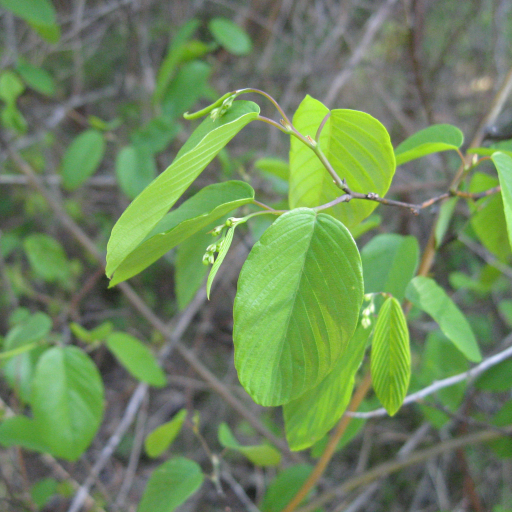
Plant Overview
Often called the Alabama Supplejack or Rattan Vine, this vigorous woody climber is a staple of the American Southeast's bottomlands and swamps. Its incredibly strong, flexible stems were once highly prized for crafting sturdy walking sticks and durable wicker-style furniture. In the wild, it creates dense, tangled thickets that provide essential sanctuary and nesting sites for a variety of songbirds.
🔍 How to Identify
- 🌿 The Leaves: Look for distinct, prominent parallel veins that look like the rungs of a ladder, set against a dark green, oval-shaped leaf with smooth edges.
- 🐍 The Stem: The bark is remarkably smooth and ranges from a deep olive green to almost black, often appearing "muscular" or marble-like as it twists tightly around host trees.
- 🍇 The Fruit: In late summer, the vine produces clusters of small, oblong berries that transition from a pale green to a deep, waxy bluish-black.
🏡 In Your Garden
- 🏗️ Structural Support: Because this vine climbs by "twining" (wrapping its body around objects), it requires a very sturdy trellis or fence; it is strong enough to accidentally "girdle" or choke young, thin-trunked trees.
- 💧 Moisture Nuance: While it naturally thrives in damp floodplains and swamps, it is surprisingly adaptable to average garden soil as long as it doesn't face extreme, prolonged bone-dry conditions.
⚠️ Safety & Toxicity
- 🟢 General Safety: Berchemia scandens is generally considered non-toxic to humans and pets, making it a safer alternative to invasive vines like Oriental Bittersweet.
- 🚫 Not for Snacking: While not inherently poisonous, the berries are bitter and unpalatable to humans; they should be left for the birds, who rely on them as a high-energy food source.
✨ Fun Fact
The "Supplejack" earned its name because the vines are nearly impossible to break by hand. In the 1800s, it was so famous for its durability that "Supplejack" became a common nickname for anything or anyone that was unusually tough and flexible!

Detailed Care Instructions
To grow Berchemia Scandens, also known as American supplejack or rattan vine, you can follow these steps:
- Climate: Ensure that you are living in a suitable climate for the plant. Berchemia Scandens thrives in USDA hardiness zones 6 to 10.
- Location: Choose a suitable location for planting. Berchemia Scandens prefers partial shade to full sun but can tolerate a wide range of light conditions.
- Soil: The plant prefers well-draining soil with a slightly acidic to neutral pH. Amend heavy clay soil with organic matter to improve drainage.
- Planting: Dig a hole twice as wide and deep as the plant's root ball. Place the plant in the hole, ensuring that the crown is level with or slightly above the soil surface. Backfill the hole with soil and gently tamp it down.
- Watering: Water the plant thoroughly after planting to ensure good root establishment. Subsequently, water regularly, providing a deep soak rather than frequent shallow watering.
- Mulching: Apply a layer of organic mulch around the base of the plant to help retain moisture, suppress weed growth, and regulate soil temperature.
- Pruning: Prune the plant in late winter or early spring to remove any dead or damaged branches and maintain its shape. Berchemia Scandens can become quite large, so regular pruning may be necessary to control its size.
- Fertilizing: Berchemia Scandens typically does not require much fertilization. However, you can apply a balanced slow-release fertilizer in early spring if necessary.
- Support: As Berchemia Scandens is a vine, it will benefit from a sturdy support structure such as a trellis or fence to climb on. Train the vine to grow along the support by gently tying it with soft materials.
- Pests and diseases: Watch for common pests like aphids, spider mites, or scale insects. Treat any infestations promptly with insecticidal soap or neem oil. Berchemia Scandens is generally resistant to most diseases.
Remember to research specific care instructions for your specific climate and follow any additional recommendations from local gardening experts.

Place in a window with dappled sun or a spot in the middle of a room. Or directly in a window facing west or east.

Berchemia scandens is a type of plant that requires regular watering to keep it healthy. To water this plant, you should start by checking the soil moisture level with your finger. If the soil feels dry to the touch, it's time to water the plant.
To water Berchemia scandens, you should use a watering can or a hose with a gentle spray nozzle. Water the soil around the base of the plant, being careful not to splash water on the leaves or stems. Allow the water to soak in and then repeat the process if necessary.
It's important not to overwater Berchemia scandens, as this can lead to root rot and other problems. As a general rule, you should aim to water the plant once or twice a week, depending on the weather conditions and the soil type.
In addition to regular watering, Berchemia scandens also benefits from occasional fertilization. You can use a balanced fertilizer once a month during the growing season to help your plant thrive.
To fertilize the Berchemia Scandens plant, follow these instructions:
- Choose a balanced, water-soluble fertilizer with a ratio of 10-10-10 or similar.
- Dilute the fertilizer according to the package instructions. Generally, a dilution ratio of 1 tablespoon of fertilizer per gallon of water is recommended.
- Water the plant thoroughly before applying the fertilizer to ensure proper absorption.
- Pour the diluted fertilizer solution around the base of the plant, avoiding direct contact with the leaves or stems.
- Apply the fertilizer once every two to four weeks during the growing season, which is typically spring through summer.
- Adjust the frequency and dosage of the fertilizer application according to the plant's response. If the leaves are turning yellow or growth is stunted, reduce the amount of fertilizer used.
- Always read and follow the instructions on the fertilizer packaging for specific guidance and precautions.
- Regularly water the plant and provide adequate sunlight to complement the fertilization process and promote healthy growth.
The ideal soil for Berchemia scandens should be well-draining and slightly acidic, with a pH range of 5.5 to 6.5. It should be rich in organic matter and nutrients, such as nitrogen, phosphorus, and potassium. The soil should also have good water retention capacity, but not be waterlogged or prone to waterlogging. The plant prefers loam or sandy loam soils, and it is important to ensure that the soil is not compacted or heavy. It is recommended to mix the soil with organic matter such as compost or well-rotted manure before planting.
Berchemia scandens is a flowering vine native to the eastern United States and Mexico. Propagating this plant can be done through several methods, including seed propagation, stem cuttings, layering, and division. Different techniques have varying success rates, so it's advised to try multiple methods for the best results.
- Seed Propagation:
- Start by collecting ripe berries from a mature Berchemia scandens plant.
- Extract the seeds from the berries and clean them by removing any pulp or debris.
- Soak the seeds in a container of water for 24 hours to soften the outer seed coat.
- Fill a seed tray or pots with a well-draining potting mix.
- Place the seeds on the surface of the soil and lightly cover them with a thin layer of additional potting mix.
- Water the seeds gently, keeping the soil moist but not waterlogged.
- Germination may take a few weeks to a few months, and it's important to provide a warm and humid environment to aid growth.
- Start by collecting ripe berries from a mature Berchemia scandens plant.
- Stem Cuttings:
- Select a healthy, non-flowering stem from the parent plant, preferably in spring or early summer.
- Cut a 4-6 inch section of the stem just below a set of leaves using a sterilized pruning shear.
- Remove the lower leaves, leaving only a few at the top.
- Dip the cut end in a rooting hormone powder to promote root development (optional).
- Insert the cutting into a well-draining potting mix or into a container filled with water.
- Place the cutting in a warm and bright area, avoiding direct sunlight.
- Keep the soil or water consistently moist, misting the leaves regularly to maintain humidity.
- After a few weeks, roots should begin to develop. Once the roots are well-established, the cutting can be transplanted into a larger container or planted outdoors.
- Select a healthy, non-flowering stem from the parent plant, preferably in spring or early summer.
- Layering:
- Select a flexible stem from the parent plant that can be bent down to the ground without breaking.
- Choose a spot where the stem can easily make contact with the soil.
- Remove any leaves from the section that will be buried in the soil.
- Make a small incision on the stem where it touches the ground, ensuring it's not completely detached from the parent plant.
- Gently bury the wounded part of the stem in a prepared soil mixture, leaving the tip above the ground.
- Secure the buried section in place with wire, a rock, or a U-shaped staple.
- Water the area regularly to maintain soil moisture and ensure successful rooting.
- After several months, new roots should develop from the buried stem. Once established, the new plant can be separated from the parent plant and planted elsewhere.
- Select a flexible stem from the parent plant that can be bent down to the ground without breaking.
- Division:
- Dig up the parent plant carefully, making sure to retain as much root mass as possible.
- Divide the plant into smaller sections, ensuring each section has a portion of the root system and shoots.
- Replant the divided sections into well-prepared soil, making sure they are at the same depth as they were before.
- Water the newly divided plants thoroughly to eliminate any air pockets and encourage root establishment.
- Maintain regular watering until the plants are well-established.
It's essential to note that Berchemia scandens prefers a well-draining soil, ample sunlight, and regular watering to thrive. Additionally, specific propagation techniques may work better depending on the specific environmental conditions, so it's worth experimenting with various methods to increase success rates.
- Dig up the parent plant carefully, making sure to retain as much root mass as possible.








