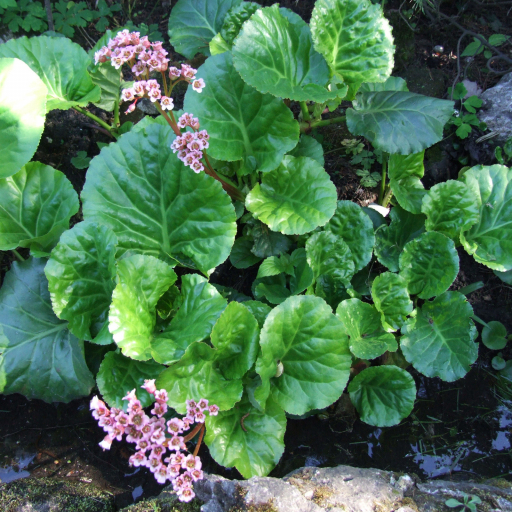
Plant Overview
Commonly known as Heartleaf Bergenia or the whimsical "Pigsqueak," this Siberian native is a powerhouse of the garden. Renowned for its oversized, leathery foliage that resembles an elephant's ears, it brings a dramatic, architectural texture to shady corners. It is a favorite among gardeners for its "iron-clad" constitution, surviving harsh winters and bouncing back with vibrant pink blooms every spring.
🔍 How to Identify
- 🐘 The Foliage: Large, heart-shaped leaves that are thick, waxy, and evergreen. They often grow in dense, low-lying clumps that look almost tropical despite their cold-hardiness.
- 🌸 The Blooms: In early spring, thick, succulent-like stalks rise above the leaves, carrying clusters of bell-shaped flowers in shades of deep pink, magenta, or soft white.
- 🍂 The Winter Glow: During the colder months, the deep green leaves undergo a stunning transformation, turning shades of burnished bronze, purple, or ruby red.
🏡 In Your Garden
- 🧱 Unstoppable Groundcover: This plant thrives in the "difficult" spots where others struggle, such as heavy clay soil or deep shade. It spreads slowly through thick rhizomes, making it an excellent weed-suppressing carpet.
- 💧 The "Why" of Watering: While it loves moisture, its thick, cabbage-like leaves are surprisingly drought-tolerant once established. However, if it gets too dry in high heat, the leaf edges may crisp, so a thick layer of mulch is its best friend.
- 🐌 Slug Resistance: Unlike many other shade-loving plants (like Hostas), the leathery, tough texture of Bergenia leaves makes them far less appetizing to slugs and snails.
⚠️ Safety & Toxicity
- 🟢 Safe for Most: Bergenia cordifolia is generally considered non-toxic to humans and common household pets like cats and dogs.
- 👅 Mild Irritation: While it isn't poisonous, the leaves contain tannins. If a curious toddler or pet decides to chew on them, it might cause a bitter taste or very mild stomach upset, but it is not a cause for medical alarm.
✨ Fun Fact
The nickname "Pigsqueak" isn't just a cute name—it’s an instruction! If you rub a fresh, clean leaf between your thumb and forefinger, it produces a high-pitched "squeak" that sounds remarkably like a tiny pig.

Detailed Care Instructions
Plant bergenia, in the ground or a container, just to the top of the root ball. Space these plants about 12 to 18 inches apart if planting multiple ones together.
Do bergenia attract butterflies and bees?
Pollinators including bees, butterflies, and hummingbirds are attracted to the flowers of bergenia.
What plants are good companions for bergenia?
Other flowering plants that are good companion plants with bergenia and provide a multitude of colors include geranium, pulmonaria, lungwort, and brunnera.
| Lighting | Full Sun |
To grow Bergenia Cordifolia plant, follow these steps:
- Choose the right location: Bergenia Cordifolia prefers a partially shaded area in your garden. It can also tolerate full sun, but some shade during the hottest parts of the day is beneficial, especially in hotter climates.
- Prepare the soil: Bergenia Cordifolia prefers well-drained soil that is rich in organic matter. Prepare the soil by adding compost or well-rotted manure to improve its fertility and drainage.
- Planting: Dig a hole slightly larger than the plant's root ball and place the plant in the hole, making sure that the crown (where the stems emerge from the root) is level with or slightly above the soil surface. Gently backfill the hole with soil and firm it around the plant.
- Watering: Water the plant thoroughly after planting and keep the soil evenly moist, especially during the growing season. However, avoid overwatering, as this can lead to root rot.
- Mulching: Apply a layer of organic mulch, such as wood chips or shredded bark, around the base of the plant. This helps retain moisture, suppresses weeds, and keeps the soil cool.
- Fertilizing: Feed the plant with a balanced, slow-release fertilizer in spring or use a liquid fertilizer every few weeks during the growing season to promote healthy growth.
- Pruning: Remove any dead or damaged leaves as needed throughout the year. Cut back the foliage to the ground in late winter or early spring to make room for new growth.
- Division: Over time, Bergenia Cordifolia can become crowded. You can divide the plant every few years in spring or autumn to maintain its vigor. Dig up the entire clump and carefully separate the sections, ensuring each division has enough roots. Replant the divisions in prepared soil and water well.
- Pests and diseases: Bergenia Cordifolia is relatively pest and disease-resistant. However, it can occasionally be affected by snails, slugs, or powdery mildew. Use appropriate pest control measures or fungicides if necessary.
By following these steps, you should be able to successfully grow Bergenia Cordifolia plant in your garden.

Place in a window with dappled sun or a spot in the middle of a room. Or directly in a window facing west or east.

To water this plant, you should check the soil to make sure it is dry before watering it. The best way to water it is to give it a deep soak and wait for the soil to dry slightly before watering it again. It is important not to let the plant sit in standing water, and it is best to water it at the base of the plant rather than overhead. During the winter months, it is important to reduce the amount of water given to the plant to prevent over-saturation.
To fertilize this plant, begin by choosing a slow-release granular plant food with a balanced NPK ratio. In the early spring, spread the fertilizer around the base of the plant, being careful not to place it directly on the foliage. Water thoroughly after fertilizing, and continue to water regularly throughout the growing season to ensure the nutrients are effectively taken up by the plant. Avoid fertilizing during periods of drought or when the plant is experiencing stress, as this can cause fertilizer burn or other negative effects.
Bergenia Cordifolia prefers a well-draining soil that is rich in nutrients. The soil should be alkaline or neutral in pH, with a range of 5.5 to 7.5. A peat-based potting mix mixed with perlite or sand is ideal for container-grown plants. In the garden, amend the soil with compost or well-rotted manure to improve fertility and drainage. Avoid planting in heavy, clay soils that retain moisture and can lead to root rot.
Bergenia cordifolia plants can be propagated through division or leaf cuttings. To propagate through division, carefully extract the plant from the soil and separate the roots into smaller divisions, ensuring that each division has leaves and roots of its own. These smaller divisions can then be potted and watered, or replanted in a new location.
To propagate through leaf cuttings, select a healthy leaf and cut it at its base. Place the leaf cutting in a pot filled with moist soil and cover it with a plastic bag to create a humid environment. Water the cutting regularly and monitor its growth until new plantlets emerge.
It is important to note that proper care and handling is required to successfully propagate Bergenia cordifolia. This includes providing adequate water, sunlight, and soil nutrients for optimal growth.








