Plant Overview
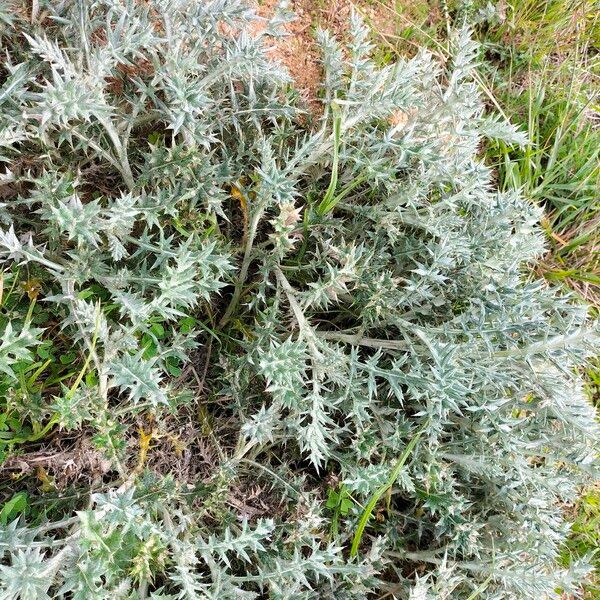
Known as the "Hardy Berkheya" or sometimes the "African Thistle," this South African native is a fascinating member of the daisy family that has traded soft petals for biological armor. It looks like a sunflower that decided to grow a set of teeth, featuring brilliant yellow blooms protected by a fortress of silver-green, spiny foliage. It is a favorite for xeriscaping and rock gardens where a "tough-as-nails" aesthetic is desired.
🔍 How to Identify
- 🌵 The Foliage: The leaves are silver-green, deeply lobed, and edged with sharp, needle-like spines that warn off any curious grazers.
- 🌻 The Blooms: Despite its prickly nature, it produces cheerful, bright yellow daisy-like flowers with distinct ray florets and a central disc.
- 🏗️ Growth Habit: It typically grows as a low, mounding perennial or subshrub, often sprawling across the ground to form a dense, protective mat.
🏡 In Your Garden
- ☀️ Sun Seeker: This plant is a sun-worshipper. It requires full, intense light to bloom properly and will become "leggy" or weak if tucked away in the shade.
- 🏜️ Drainage is King: Because it possesses a deep taproot designed to find water in dry African soils, it is incredibly drought-tolerant. However, this taproot makes it very difficult to transplant; choose its "forever home" in gritty, well-draining soil carefully.
- 🐝 Pollinator Magnet: While it keeps mammals at bay with its spines, its nectar-rich yellow flowers are an open invitation to bees and butterflies, making it a great choice for a wildlife-friendly dry garden.
⚠️ Safety & Toxicity
- ⚔️ Physical Hazard: Berkheya rigida is not known to be chemically toxic to humans or pets. However, its spines are exceptionally sharp and can easily puncture skin or paws.
- 🧤 Handling: Always wear thick, leather gardening gloves when pruning or weeding around this plant. It is best planted away from high-traffic pathways where children or pets might accidentally brush against it.
✨ Fun Fact
Many Berkheya species are "hyperaccumulators," meaning they have the unique scientific ability to soak up heavy metals like nickel from the soil without being harmed—a trait researchers study for cleaning up polluted environments!

Detailed Care Instructions

Some plants require more regular watering than others, which should be done every few days. It's critical to maintain the soil moist all of the time. The water requirements of the same plant placed in pots with varying sizes will differ. Because the water in the smaller pot evaporates faster than the water in the larger pot, it will require more watering. Regardless of pot size, the surface should constantly be maintained moist.







