Plant Overview
Imagine walking into your garden at sunrise and being greeted by the rich, decadent aroma of a fresh batch of brownies. Known commonly as the Chocolate Daisy or Lyreleaf Greeneyes, this resilient wildflower from the American Southwest turns your outdoor space into a natural confectionery. Its cheerful yellow petals hide one of nature's most delightful olfactory surprises, making it a favorite for sensory gardens.
🔍 How to Identify
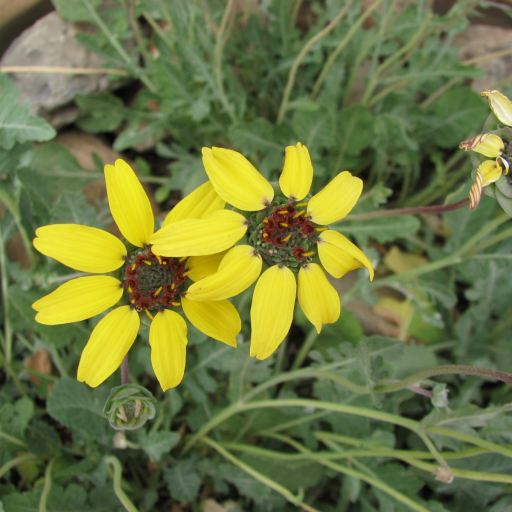
- 🌼 The "Green Eye": The center of the flower features a prominent maroon-to-green disc that looks like a velvety eye, which remains on the stem even after the yellow petals fall off.
- 🍫 Decadent Fragrance: The most iconic feature is the heavy scent of cocoa or baking chocolate, which is strongest in the cool air of the early morning.
- 🌿 Lyrate Foliage: Its gray-green leaves are deeply lobed and shaped like a lyre (or a fiddle), growing in a low-mounded rosette that hugs the ground.
🏡 In Your Garden
- ☀️ Sun Worshiper: These daisies thrive in harsh, hot conditions and actually prefer rocky, lean, or sandy soils over rich, pampered garden beds. Over-watering or heavy fertilizing can actually make them "floppy."
- 🦋 Pollinator Magnet: While we love the chocolate scent, bees and butterflies are drawn to the nectar, making it an essential addition to any drought-tolerant wildlife sanctuary or xeriscape.
- ✂️ The "Morning" Bloomer: The yellow ray petals often curl up or drop in the afternoon heat, so place them near a patio or walkway where you can enjoy them during your morning coffee.
⚠️ Safety & Toxicity
- ✅ Safe Status: The Chocolate Daisy is generally considered non-toxic to humans, cats, and dogs.
- 🚫 Not a Snack: Despite the convincing chocolate smell, the plant is not edible for humans or pets. It won't taste like candy—it’s bitter and may cause mild stomach upset if ingested.
✨ Fun Fact
The chocolate scent is so realistic that some gardeners report being "tricked" into thinking a neighbor is baking! Historically, some Indigenous tribes used the smoke from dried, burning roots of the Berlandiera lyrata to treat nervousness or to clear the "fog" from a tired mind.

Detailed Care Instructions
To grow Berlandiera Lyrata, also known as chocolate flower or chocolate daisy, you can follow these steps:
- Choose a suitable location: Berlandiera Lyrata thrives in full sun to partial shade conditions. Ensure the selected spot receives at least six hours of direct sunlight daily.
- Prepare the soil: Berlandiera Lyrata prefers well-draining soil with good organic matter. Mix compost or well-rotted manure into the soil before planting to improve its fertility and drainage. Avoid heavy clay soils that retain water.
- Sow the seeds: Berlandiera Lyrata can be grown from seeds. Sow the seeds in early spring when the soil has warmed up. Sprinkle the seeds on the prepared soil, but avoid burying them too deep. Lightly press them into the soil without covering them completely.
- Watering: Keep the soil consistently moist but avoid overwatering. Water the newly planted seeds regularly until they germinate. Once they establish, reduce the frequency but ensure the soil doesn't dry out completely.
- Fertilization: Berlandiera Lyrata doesn't require heavy fertilization. However, you can apply a balanced, slow-release fertilizer during the growing season to supply necessary nutrients. Follow the package instructions for the correct amount to use.
- Weed control: Regularly remove any weeds that compete with the young plants for nutrients and water. Be careful not to disturb the delicate roots of Berlandiera Lyrata while weeding.
- Pruning: Berlandiera Lyrata doesn't require extensive pruning. However, you can remove any dead flowers or leaves to maintain a tidy appearance. Additionally, you can trim back the plant by about one-third in early spring to encourage bushier growth.
- Protection from pests and diseases: Monitor the plant for any signs of pests like aphids, caterpillars, or snails. Use appropriate organic insecticides or pesticides to control infestations. Berlandiera Lyrata is generally resistant to diseases.
- Mulching: Apply a layer of organic mulch around the base of the plant to conserve moisture, suppress weed growth, and protect the roots during extreme temperatures.
- Harvesting seeds: In late summer or early fall, the plant produces seed pods that contain small seeds. Allow the pods to dry on the plant, then collect and store the seeds in a dry, cool place for future planting.
With proper care and maintenance, Berlandiera Lyrata should grow well and provide beautiful flowers. Enjoy the delightful chocolate fragrance emitted by its blossoms!

Place in a bright room that is sun drenched almost all day. Or directly in a south-facing window.

Berlandiera Lyrata is a plant that requires adequate watering for optimal growth and development. When watering Berlandiera Lyrata, it is important to ensure that the soil is evenly moist, but not waterlogged. Overwatering can lead to root rot and adversely affect the plant's growth.
One way to water Berlandiera Lyrata is to check the top inch of soil and water if it is dry to the touch. It is essential to water the plant at the base to avoid wetting the foliage, which can lead to fungal diseases. This can be achieved by using a watering can, hose, or drip irrigation system.
During hot summer days, Berlandiera Lyrata may require more frequent watering, while in winter, it may need less frequent watering. However, it is crucial to monitor the moisture levels in the soil as watering requirements may vary depending on the environment and the plant's growth stage.
Another tip to maintain proper moisture levels is to incorporate organic matter such as compost or mulch into the soil. This will help regulate the soil's moisture and provide a steady release of nutrients to the plant.
Overall, when watering Berlandiera Lyrata, it is important to be mindful of the plant's water requirements and refrain from overwatering. Consistent and appropriate watering will ensure healthy growth and development of the plant.
To fertilize this plant, use a balanced, slow-release fertilizer with an NPK ratio of 10-10-10. Apply it once a month during the growing season, which typically lasts from spring to fall. Before fertilizing, make sure the soil is moist but not waterlogged. Spread the fertilizer evenly around the base of the plant and water it in thoroughly. Avoid over-fertilizing, as this can cause damage to the plant.
Berlandiera Lyrata plant prefers soil that is well-draining and rich in organic matter. The pH level of the soil should be slightly acidic to neutral. A mixture of sand, loam and compost can be used as a potting mix for container-bound plants. If planting directly in the ground, it is important to amend the soil with compost or other organic matter to create a nutrient-rich environment. It is also important to ensure adequate drainage by amending heavy clay soils with sand and/or organic matter. Regular watering is important, but the soil should not be waterlogged to avoid root rot.
To propagate this plant, you can take stem cuttings in the spring or summer. Select a healthy stem with a few leaves and cut it right below a node (where the leaves meet the stem). Remove the leaves from the lower half of the cutting, leaving just a few leaves on the top. Dip the bottom of the cutting in rooting hormone powder, then plant it in a soil mix of sand and peat moss. Keep the soil moist but not too wet and place the cutting in a warm, bright location (but not in direct sunlight). After a few weeks, roots should begin to form and new growth will appear. Once the cutting has established roots and new growth, it can be transplanted into a larger pot or outdoors in well-draining soil.
Common pests of the chocolate flower include Spider mites, aphids. Make a habit of checking your chocolate flower frequently for pests so that any infestations can be caught and managed early.








