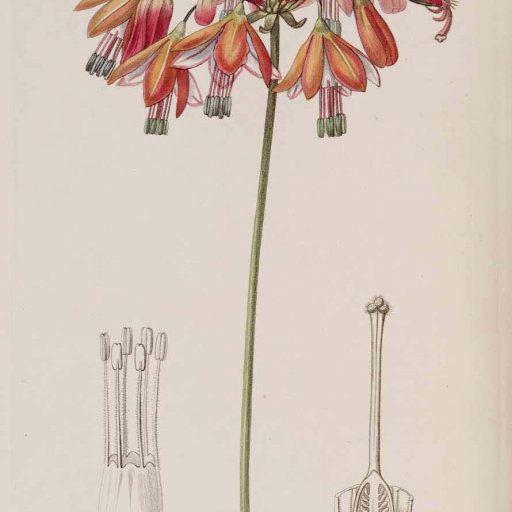
Plant Overview
Known affectionately as "Coral Drops," this stunning Mexican native looks like a cluster of tiny, vibrant parasols suspended in mid-air. Its graceful, swaying stems and nodding flowers give it a whimsical, "Alice in Wonderland" appearance that has made it a prized choice for collectors who enjoy theatrical summer displays.
🔍 How to Identify
- ⛱️ The Flowers: Deep coral or vermillion-red bells that hang downward in an umbrella-like cluster (umbel) at the top of a tall, leafless stalk.
- 🎨 Hidden Patterns: The inside of the flower is even more beautiful than the outside, featuring creamy white centers with striking violet or purple stripes.
- 🍃 The Foliage: Long, thin, grass-like leaves that appear before the flower stalks and often arch toward the ground.
- 📏 The Stature: While the leaves stay low, the slender flowering stems can reach up to 2 feet in height, making the blooms look like they are floating.
🏡 In Your Garden
- 🏺 Container Queen: Because these plants require exceptionally sharp drainage to prevent the bulbs from rotting, they are most successfully grown in terracotta pots with a gritty, sandy soil mix.
- 💤 The Sleep Cycle: These are summer-growing bulbs. Once the flowers fade in late summer, the plant will go completely dormant. It is vital to stop watering entirely during this "sleep" phase to keep the bulb healthy for next year.
- ☀️ Sun Seeker: To get those intense coral colors, give them plenty of bright sunlight, though they appreciate a little afternoon shade in scorching hot climates.
⚠️ Safety & Toxicity
- 🐾 Pet & Child Safety: Bessera elegans is generally considered non-toxic to humans and pets. However, the bulbs can be a choking hazard for curious dogs who like to dig.
- 🤢 Ingestion: Like many ornamental bulbs, eating large quantities of the bulb may cause mild stomach upset or nausea. It is best kept as a "look but don't eat" garden guest.
✨ Fun Fact
The genus Bessera was named in honor of Wilibald Swibert Joseph Gottlieb von Besser, a 19th-century botanist. Despite its delicate, fragile appearance, this plant is incredibly resilient in its native rocky slopes of Mexico, where it handles intense heat with ease.

Detailed Care Instructions

Some plants require more regular watering than others, which should be done every few days. It's critical to maintain the soil moist all of the time. The water requirements of the same plant placed in pots with varying sizes will differ. Because the water in the smaller pot evaporates faster than the water in the larger pot, it will require more watering. Regardless of pot size, the surface should constantly be maintained moist.








