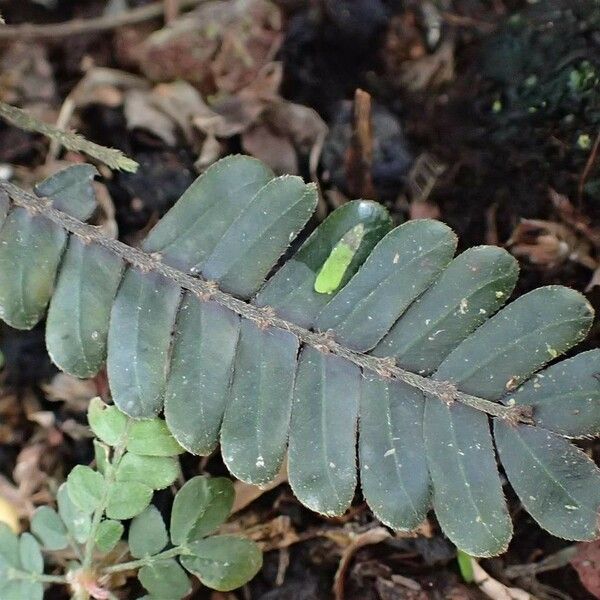
Plant Overview
Often called the "Miniature Palm" or "Little Tree Plant," Biophytum zenkeri is a botanical marvel that looks like a full-grown tropical tree shrunk down to fit in the palm of your hand. Originating from the shaded forest floors of West-Central Africa, it brings an ancient, prehistoric aesthetic to any terrarium or indoor collection. It is best known for its "shy" nature, as it physically reacts to the touch and the setting sun.
🔍 How to Identify
- 🌿 Miniature Stature: It features a single, woody-looking stem topped with a lush "umbrella" of pinnate leaves, rarely exceeding 6–10 inches in height.
- 🍂 Pinnate Foliage: Long, delicate fronds made up of numerous small, oval leaflets arranged in pairs, mimicking the look of a fern or a palm branch.
- 🌸 Hidden Blooms: It produces tiny, five-petaled flowers, usually white or pale pink, that emerge on thin stalks from the very center of the leaf crown.
🏡 In Your Garden
- 💧 The Humidity Requirement: Because it hails from African rainforests, it thrives in high humidity; it is a "diva" when it comes to dry air and will quickly crisp up if the atmosphere is too parched.
- 🌱 Root Sensitivity: This plant possesses a delicate taproot system that hates being disturbed; it is best to choose its home carefully, as "transplant shock" can be fatal to its fragile root structure.
- ☀️ Light Sensitivity: Unlike many tropicals, it prefers dappled or filtered light—reminiscent of the forest floor—and its leaves will physically fold downward at night to conserve moisture.
⚠️ Safety & Toxicity
- 🐕 Pet Safety: While not considered highly toxic, it belongs to the Oxalidaceae family, which contains oxalic acid. Large quantities can cause mouth irritation or stomach upset in curious cats or dogs.
- 👶 Child Safety: It is generally safe to keep indoors, though its delicate leaves are easily damaged by rough handling from curious children who want to see it "move."
✨ Fun Fact
- ✨ Rapid Reflexes: Biophytum zenkeri is one of the rare members of the plant kingdom capable of rapid movement (thigmonasty). If you brush your finger across the leaflets, they will fold up in seconds—a defense mechanism used in the wild to scare off hungry insects!

Detailed Care Instructions
To properly water this type of plant, you should first wait until the soil is completely dry. Then, gently pour water onto the soil, taking care to not let the water overflow from the pot. It is important to water the plant slowly and steadily, allowing the water to soak in and reach the roots. Be sure to avoid getting water on the leaves or stem, as this can contribute to fungal growth or other diseases. Finally, observe the plant closely to see how often it requires watering, as this can vary depending on the environment and the plant's specific needs.
The recommended soil for this plant is a well-draining, fertile soil mix that is rich in organic matter. The soil pH should be slightly acidic to neutral, between 6.0 and 7.0. It is important to avoid heavy clay soils as they can retain too much moisture and lead to root rot. A good soil mix can be created using equal parts of peat moss, perlite, and coarse sand or bark. This will provide good drainage while holding enough moisture and nutrients for the plant to thrive. Additionally, adding a small amount of slow-release fertilizer to the soil mix can help promote healthy growth and flowering.








