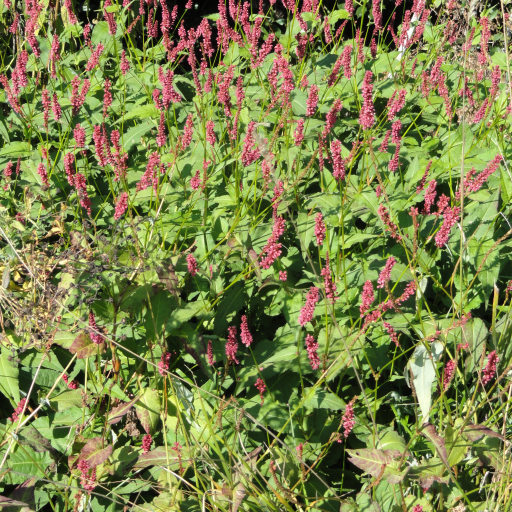
Plant Overview
Native to the cool, misty slopes of the Himalayas, Bistorta amplexicaulis is the long-distance runner of the garden world. Often called "Red Bistort" or "Mountain Fleece," this hardy perennial is beloved for its ability to produce vibrant, poker-straight flower spikes from midsummer all the way until the first frost. It turns a simple border into a sea of swaying crimson "bottlebrushes."
🔍 How to Identify
- 🌸 The Flower Spikes: Slender, upright racemes that look like tiny, fuzzy candles. While most are deep crimson, varieties exist in soft pink and pure white.
- 🍃 Clasping Leaves: The specific name amplexicaulis means "clasping the stem." Look for large, heart-shaped, mid-green leaves that wrap directly around the flowering stems without a leaf stalk.
- 🌿 Growth Habit: It forms dense, bushy clumps that can reach up to 4 feet tall, creating a lush, weed-smothering canopy of foliage.
🏡 In Your Garden
- 💧 The Moisture Lover: This plant is the perfect solution for "heavy" garden spots. It thrives in damp, clay-heavy soils where other plants might rot, and it absolutely hates to dry out during a summer heatwave.
- 🐝 Pollinator Magnet: Because it blooms for months on end, it provides a vital, long-term nectar source for honeybees and hoverflies when other spring flowers have long faded.
- ✂️ Low Maintenance: Unlike many tall perennials, Red Bistort rarely needs staking. Once it is established, its thick rhizomes help it hold its ground, though it may need a little "tough love" pruning to keep it from wandering too far into its neighbor's territory.
⚠️ Safety & Toxicity
- 🟢 Generally Safe: Bistorta amplexicaulis is not considered highly toxic to humans or common household pets.
- 👅 Oxalic Acid: Like its cousins in the Buckwheat family (including Rhubarb), the leaves contain oxalic acid. While not dangerous in small amounts, eating large quantities can cause stomach upset or mouth irritation, so keep it away from curious nibblers.
✨ Fun Fact
The Latin name Bistorta translates to "twice-twisted," referring to the shape of the plant's thick, woody roots, which were historically used in traditional herbal medicine to treat wounds and "cool" the blood.

Detailed Care Instructions
To grow Bistorta amplexicaulis (mountain fleece) plants, follow these steps:
- Location: Choose a suitable location for planting this perennial. Bistorta amplexicaulis prefers full sun or partial shade, but it can tolerate a variety of soil types. Ensure that the area has well-draining soil.
- Planting: Dig a hole in the soil that is slightly larger than the root ball of the plant. Gently place the plant in the hole and backfill with soil, making sure that the crown of the plant is level with the soil surface. Water the plant thoroughly after planting.
- Watering: Ensure the soil remains consistently moist, but not overly saturated. Bistorta amplexicaulis prefers regular watering, especially during dry periods. Mulching around the base of the plant can help retain moisture in the soil.
- Fertilizer: Apply a balanced, slow-release fertilizer in early spring to provide nutrients for growth. Follow the manufacturer's instructions for proper application.
- Pruning: Cut back the faded flower spikes after flowering to encourage new growth and maintain the plant's appearance. In late winter or early spring, cut back the entire plant to encourage fresh growth.
- Division: Over time, the plant may become overcrowded, leading to reduced vigor and flowering. To rejuvenate the plant, dig up the clump and divide it into smaller sections. Replant the divided sections in prepared soil.
- Pests and Diseases: Bistorta amplexicaulis is generally resistant to pests and diseases. However, keep an eye out for slugs, snails, and powdery mildew. Take appropriate measures to control these issues if necessary.
- Winter care: In colder regions, where freezing temperatures occur, apply a layer of mulch around the base of the plant to protect the roots from extreme cold.
By following these guidelines, you can successfully grow Bistorta amplexicaulis plants and enjoy their beautiful flower spikes during the blooming season.

Place in a bright room that is sun drenched almost all day. Or directly in a south-facing window.

Bistorta amplexicaulis plant requires regular watering. The best way to water this plant is to wait until the top inch of soil is dry before giving it a thorough watering. It's important to avoid overwatering this plant as it can lead to root rot, which can damage or kill the plant. To prevent this from happening, make sure the soil has good drainage and only water it when necessary. During periods of drought or high temperatures, you may need to increase the frequency of watering to keep the soil moist. Always water the plant at the base to avoid wetting the foliage, which can lead to fungal diseases. Additionally, it's important to avoid watering late in the day to prevent excess moisture from lingering on the plant overnight.
To promote healthy growth and blooming of this plant, fertilize it once a month during the growing season with a balanced fertilizer, such as a 10-10-10 or 20-20-20. Be sure to follow the instructions on the fertilizer packaging and avoid over-fertilizing, as this can lead to burnt roots and damage the plant. In addition, apply a layer of organic mulch around the base of the plant to retain moisture and provide nutrients to the soil.
When planting this particular plant, it is recommended to use a soil that is well-draining, rich in organic matter, and has a pH level between 5.5 and 7.0. The soil should be slightly acidic to neutral in nature. A recommended soil mix can be a mix of peat moss, garden compost, and coarse sand in equal parts to ensure good drainage and soil aeration. Additionally, adding perlite can also aid in drainage and help prevent compaction. Avoid using heavy clay soils or soils that are very alkaline, as the plant may struggle to grow in these conditions.
Bistorta Amplexicaulis can be propagated by division. First, select a healthy plant that is at least two years old and has multiple shoots. In late autumn or early spring when the plant is dormant, carefully lift it from the ground and gently loosen the soil around the roots. Use a clean, sharp knife or garden shears to cut the plant into sections, making sure that each section has at least one healthy shoot and an adequate amount of roots. Replant each division in a separate location, making sure to keep the soil moist until the plants have established themselves. It is important to note that Bistorta Amplexicaulis prefers to grow in moist soil and partial shade, so choose a suitable planting location.








