Plant Overview
Known as the Slender-stemmed Knotweed or Dwarf Bistort, this charming perennial is one of the first heralds of spring in the woodlands of Japan and Korea. Unlike its larger, more aggressive "Knotweed" cousins, this miniature version is a polite garden guest that forms tidy, low-growing clumps. Its dainty white flower spikes often emerge while the rest of the garden is still waking up from winter.
🔍 How to Identify
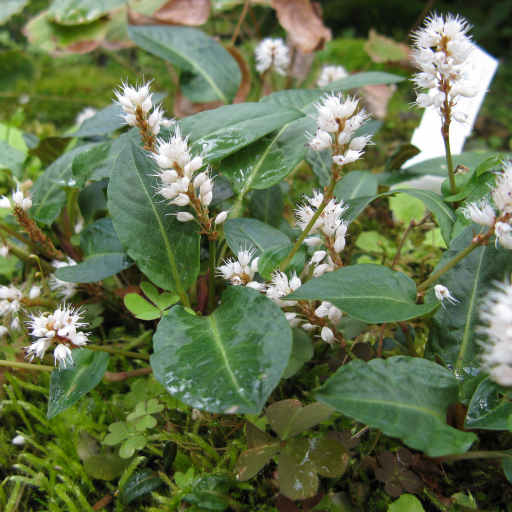
- 🌸 Bottle-brush Blooms: It produces small, fluffy, cylindrical flower spikes (racemes) that are creamy white and appear on leafless stalks in early spring.
- 🍃 Textured Foliage: The leaves are ovate or heart-shaped, featuring a slightly puckered "quilted" texture and a vibrant, soft green hue.
- 🌱 Compact Stature: This is a true dwarf plant, rarely growing taller than 4 to 6 inches, making it look like a tiny forest floor carpet.
🏡 In Your Garden
- 🌓 Shade Specialist: This plant is perfect for the "north side" of the house or under the canopy of deciduous trees. It evolved to bloom before the trees fully leaf out, capturing the early spring sun.
- 💧 Thirsty Roots: Because it naturally grows in moist mountain valleys, it hates drying out. It thrives in humus-rich soil that stays consistently damp—if the soil cracks, the plant will likely go dormant early.
- 🏔️ Rock Garden Hero: Due to its slow-spreading rhizomes and small scale, it is an excellent choice for cool, moist rock gardens or the edges of garden paths.
⚠️ Safety & Toxicity
- 🟢 Non-Toxic: Bistorta tenuicaulis is generally considered safe and is not listed as a major toxic threat to humans or common pets.
- 👅 Oxalate Note: Like many plants in the Buckwheat family, it contains mild amounts of oxalic acid. While not dangerous, it might cause a slight "tingly" sensation or minor stomach upset if large quantities are nibbled by curious cats or dogs.
✨ Fun Fact
The name Bistorta comes from the Latin words bis (twice) and torta (twisted), referring to the strange, S-shaped twist of the plant's underground roots!

Detailed Care Instructions








