Plant Overview
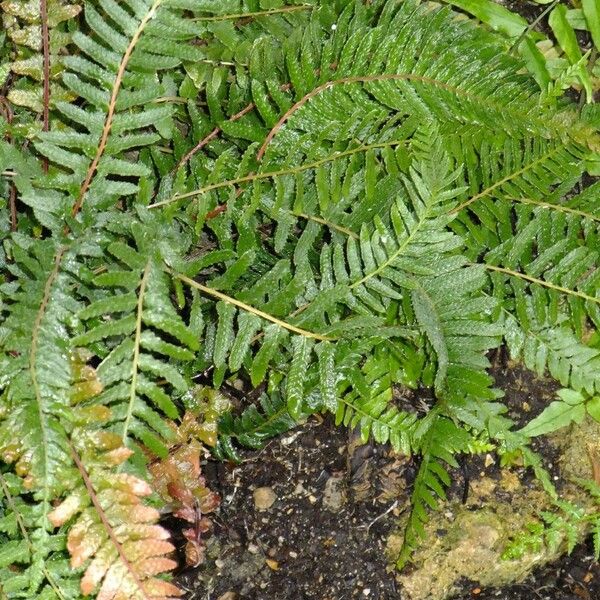
Often referred to as a "Hard Fern" due to its resilient, leathery fronds, Blechnum dives is a botanical bridge to the prehistoric past. This sturdy fern is prized for its architectural symmetry and its ability to thrive in cooler, shaded damp spots where other plants might struggle. It brings a touch of wild, untamed forest floor elegance to any shaded garden or conservatory.
🔍 How to Identify
- 🌿 Frond Texture: Unlike the soft, papery leaves of many ferns, these fronds are stiff, waxy, and remarkably durable to the touch.
- 🎨 Emerging Color: The young, unfurling "croziers" or fiddleheads often emerge with a distinctive bronze or reddish-pink tint before maturing into a deep, glossy emerald green.
- 📐 Growth Pattern: It grows in a neat, symmetrical rosette, with fronds radiating outward like a green crown from a central rhizome.
🏡 In Your Garden
- 💧 Drainage over Dampness: While it loves moisture, it is prone to crown rot if left in standing water. It prefers "humus-rich" soil—think of the fluffy, decaying leaf litter found on a forest floor.
- 🌬️ Humidity Lover: This plant thrives in high humidity. If kept indoors, it appreciates being placed near a humidifier or in a bright bathroom where it can soak up the steam from your morning shower.
⚠️ Safety & Toxicity
- ✅ Safe Status: Blechnum dives is generally considered non-toxic to humans, cats, and dogs.
- 🛡️ Physical Irritation: While not poisonous, the spores on the underside of mature fronds can occasionally cause mild respiratory irritation if handled excessively by sensitive individuals.
✨ Fun Fact
Members of the Blechnum genus are often called "living fossils." Their ancestors populated the earth during the Carboniferous period, meaning these plants were already ancient history by the time the first T-Rex appeared!

Detailed Care Instructions
Blechnum Dives plant is an evergreen fern plant that requires consistent and adequate watering to ensure its healthy growth. To water this plant, it is important to follow the right steps. These are:
- Check the soil: Before watering the plant, make sure to check the soil. Stick your finger or a small stick into the soil to determine how dry or moist it is. If the soil is dry to touch, it's the right time to water the plant.
- Water the plant evenly: When watering Blechnum Dives plant, ensure that the water is evenly distributed around the pot or the plant's base. Overwatering can cause root rot, while under-watering can lead to dehydration and wilting of the plant.
- Amount of water: The amount of water required by the plant may vary depending upon the weather, humidity level, and size of the plant. Generally, the plant should be watered enough to ensure the soil is moist, but not waterlogged.
- Avoid overhead watering: Watering over the foliage can lead to fungal diseases. It is recommended to water the plant from the base.
- Drainage: Make sure the container has drainage holes at the bottom to avoid waterlogging, as this can lead to root rot and the plant's death.
- Frequency: Blechnum Dives plant requires frequent watering during summers and less in the winter season. It is better to water the plant once a week in winter and twice or thrice a week during summer.
By following these watering guidelines, you can help your Blechnum Dives plant stay healthy and vibrant, improving its visual appeal in your garden.
For optimal growth and health, Blechnum Dives plants require well-draining soil that is rich in organic matter. The ideal soil pH range should be between 6.5 and 7.5. The soil should be moist, but not waterlogged, as excess moisture can cause root rot. A mixture of peat moss, sand, and loamy soil can be used to provide a balanced growing medium. Using a slow-release fertilizer during the growing season can also help promote healthy growth.








