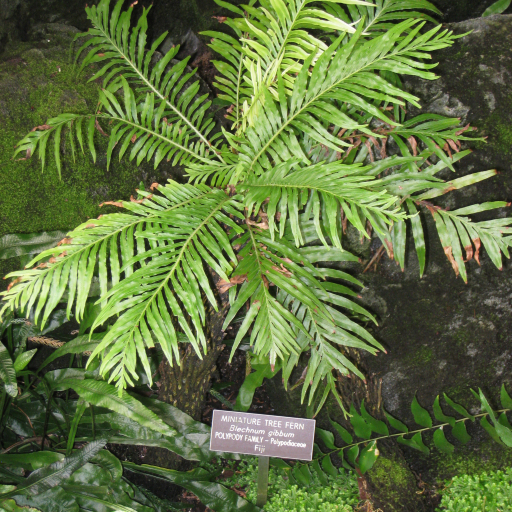
Plant Overview
Often called the "Silver Lady Fern," this architectural beauty bridges the gap between a delicate forest fern and a stately palm tree. Native to the lush, volcanic islands of New Caledonia, it brings a prehistoric, "Jurassic Park" vibe to any indoor space. It is highly prized by hobbyists for its symmetrical growth and its unique ability to eventually form a small, woody trunk as it matures.
🔍 How to Identify
- 🌿 The Crown: It features a perfect, symmetrical rosette of bright, lime-green fronds that emerge gracefully from a central "nest."
- 🌴 The Trunk: Unlike many common house ferns, older specimens develop a short, dark, scaly trunk (stipe), giving it the appearance of a miniature tree fern.
- 🍃 Frond Texture: The fronds are relatively stiff and neatly arranged in a comb-like pattern (pinnate), which creates a much tidier silhouette than the wild, messy foliage of a Boston Fern.
🏡 In Your Garden
- 💧 Consistency is Key: The Silver Lady is quite sensitive to "wet feet" but equally hates a "dry throat." It requires consistently moist soil; if the root ball dries out completely, the fronds will turn crispy and brown almost overnight.
- ☁️ Humidity Requirements: Because its leaves are thin and lack a waxy coating, it thrives in high humidity. It is a perfect candidate for a bright bathroom or a spot near a humidifier to prevent the tips from browning.
- ☀️ Light Sensitivity: It prefers bright, filtered light. Direct afternoon sun will scorch the delicate fronds, while too much shade will make the growth leggy and cause the "trunk" to tilt toward the light.
⚠️ Safety & Toxicity
- 🐾 Pet Friendly: The Silver Lady is generally considered non-toxic to cats and dogs, making it an excellent "stress-free" choice for pet owners.
- 👶 Kid Safe: There are no known irritants or poisons in the foliage. However, the central trunk can be a bit rough and scaly, so it's best handled with care by small children.
✨ Fun Fact
- 🕰️ A Living Fossil: Ferns in the Blechnum genus belong to an ancient lineage that has remained largely unchanged for millions of years. Growing one in your home is like keeping a small, living piece of the Cretaceous period!

Detailed Care Instructions
| Soil Ph | 5.5-7 |
| Humidity | High |
| Lighting | Part Sun |
| Toxicity | Non-Toxic |
| Soil Type | Rich, Humusy Potting Mix |
| Difficulty | Hard |
| Plant Type | Fern |
| Mature Size | Height: 3 Ft. To 6 Ft. |
| Native Area | Vanuatu To New Caledonia |
| Temperature | 15°C - 23°C |
| Sun Exposure | Partial Shade Or Dappled Sunlight |
| Hardiness Zones | 11 |
To grow a Blechnum Gibbum plant, also known as the dwarf tree fern or silver lady fern, follow these steps:
- Purchase a healthy Blechnum Gibbum plant from a reputable nursery or online store. Make sure the plant has lush fronds and no signs of pest or disease.
- Choose a suitable location for your plant. It prefers bright, indirect sunlight, so place it in a well-lit room or a shady spot in your garden. Avoid areas with direct sunlight as it can scorch the fronds.
- Prepare a well-draining potting mix. Use a mixture of peat moss, perlite, and coarse sand to ensure good drainage. The plant likes to be kept slightly moist but not waterlogged.
- Plant the Blechnum Gibbum in a container that has drainage holes at the bottom. Ensure the pot is large enough to allow the roots to spread. Place the plant in the center and fill the pot with the prepared potting mix, gently pressing it around the roots.
- Water the plant thoroughly after planting, ensuring the water reaches the root zone and drains out the bottom. Water regularly to keep the soil slightly moist but not soggy. Increase watering during warmer months and decrease during cooler months.
- Provide humidity for the plant as it prefers a moist environment. You can mist the fronds regularly or place the pot on a tray filled with water and pebbles to increase humidity around the plant.
- Fertilize the Blechnum Gibbum every two to four weeks during the growing season, using a balanced liquid fertilizer diluted to half-strength. This will provide the necessary nutrients for healthy growth.
- Prune any dead or damaged fronds to maintain the plant's appearance and encourage new growth. Use clean, sharp pruning shears to make clean cuts at the base of the frond.
- Monitor for pests such as aphids, scale insects, or mealybugs. If you notice any infestation, treat the plant with an appropriate insecticide or use natural remedies like neem oil or insecticidal soap.
- Keep an eye on the plant's overall health. If you notice any signs of yellowing fronds, wilting, or stunted growth, it may indicate a problem such as overwatering, underwatering, or insufficient light. Adjust your care routine accordingly.
By following these steps and providing proper care, your Blechnum Gibbum plant should grow and thrive, adding beauty to your indoor or outdoor space.

Place in a window with dappled sun or a spot in the middle of a room. Or directly in a window facing west or east.

To water this type of plant, you should first assess the surrounding soil by feeling it with your fingers. If the soil feels dry to the touch, then it is time to water it. The ideal method of watering is to gently pour water onto the soil at the base of the plant until the water drips from the bottom of the pot or container. Avoid watering directly on the leaves as this can lead to leaf damage and fungal growth. It is important to ensure that the plant is not overwatered, as too much water can lead to root rot and other issues. As a general rule, it is best to allow the top layer of soil to dry out between watering sessions to give the plant a chance to absorb enough water and nutrients.
For optimal growth, it is recommended to fertilize this plant every four weeks during the growing season using a balanced liquid fertilizer. Dilute the fertilizer according to package instructions and apply it directly to the soil around the root zone. Avoid direct contact with the foliage to prevent burning or damage to the plant. During the dormant season, reduce fertilization to once every two months. It is important to also keep the soil consistently moist, but not overly saturated, to encourage healthy growth and prevent root rot.
Blechnum Gibbum plant prefers a well-draining soil with a slightly acidic to neutral pH level. The soil should be a mixture of organic matter such as peat moss, compost, or well-aged manure, and a well-draining material such as coarse sand, perlite, or vermiculite. The ideal soil should be loose, crumbly, and able to hold moisture without being waterlogged. Avoid using heavy clay soils or soils that retain too much water as they can lead to root rot. Ensure that the soil is rich in nutrients, especially nitrogen, phosphorus, and potassium, by adding a slow-release fertilizer or organic matter to the soil before planting.
To propagate this plant, you can use the spores that grow underneath the fronds. To collect these spores, wait until the spores turn a rusty brown color on the fronds and then cut off the frond you would like to collect spores from. Place the frond in a paper bag and wait for the spores to separate from the frond. Once the spores are separated, plant them in a mixture of peat moss and perlite, and keep the soil moist. Place the pot in indirect sunlight until the new plant has sprouted, then move to a brighter area.
Common pests of the dwarf tree fern include Mealybugs, spider mites, aphids. Make a habit of checking your dwarf tree fern frequently for pests so that any infestations can be caught and managed early.








