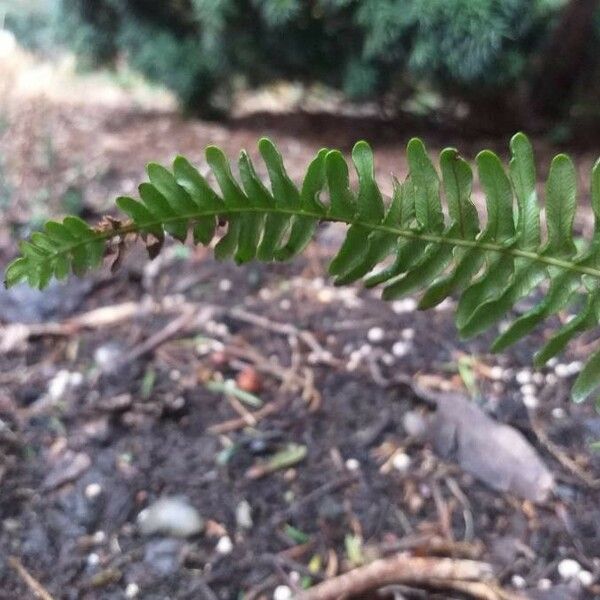
Plant Overview
Blechnum nipponicum, often called the Japanese Deer Fern, is a hidden gem of the woodland floor. Emerging in the spring with delicate, shrimp-pink or bronze-tinted fronds, it slowly matures into a deep, glossy emerald green. It captures the serene essence of ancient Japanese forests, making it a favorite for "Zen" gardens and shaded sanctuary spaces.
🔍 How to Identify
- 🌿 Dual-Frond Style: This fern is "dimorphic," meaning it produces two distinct types of fronds: wide, flat sterile ones that hug the ground, and tall, thin fertile ones that stand upright in the center.
- 🎨 Rosy Beginnings: The most striking feature is the new growth; young fronds sport shades of copper, red, or pink before transitioning to a leathery green.
- 📐 Structured Rosette: The leaves are arranged in a tidy, symmetrical rosette that looks like a green explosion coming from a central crown.
🏡 In Your Garden
- 🪵 Acidic Appetite: Like many mountain forest dwellers, this fern thrives in "ericaceous" (acidic) soil. It performs best when the ground is enriched with leaf mold or composted pine needles.
- 💧 The Moisture Balance: It hates "wet feet" but demands "cool toes." It requires consistently moist soil to prevent the frond tips from crisping, but the soil must drain well to protect the roots.
- 🛡️ Shelter Seeker: While its leathery texture makes it sturdier than the delicate Maidenhair fern, it still requires a spot protected from harsh afternoon sun and drying winds to maintain its glossy sheen.
⚠️ Safety & Toxicity
- ✅ Non-Toxic Status: Blechnum nipponicum is generally considered non-toxic and safe for homes with curious cats or dogs.
- 🚫 General Caution: While not poisonous, ferns are not intended for human consumption. Ingesting large amounts of any garden fern can lead to mild digestive upset.
✨ Fun Fact
- 🕰️ Prehistoric Survivor: The Blechnum genus belongs to an ancient lineage of plants. Their "dimorphic" fronds—separating the jobs of photosynthesis and reproduction into two different leaf shapes—is a strategy that has successfully sustained them since the time of the dinosaurs.

Detailed Care Instructions







