Plant Overview
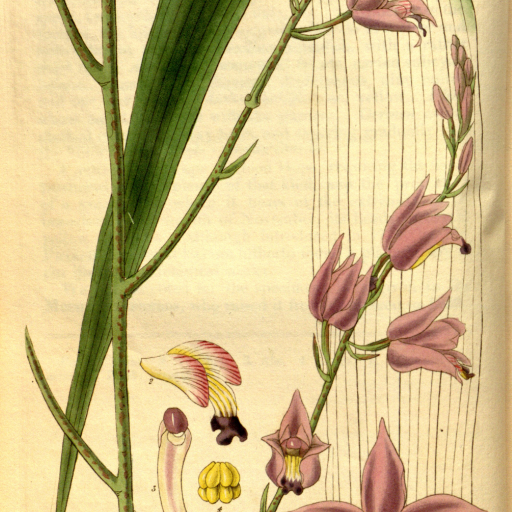
Known as the "Pine-pink," Bletia purpurea is a hardy terrestrial orchid that surprises many with its ability to grow directly in the ground rather than clinging to trees. This native beauty of Florida, Mexico, and the Caribbean is a symbol of wild elegance, often found hiding in pine rocklands or grassy meadows. Its name honors Gabriel Blet, a 16th-century Spanish apothecary, adding a touch of historical charm to its botanical profile.
🔍 How to Identify
- 🍃 The Leaves: Long, narrow, and distinctly pleated (plicate), these leaves often look like miniature fans or young palm fronds. They emerge from a rounded, bulb-like structure called a corm.
- 🌸 The Flowers: Delicate, star-shaped blooms ranging from pale rose to deep magenta, featuring a ruffled "lip" (labellum) decorated with bright yellow or white crests.
- 📏 The Stature: Unlike low-growing ground cover, this orchid sends up tall, wiry flower spikes that can reach over three feet in height, allowing the flowers to dance well above the surrounding grass.
🏡 In Your Garden
- 🌱 Substrate Choice: Because it is terrestrial, it craves a mix of peat, sand, and perlite rather than the chunky bark used for tropical orchids. It loves staying moist during the growing season but requires excellent drainage to prevent its corms from rotting.
- 💤 The Winter Nap: Don't panic if your plant loses its leaves! Bletia purpurea often goes dormant in the winter. Reduce watering significantly during this time and wait for the "corm" to push out fresh green shoots once the weather warms.
⚠️ Safety & Toxicity
- 🐾 Pet Friendly: This orchid is generally considered non-toxic to cats, dogs, and horses, making it a worry-free addition to a pet-friendly home or garden.
- 🛑 Handle with Care: While not poisonous, the plant's delicate stems are easily snapped. Keep it in a low-traffic area where curious children or pets won't accidentally trample the emerging flower spikes.
✨ Fun Fact
Bletia purpurea is a resilient "pioneer" species. In its native habitats, it is often one of the first flowers to bloom and colonize an area after a pineland fire, using the nutrient-rich ash to fuel its spectacular purple displays!

Detailed Care Instructions
To grow Bletia purpurea, also known as the purple bletia or the Florida hyacinth orchid, follow these steps:
- Climate: Bletia purpurea is native to subtropical and tropical regions, so it grows best in warm climates. It can tolerate temperatures down to 25°F (-4°C), but it thrives in temperatures above 50°F (10°C).
- Lighting: Provide your Bletia purpurea with bright, indirect light. Avoid direct sunlight, as it can scorch the leaves. A sunny windowsill or a lightly shaded spot in your garden would be ideal.
- Soil: The plant prefers well-draining soil, such as a mix of equal parts potting soil, perlite, and orchid bark. This allows for good airflow and prevents waterlogging of the roots.
- Watering: Keep the soil slightly moist but not soggy. Water the plant when the top inch of soil feels dry. During the growing season, typically spring to fall, increase watering frequency. Reduce watering during the winter as the plant enters a dormant period.
- Fertilizer: Bletia purpurea benefits from regular feeding during the growing season. Use a balanced orchid fertilizer diluted to half or a quarter of the recommended strength. Apply the fertilizer every 2-3 weeks.
- Humidity: This orchid naturally grows in humid conditions. Mimic this by placing a tray of water near the plant or using a humidifier. Alternatively, mist the plant occasionally to increase humidity around it.
- Repotting: Bletia purpurea prefers to be slightly pot-bound, so only repot the plant when it has outgrown its container. Repotting is usually done in spring. Use a pot that provides good drainage, and gently remove any old potting material before re-potting.
- Pests and diseases: Keep an eye out for common orchid pests such as aphids, mealybugs, and spider mites. Treat any infestations promptly with appropriate insecticides or horticultural soaps. Also, ensure good airflow around the plant to prevent fungal diseases.
- Blooming: Bletia purpurea typically produces purple, pink, or white flowers in racemes during the summer months. These flowers can last several weeks. After the blooming period, allow the plant to enter its dormant phase and reduce watering and fertilizer application.
By following these care tips, you can successfully grow Bletia purpurea and enjoy its beautiful orchid blossoms.

Place in a window with dappled sun or a spot in the middle of a room. Or directly in a window facing west or east.

To water this plant, allow the top 1-2 inches of soil to dry out before watering. Use a watering can or hose to water the soil around the base of the plant, being careful not to wet the foliage. Avoid overwatering, as this can lead to root rot. Water less frequently during the winter months when the plant is dormant.
To fertilize Bletia Purpurea, apply a balanced fertilizer once every two weeks during the growing season. Use a ratio of 10-10-10 or 20-20-20, diluted to half-strength. Use caution not to over-fertilize, as this can damage the plant. Stick to routine watering and avoid applying fertilizer when the plant is dry.
Bletia Purpurea plant prefers well-drained soil with good water retention properties. The soil should be rich in organic matter and have a slightly acidic pH level between 6.0 to 6.5. A porous mix containing sphagnum peat moss, perlite, and fir bark is recommended for optimal growth. It is important to avoid heavy soils that do not drain well as it can lead to root rot and other fungal diseases. The potting mix should be changed every two years or so to maintain a healthy root system.
Propagation of this plant involves taking a stem cutting or dividing the rhizomes of the mature plant. For stem cutting propagation, a healthy stem about 4-6 inches long is selected and cut below a node. The lower leaves of the cutting are removed, and rooting hormone is applied. The stem cutting is then planted in a well-draining potting mix and kept in a humid environment with indirect light. Root growth can be observed within 4-6 weeks, and once established, the plant can be transplanted to a larger container or a garden bed.
For rhizome division, the mature plant is carefully dug up, and the rhizomes are separated into individual sections. Each section should have at least one growing point or bud and some healthy roots. The divided rhizomes are then planted in well-draining soil, slightly covered, and watered adequately. The transplanted rhizomes should be kept in a warm and humid environment until new growth appears, and then they can be moved to their permanent location.
It is important to note that Bletia Purpurea prefers bright, indirect light, moist but well-draining soil, and high humidity. It is also susceptible to root rot, so overwatering should be avoided.








