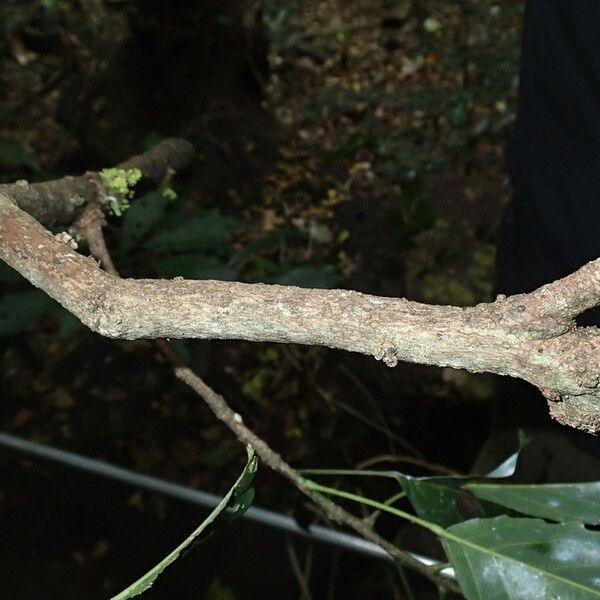
Plant Overview
Often called the New Caledonian Spurge-Tree, this rare beauty is a crown jewel of the South Pacific’s unique ecosystem. It belongs to a genus found almost exclusively in the wild, nickel-rich soils of New Caledonia, where it has evolved in isolation for millions of years. For the rare plant collector, it represents a piece of prehistoric botanical history.
🔍 How to Identify
- 🍃 Foliage Texture: The leaves are remarkably glossy and leathery, often featuring a distinct midrib and subtle serrations along the edges.
- 🎨 Color Shift: New growth frequently emerges in striking shades of bronze, copper, or deep red before maturing into a rich, dark emerald green.
- 🌳 Growth Habit: It typically forms a slender, upright woody shrub or small tree, giving it an architectural silhouette that fits well in narrow garden spaces.
🏡 In Your Garden
- 🏝️ Island Conditions: Because it hails from a tropical archipelago, it craves high humidity and protection from harsh, drying winds. It is best suited for "bright shade" rather than punishing direct afternoon sun.
- 🧪 Soil Nuance: In the wild, these plants are adapted to "ultramafic" soils (rich in minerals). In a home setting, they appreciate a well-draining, slightly acidic mix and are quite sensitive to over-watering, which can lead to root decline.
⚠️ Safety & Toxicity
- 🛑 Irritant Potential: Like many members of the Euphorbiaceae (Spurge) family, Bocquillonia species may produce a milky sap when cut or bruised.
- 🧤 Handling: This sap can cause skin irritation or redness. It is highly recommended to wear gloves when pruning and to keep the plant away from curious pets or children who might nibble on the leaves.
✨ Fun Fact
New Caledonia is often called a "living laboratory" of evolution. Bocquillonia arborea is part of a flora so unique that about 76% of the plant species found there exist nowhere else on Earth—making your plant a true global rarity!

Detailed Care Instructions








