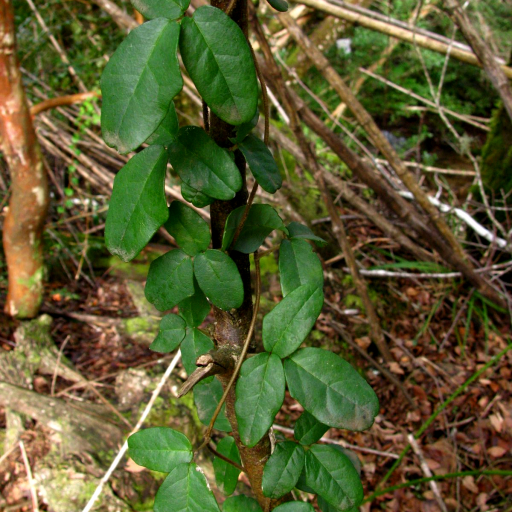
Plant Overview
Often called the Chameleon Vine, Boquila trifoliolata is perhaps the most mysterious master of disguise in the botanical world. Native to the temperate rainforests of Chile and Argentina, this woody vine has baffled scientists with its ability to change its appearance to match whatever plant it happens to be climbing. It is a living lesson in adaptation and survival.
🔍 How to Identify
- 🍃 Mimetic Leaves: Its most striking feature is its inconsistency. The leaves can change their size, shape, color, and even the pattern of their veins to mimic the foliage of its host plant.
- ☘️ Trifoliate Base: When not mimicking others, its "natural" state usually consists of three distinct leaflets (hence the name trifoliolata), which are typically oval and leathery.
- 🌿 Vine Habit: As a liana (woody vine), it uses its flexible stems to wrap around trees and shrubs, often blending in so perfectly that it becomes invisible to the naked eye.
🏡 In Your Garden
- 🎭 The Ultimate Camouflage: In its natural habitat, this vine mimics nearby plants to avoid being eaten by herbivores. In a garden setting, it provides a fascinating conversation piece, as it may begin to take on the characteristics of your favorite shrubs or trellis plants.
- 💧 Rainforest Roots: Because it originates in the cool, moist forests of South America, it thrives in dappled shade and requires consistently moist, well-draining soil. It is sensitive to extreme heat and dry air, so misting can help it feel at home.
⚠️ Safety & Toxicity
- ✅ General Safety: Boquila trifoliolata is generally considered non-toxic and is not known to be a skin irritant or a major threat to curious pets.
- 🐾 Pet Watch: While not listed as a poisonous plant, it is always wise to prevent pets from chewing on the woody stems, as the fibrous material can cause mild digestive upset if swallowed in large quantities.
✨ Fun Fact
Scientists are still debating exactly how the Chameleon Vine "sees" its host. Some researchers believe it uses "ocelli" (simple eye-like structures) to observe its neighbors, while others think it picks up airborne chemical signals or even swaps genes with the plants it touches!

Detailed Care Instructions
To grow a Boquila Trifoliolata plant, also known as the "Mexican Ivy," you can follow these steps:
- Obtain a healthy Boquila Trifoliolata plant: Purchase a well-established plant from a reputable nursery or obtain cuttings from a friend who already has the plant.
- Choose a suitable location: Find a spot in your garden or indoor area that receives bright indirect sunlight. Boquila Trifoliolata can tolerate partial shade but needs sufficient light to grow well.
- Prepare the soil: The plant prefers slightly acidic soil with good drainage. Mix equal parts of potting soil, peat moss, and sand to create a well-draining medium. If growing outdoors, amend the soil with compost or organic matter.
- Plant the Boquila Trifoliolata: Dig a hole in the soil that is slightly larger than the root ball of the plant. Place the plant in the hole and backfill with the prepared soil, gently patting it down to remove air pockets. Ensure that the top of the root ball is level with the soil surface.
- Watering: Water the plant thoroughly after planting to establish good root growth. Keep the soil consistently moist but not waterlogged. In hotter months, increase watering frequency and reduce it during cooler periods.
- Provide support: Mexican Ivy is a climbing plant, so provide a trellis, fence, or other support for it to grow upon. Alternatively, you can let it trail or let it hang from a hanging basket.
- Fertilize: Once a month during the growing season, apply a balanced liquid fertilizer to provide essential nutrients to the plant. Follow the instructions on the fertilizer packaging for the correct dosage.
- Pruning: Regularly prune the plant to control its size and encourage bushier growth. Remove dead or diseased leaves and cut back excessively long or straggly stems.
- Monitor for pests and diseases: Watch out for common pests such as aphids, mealybugs, or spider mites. If necessary, use organic or chemical pest control options to manage infestations.
- Winter care: Boquila Trifoliolata is not frost-tolerant, so if you live in a colder climate, you may need to bring the plant indoors during winter or protect it with a frost blanket.
With proper care and attention to these guidelines, your Boquila Trifoliolata plant should thrive and grow.
Boquila Trifoliolata plant requires adequate watering to thrive. The watering frequency will largely depend on the environmental conditions and the specific requirements of the plant. It is important to ensure that the soil is moist but not waterlogged as excessive moisture can lead to root rot and other fungal diseases.
To water the plant, start by checking the moisture level of the soil. This can be done by inserting your finger about one inch into the soil. If the soil feels dry, it is time to water the plant.
Water the plant deeply and ensure that the water penetrates the soil to a depth of at least six inches. Avoid watering the foliage as this can lead to fungal diseases. Instead, water the soil around the base of the plant, taking care not to wet the stem.
During hot weather or in dry environments, the plant may require more frequent watering. However, it is important to avoid overwatering as this can lead to waterlogged soil and root rot.
In addition to proper watering, Boquila Trifoliolata plant needs adequate light, fertilizer, and proper soil conditions to thrive. With the right care, this beautiful plant can grow into a healthy and vibrant plant that adds beauty and interest to any garden or indoor space.
To fertilize this plant, use a balanced fertilizer with a ratio of 10-10-10 or 20-20-20. Apply the fertilizer every two to four weeks during the growing season from spring to fall. Avoid over-fertilizing as it can damage the roots. Water the plant before fertilizing to prevent burning the roots.
Boquila trifoliolata is a plant species that requires a well-draining and nutrient-rich soil mixture. The ideal soil type for this plant is a loamy soil that is rich in organic matter. The soil pH should be slightly acidic, between 5.5 and 6.5. The plant can also grow in sandy soils, but it will require more frequent watering and fertilization. The soil should be kept moist but not waterlogged, as the plant does not tolerate wet feet. Adding compost or aged manure to the soil can help improve its nutrient content and water-holding capacity. It is important to ensure that the soil is free of any pests or diseases before planting.
To propagate this plant, select a healthy and sturdy stem from an existing plant. Cut the stem at a 45-degree angle, making sure the cut is clean and straight. Remove the leaves from the bottom 6 inches of the stem, leaving only two or three pairs of leaves at the top. Dip the cut end of the stem in rooting hormone powder.
Prepare a small pot with well-draining soil and create a hole in the center of the soil. Insert the stem into the hole and gently firm the soil around it. Water the plant thoroughly, making sure the soil is evenly moist but not waterlogged. Cover the pot with a plastic bag or dome to create a humid environment.
Place the pot in bright, indirect light but avoid direct sunlight. Check the pot regularly and mist the leaves if they appear to be drying out. After a few weeks, roots should begin to form. Once the plant has established a good root system, it can be planted in a larger pot or directly into the ground.








