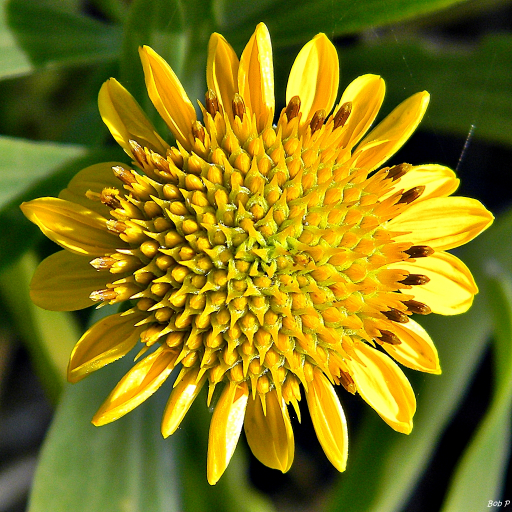
Plant Overview
Often called the Sea Oxeye Daisy or "Bushy Seaside Tansy," this hardy survivor thrives where most plants wither—right at the edge of the ocean. Native to the salt marshes and dunes of the Atlantic and Gulf coasts, it forms shimmering silver-green thickets that provide a cheerful splash of yellow against the sandy horizon. It is a true "beach bum" of the plant world, perfectly adapted to sun, sand, and salt spray.
🔍 How to Identify
- 🌿 Foliage: The leaves are thick, fleshy, and succulent-like. They usually have a distinct silvery-gray or pale green hue caused by a coating of fine, silky hairs that protect the plant from the intense coastal sun.
- 🌼 Flowers: Bright yellow, daisy-like blooms appear at the tips of the stems. The center "eye" of the flower is notably stiff and becomes prickly as it matures into a seed head.
- 🌳 Growth Habit: It grows as a low, woody shrub, typically reaching 2 to 3 feet in height. It spreads via underground runners (rhizomes), often forming dense, protective colonies.
🏡 In Your Garden
- 🌊 Salt Specialist: This plant is a "halophyte," meaning it is incredibly salt-tolerant. It is the gold standard for beachfront landscaping where salt spray and occasional tidal flooding would kill typical garden flowers.
- 🏜️ Coastal Toughness: Because it is evolved for sandy, nutrient-poor soil, it is extremely drought-resistant once established. It hates being over-watered or kept in "wet feet" unless the water is brackish, as it thrives on high drainage.
⚠️ Safety & Toxicity
- 🐾 Non-Toxic: The Sea Oxeye Daisy is generally considered safe and non-toxic for dogs, cats, and horses. It is a "friendly" addition to seaside paths where pets might wander.
- 👐 Physical Irritant: While not chemically toxic, the dried flower heads (bracts) are very sharp and woody. They can easily poke through thin gardening gloves or prick bare feet, so handle with care during cleanup.
✨ Fun Fact
To survive the salty marsh environment, the Sea Oxeye Daisy has a "sweaty" secret: it can actually excrete excess salt through specialized glands on its leaves, often leaving behind a faint crystalline shimmer on the foliage!

Detailed Care Instructions
To grow Borrichia Frutescens, also known as sea oxeye or sea oxeye daisy, follow these steps:
- Location: Choose a sunny location for planting the Borrichia Frutescens. It prefers full sun to partial shade.
- Soil: The plant thrives in well-drained soil, preferably sandy or loamy soil. If your soil is heavy clay, amend it with organic matter to improve drainage.
- Watering: The plant is salt-tolerant and prefers regular watering but can withstand occasional dry spells. Water enough to keep the soil consistently moist but not waterlogged.
- Propagation: Borrichia Frutescens can be propagated from seeds or stem cuttings. If using seeds, sow them in a seed tray or small pots filled with moist soil. Keep the soil consistently moist until the seedlings emerge. Once they are established, transplant them into larger pots or directly into the ground. If using stem cuttings, take 4-6 inch-long cuttings from a healthy plant and remove the lower leaves. Dip the cut end in rooting hormone powder and plant it in moist soil. Keep the soil slightly moist until roots develop.
- Planting: If planting the seedlings directly outdoors, space them about 12-18 inches apart. Dig a hole slightly larger than the root ball, place the seedling, and backfill with soil, gently firming it around the plant's base. Water thoroughly after planting.
- Fertilizer: Borrichia Frutescens generally does not require much fertilizer. However, if the soil is poor, you can apply a slow-release fertilizer in early spring or use an organic fertilizer like compost or well-rotted manure.
- Maintenance: Remove any weeds that compete for nutrients and water. Prune plants in early spring to promote bushier growth and remove dead or damaged branches.
- Pests and Diseases: The plant is relatively resistant to pests and diseases. However, keep an eye out for aphids, spider mites, or slugs. Use organic or chemical methods to control these pests if necessary.
- Winter Care: In areas with frost, Borrichia Frutescens may not be fully hardy. Protect the plant from freezing temperatures by covering it with a thick layer of mulch or bringing it indoors if possible.
By following these steps, you should be able to successfully grow Borrichia Frutescens in your garden or landscape.

Place in a bright room that is sun drenched almost all day. Or directly in a south-facing window.

To properly water this particular plant, it is important to consider the soil conditions in which it is growing. The soil should be well-draining, as the plant does not tolerate standing water. When watering, it is best to soak the soil deeply and then allow it to dry out somewhat before watering again. It is also important to avoid watering the foliage, as this can lead to fungal diseases. Instead, water at the base of the plant, aiming for the soil around the roots. In hot and dry weather, it may be necessary to water more frequently to keep the soil from drying out completely.
To fertilize this plant, first determine the type of soil it is planted in. If it is planted in sandy soil, use a slow-release fertilizer with low nitrogen content. If it is planted in clay soil, choose a fertilizer with a higher nitrogen content. Apply the fertilizer during the growing season, typically from late spring to early fall. Spread the fertilizer evenly around the base of the plant and water it in well. Be careful not to over-fertilize as this can lead to excessive growth and reduce the plant's overall health.
The Borrichia Frutescens plant thrives in soil that is well-drained, with a pH that is slightly acidic to alkaline. A good soil mix can include a combination of materials such as perlite, vermiculite, peat moss, and sand. The soil should be rich in organic matter, which helps to promote healthy soil composition and plant growth. It should be able to hold moisture, but not be waterlogged, as this can decrease soil aeration and lead to root rot. A soil mix that is suitable for succulent plants or cactus plants can be appropriate for this plant as well. Adding slow-release fertilizer to the soil can provide nutrients that are essential to the plant's growth and health.
Borrichia Frutescens plant can be propagated through stem cuttings. Start by taking several cuttings from a healthy mother plant, making sure each cutting is about 4 to 6 inches long. Remove any leaves from the lower half of the cutting, leaving at least two or three at the top. Dip the cuttings in rooting hormone powder to promote root growth. Then, plant the cuttings in a well-draining soil mix, making sure the soil is evenly moist but not waterlogged. Cover the cuttings with a plastic bag or dome to help retain moisture and create a greenhouse effect. Place the cuttings in bright, indirect light and keep them out of direct sunlight. Mist the cuttings regularly to keep them moist and within a few weeks, they will begin to root and show new growth. Once the cuttings have established roots, they can be transplanted to larger pots or directly into the ground.








