Plant Overview
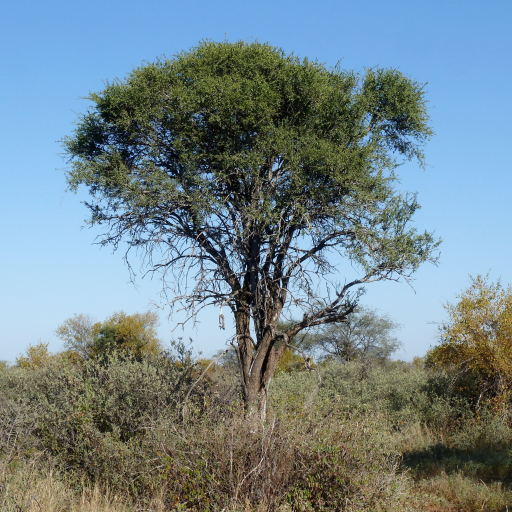
Known as the "Shepherd's Tree" or Witgat, this iconic African survivor is a literal lifeline in the arid Kalahari and bushveld. Its striking white trunk and dense, evergreen canopy provide a cool oasis for weary travelers and wildlife alike in the scorching heat. In many Southern African cultures, it is considered a "Tree of Life" and is often protected by local laws and traditions.
🔍 How to Identify
- 🦴 The Trunk: Its most distinctive feature is the smooth, chalky-white to pale grey bark that appears almost bleached by the sun.
- 🍃 The Leaves: Small, narrow, and leathery leaves with a dull grey-green finish, specifically designed to minimize water loss in desert climates.
- 🌳 The Silhouette: It typically grows with a thick, sturdy trunk and a very dense, rounded "mushroom-shaped" crown that casts a solid, dark shadow.
🏡 In Your Garden
- 🏜️ Drought Mastery: This tree is the gold standard for water-wise gardening. It has evolved an incredibly deep taproot system—documented to reach over 60 meters deep—to find hidden water reserves.
- 🌱 Stability is Key: Because of its sensitive and deep taproot, the Shepherd's Tree hates being moved. It is notoriously difficult to transplant, so if you plant one, ensure it is in its "forever home" with sandy, well-draining soil.
⚠️ Safety & Toxicity
- 🐾 Status: Generally safe and non-toxic for both humans and animals.
- 🥗 Nutritional Value: The leaves are highly nutritious and are a favorite snack for giraffes and livestock. However, the berries, while edible, have a distinctively "hot" or peppery aftertaste that may not appeal to everyone.
✨ Fun Fact
☕ The Bush Coffee: During the Boer War and times of colonial exploration, the roots of the Boscia albitrunca were dried, roasted, and ground to create a popular caffeine-free coffee substitute. It was also used to make a survival porridge during severe droughts.

Detailed Care Instructions
| Humidity | Dry |
| Lighting | Full Sun |
| Difficulty | Easy |
| Hibernation | Cold Period |
To grow Boscia Albitrunca plant, also known as shepherd's tree, you can follow these steps:
- Climate and Location: Determine if your climate is suitable for growing Boscia Albitrunca. It is a drought-resistant plant that thrives in dry, warm climates such as deserts. It can tolerate a wide range of temperatures but prefers sunny locations.
- Soil and Potting: Boscia Albitrunca prefers well-draining soil. Use a sandy or loamy soil mix with good drainage capabilities. If planting in a pot, ensure it has drainage holes.
- Planting: Plant the seeds in the desired location or pot. You can also propagate it from cuttings or transplant a young Boscia Albitrunca plant. Make sure to plant it at a depth twice the size of the seed, and gently cover it with soil.
- Watering: Initially, water the plant regularly to establish its roots. Once established, reduce the frequency of watering as it is a drought-resistant plant. Water sparingly, allowing the soil to dry out between waterings. Overwatering can lead to root rot.
- Pruning: Shepherd's tree does not require heavy pruning. However, you can trim any dead or diseased branches for the plant's overall health. Pruning after blooming can help maintain its shape and promote new growth.
- Fertilization: Boscia Albitrunca does not require frequent fertilization. However, you can apply a balanced slow-release fertilizer during the growing season for added nutrients.
- Pest and Disease Control: This plant has natural resistance to pests and diseases. However, monitor for any signs of infestation or diseases and take appropriate measures if necessary.
- Maintenance: Provide sufficient space for the plant to grow as it can reach a height of up to 10 meters. Avoid planting it too close to buildings or other structures. Regularly remove any weeds around the plant to avoid competition for nutrients and water.
Remember that every plant has specific care requirements, so it's always beneficial to research further and adapt the instructions to your specific climate and conditions.

Place in a bright room that is sun drenched almost all day. Or directly in a south-facing window.

The best way to water this plant is to ensure that the soil remains consistently moist. It is important to avoid overwatering as this may cause the roots to rot. One method is to wait until the top inch of soil is dry to the touch before watering. When watering, use a slow and steady stream of water, aiming for the base of the plant to avoid getting water on the leaves. It is also helpful to use good drainage in the pot or container to prevent excess water buildup. Test the soil regularly to ensure it is retaining moisture at the base of the roots. Finally, ensure that the plant gets adequate sunlight and is placed in well-draining soil that can support healthy root growth.
To fertilize this plant, use a balanced, water-soluble fertilizer once a month during the growing season (spring and summer). Dilute the fertilizer according to the instructions on the packaging and apply to the soil around the base of the plant. Avoid getting fertilizer on the leaves as it can cause damage. During the dormant season (fall and winter), reduce the frequency of fertilizing or stop altogether.
Boscia Albitrunca plant is a type of tree, and like most plants, it requires a specific type of soil to thrive. The best soil to use for this tree is a well-drained soil that is rich in organic matter. It should also be slightly acidic with a pH range of 5.5 to 7.
The soil should be loose and not compacted, allowing for proper oxygen flow to the roots. The tree prefers sandy or loamy soils, but it can also tolerate heavy clay soils as long as the soil is well-drained.
To improve soil quality, it may be necessary to add organic matter such as compost or mulch. It is recommended to mix in a 2- to 3-inch layer of organic matter to the top 6 to 8 inches of soil. This will not only improve soil structure but also provide nutrients to the tree.
It is essential to ensure the soil is evenly moist, but not waterlogged, as too much water can lead to root rot. Adequate drainage is key, and the soil should never be allowed to completely dry out.
In summary, Boscia Albitrunca plant requires a well-drained, slightly acidic, loose, and nutrient-rich soil that allows for proper oxygen flow to the roots. Adding organic matter to the soil can improve soil quality and provide necessary nutrients for the tree to thrive.
To propagate this plant, you can start by collecting seeds from mature fruits. Sow these seeds in a well-draining soil mixture in a warm location with indirect light. Keep the soil moist but not waterlogged and cover the seeds with a thin layer of soil. The seeds should germinate within a few weeks.
Another method of propagation is through stem cuttings. Select a healthy stem with several leaves and cut it just below a node. Remove the bottom leaves and any flowers or buds. Dip the cut end of the stem in rooting hormone and plant it in well-draining soil. Keep the soil moist and place the cutting in a warm, bright location.
The plant can also be propagated through layering, where a stem is bent to the ground and covered with soil. New roots will grow from the covered section of the stem, and once established, the stem can be cut and transplanted.
Propagation can be done in spring or early summer, when the plant is actively growing and has the best chance of successful propagation.








