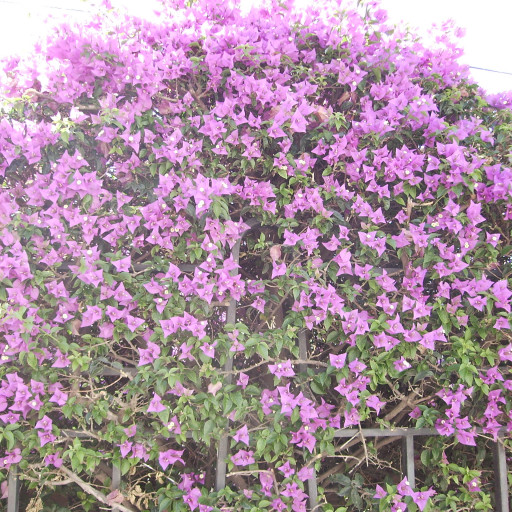
Plant Overview
Affectionately known as the "Paper Flower" due to its delicate, parchment-like colorful bracts, Bougainvillea spectabilis is the undisputed queen of tropical landscapes. Originating from the lush rainforests of Brazil, this vigorous climber has traveled the globe, draping Mediterranean villas and coastal gardens in vibrant hues of magenta, purple, and red. While it looks like a soft, floral dream from a distance, it is a sturdy, sun-loving survivor with a hidden, thorny side.
🔍 How to Identify
- 🌸 The "False" Flowers: The stunning colors you see aren't actually petals; they are modified leaves called bracts. The true flowers are the tiny, creamy-white trumpets nestled deep within the center of the bracts.
- 🍃 Leaf Texture: Unlike some of its smoother cousins, the leaves of the spectabilis are typically large, heart-shaped, and slightly hairy (pubescent) on the underside.
- ⚔️ Protective Thorns: Look closely at the woody stems; you will find sharp, sturdy thorns that the plant uses to scramble over fences, trellises, and neighboring trees.
🏡 In Your Garden
- ☀️ The Sun Worshipper: This plant thrives on "tough love." To get those legendary explosions of color, it needs at least six hours of direct, searing sunlight. If kept in the shade, it will grow lush green leaves but refuse to produce its iconic papery bracts.
- 🌱 Root Sensitivity: Be very careful when planting! Bougainvillea has a notoriously fragile, fibrous root system. It absolutely hates being moved once established, and even minor root disturbance during repotting can cause the plant to drop its leaves in a "transplant tantrum."
- ✂️ Pruning for Blooms: Because it blooms on new growth, regular pruning is essential. Pinching back the tips after a flowering cycle encourages the plant to branch out, leading to a denser, more colorful display.
⚠️ Safety & Toxicity
- 🌵 Mechanical Injury: The primary danger comes from the sharp thorns, which can easily puncture skin. Some people also experience localized skin dermatitis (an itchy rash) if the sap from a broken stem touches their skin.
- 🐾 Pet Safety: While not considered "deadly," ingesting the leaves or bracts can cause mild gastrointestinal upset (nausea or vomiting) in dogs and cats. It is best kept out of reach of curious chewers.
✨ Fun Fact
The Bougainvillea was the first South American plant to become world-famous. It was named after Louis Antoine de Bougainville, a French admiral who circumnavigated the globe in the 1760s—though the plant was actually "discovered" by the expedition’s botanist's assistant, Jeanne Baret, who had disguised herself as a man to join the voyage!

Detailed Care Instructions
| Color | Rose, Rusty-Red, Purple |
| Soil Ph | <6.0 |
| Humidity | Normal |
| Lighting | Full Sun |
| Soil Type | Well-Drained, Acidic Soil |
| Difficulty | Medium |
| Plant Type | Broadleaf Evergreen |
| Hibernation | Cold Period |
| Mature Size | 460 To 1200 Cm |
| Native Area | Brazil, Bolivia, Peru |
| Temperature | 18°C - 29°C |
| Sun Exposure | Full Sun |
| Hardiness Zones | 9 To 11 |
To grow a Bougainvillea Spectabilis plant, you can follow these steps:
- Choose the right location: Bougainvilleas generally require full sun, so select a spot in your garden that receives at least six hours of direct sunlight a day.
- Prepare the soil: The soil should be well-drained and fertile. Amend the soil with compost or well-rotted manure to improve its quality and drainage.
- Plant the Bougainvillea: Dig a hole that is slightly larger than the root ball of the plant. Place the plant in the hole, ensuring that the top of the root ball is level with or slightly above the soil surface. Refill the hole with soil, firming it gently around the plant.
- Water adequately: Water the plant deeply immediately after planting to help establish the root system. After that, water it regularly, especially during the drier months. However, do not overwater, as Bougainvilleas prefer slightly drier conditions.
- Support the plant: Bougainvilleas are vigorous climbers, so provide a sturdy support for the plant, such as a trellis or fence, to help it grow vertically.
- Prune when necessary: Regular pruning is beneficial for Bougainvilleas to encourage bushier growth and more abundant flowering. Prune after the blooming cycle ends or whenever necessary to control the size or shape of the plant.
- Fertilize wisely: Apply a balanced, slow-release fertilizer formulated for flowering plants once every two to three months during the growing season. Follow the instructions on the fertilizer packaging for proper application rates.
- Protect from frost: Bougainvilleas are sensitive to frost, so if you live in a cold climate, consider growing it in a container that can be moved indoors during winter or cover the plant with a frost blanket during cold nights.
- Monitor for pests and diseases: Bougainvilleas can be susceptible to pests like aphids, mealybugs, and caterpillars, as well as diseases like powdery mildew. Regularly inspect the plant and take necessary measures, such as using organic insecticides or fungicides, to control any infestations.
By following these guidelines, you should be able to successfully grow and maintain a Bougainvillea Spectabilis plant and enjoy its vibrant and colorful blooms.

Place in a bright room that is sun drenched almost all day. Or directly in a south-facing window.

To water this plant, you should first check the soil to determine its moisture level. If the top inch of soil is dry to the touch, it's time to water. Use a watering can or hose to evenly saturate the soil around the base of the plant until water begins to flow out of the bottom drainage holes. Be careful not to overwater, as this can lead to root rot. It's also important to avoid getting water on the leaves or flowers, as this can cause fungal diseases. Watering should be done in the morning or early afternoon to allow the plant enough time to dry off before nighttime. During periods of drought or extreme heat, you may need to water more frequently.
- Bougainvillea plant requires regular fertilization for optimal growth and blooming.
- Use a balanced fertilizer with a ratio of 10-10-10 or 20-20-20.
- Apply fertilizer every 6-8 weeks during the growing season (spring and summer).
- Water the plant well before and after fertilization to help move nutrients to the root zone.
- Make sure not to over-fertilize as it can damage the plant roots.
- Use a slow-release fertilizer or liquid fertilizer according to the package instructions.
- Avoid fertilizing during the dormant season (fall and winter) when the plant growth slows down.
- Keep the soil moist but well-drained to ensure proper nutrient uptake.
- Regularly remove dead or yellow leaves to promote healthy growth.
- Prune the plant to remove any damaged or diseased parts and encourage growth and blooming.
For optimal growth of the plant, a well-draining soil mix is recommended. The soil should be rich in organic matter, such as compost or peat moss, to provide adequate nutrients. A pH range of 5.5 to 6.5 is ideal for this plant. Sandy loam soil would be a good choice as it provides good drainage and allows the roots to get enough oxygen. The soil should also be free from any weeds or harmful insects. It is important to provide adequate water without overwatering, as this can lead to root rot and other issues. Adding perlite or sand to the soil mix can also improve drainage and reduce the risk of waterlogging. Additionally, fertilizing the plant regularly with a balanced fertilizer can also help promote healthy growth.
To propagate this plant, take stem cuttings from a mature plant. Choose a healthy stem and cut it about 6-8 inches in length. Remove the bottom leaves, leaving only 2-3 leaves at the tip of the cutting. Dip the cut end in rooting hormone powder and insert it into a pot filled with well-draining soil. Water the soil and cover the pot with plastic wrap to create a greenhouse effect. Place the pot in indirect sunlight and water regularly to keep the soil moist. After several weeks, the cutting should begin to grow roots and new leaves. Once it has established a strong root system, it can be transplanted into a larger pot or directly into the ground.
Common pests of the great bougainvillea include Scale insect, mealybugs, spider mites, aphids, whiteflies. Make a habit of checking your great bougainvillea frequently for pests so that any infestations can be caught and managed early.








