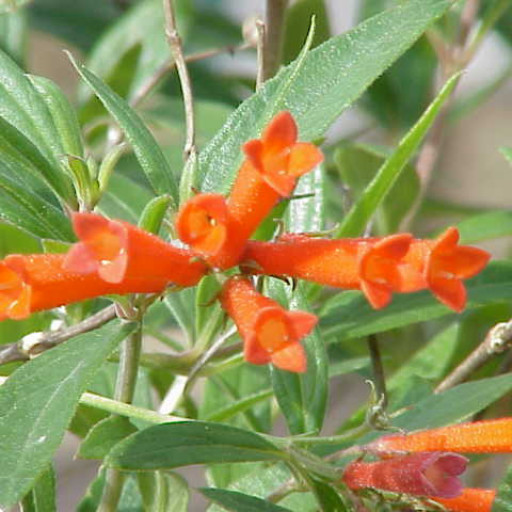
Plant Overview
Known affectionately as the "Firecracker Bush" or "Hummingbird Flower," the Bouvardia is a hidden gem of the coffee family (Rubiaceae). Native to the sun-drenched landscapes of Mexico and Central America, these evergreen shrubs have long been a favorite of florists for their delicate, star-shaped clusters and incredible vase life. Whether they are decorating a bridal bouquet or a sunny patio, they bring a touch of tropical elegance and an irresistible scent to any space.
🔍 How to Identify
- 🎺 The Flowers: Look for clusters of long, tubular blossoms that open into a distinct four-pointed star. They come in vibrant shades of scarlet, salmon, pink, and snowy white.
- 🍃 The Foliage: The leaves are typically dark green, pointed, and grow in opposite pairs or circles (whorls) around the woody stems, providing a lush backdrop for the bright blooms.
- 🌿 Growth Habit: It maintains a bushy, upright form, usually reaching 2 to 4 feet in height, making it an ideal "filler" plant for mixed borders or decorative containers.
🏡 In Your Garden
- ☀️ Sun-Kissed Roots: Because it hails from the tropics, the Bouvardia thrives in bright, indirect light. While it loves the sun, intense afternoon heat can scorch its delicate petals, so a bit of dappled shade is its "happy place."
- ✂️ The Pruning Secret: To keep your Bouvardia from becoming "leggy" or sparse, pinch back the growing tips in early spring. This encourages the plant to branch out, resulting in a much fuller shape and more frequent flowering cycles.
- 💧 Thirsty but Picky: These plants prefer "goldilocks" moisture—not too dry, not too soggy. They are sensitive to root rot, so ensuring your potting mix is airy and well-draining is the key to a long-lived specimen.
⚠️ Safety & Toxicity
- 🟢 General Safety: Bouvardia is generally considered non-toxic to humans and is not listed as a high-risk plant for major poisoning.
- 🐾 Pet Caution: While not strictly poisonous, ingesting the leaves or flowers can cause mild gastrointestinal upset (vomiting or drooling) in curious cats or dogs. It’s always best to keep decorative plants out of reach of nibbling pets.
- 🧤 Skin Sensitivity: Some gardeners with sensitive skin may experience mild irritation from the sap when pruning, so wearing gloves is a smart precaution.
✨ Fun Fact
The Bouvardia was named in honor of Charles Bouvard, the personal physician to King Louis XIII and the superintendent of the Royal Botanic Gardens in Paris. In the Victorian "Language of Flowers," gifting a Bouvardia symbolized "enthusiasm"—making it the perfect plant to celebrate a new beginning or a job well done!

Detailed Care Instructions
| Humidity | Normal |
| Lighting | Full Sun |
| Difficulty | Medium |
| Hibernation | Cold Period |
| Temperature | 22°C - 26°C |
| Hardiness Zones | 9 - 11 |
To grow a Bouvardia plant, follow these steps:
- Choose a suitable growing spot: Bouvardias prefer full sunlight or partial shade, so select a location that receives at least 4-6 hours of direct sunlight per day.
- Prepare the soil: Bouvardias thrive in well-drained soil that is rich in organic matter. Prepare the planting area by loosening the soil and adding compost or well-rotted manure.
- Planting: Dig a hole that is slightly larger than the root ball of the Bouvardia plant. Place the plant in the hole, ensuring that the top of the root ball is level with the soil surface. Backfill the hole with soil and gently firm it around the roots.
- Watering: Water the plant thoroughly after planting to settle the soil. Bouvardias require regular watering, especially during dry spells. Water deeply once a week, allowing the soil to dry slightly between waterings.
- Fertilization: Apply a balanced, slow-release fertilizer during the growing season to promote healthy growth and abundant blooms. Follow the instructions on the fertilizer packaging for application rates.
- Pruning: Bouvardias tend to become leggy over time. To maintain a compact shape and encourage more blooms, prune the plant after its flowering period. Trim back any dead or damaged branches and cut back the plant by about one-third.
- Mulching: Apply a layer of organic mulch around the base of the plant to help retain moisture, suppress weeds, and regulate soil temperature.
- Pests and diseases: Bouvardias are generally resistant to many pests and diseases. However, keep an eye out for aphids, spider mites, or powdery mildew. If needed, use appropriate insecticides or fungicides to control these issues.
- Overwintering: If you live in a region with cold winters, consider growing Bouvardias in containers so you can bring them indoors during the winter months. Bouvardias are not frost-tolerant, and the plant can be kept indoors in a bright location with temperatures above 55°F (13°C).
By following these steps, you can successfully grow Bouvardia plants and enjoy their beautiful blooms throughout the growing season.

Place in a window with dappled sun or a spot in the middle of a room. Or directly in a window facing west or east.

Bouvardia plants prefer to be watered regularly but not excessively. It is important to allow the top layer of soil to dry out before watering again. When watering, the soil should be evenly moistened and not too wet. Overwatering can lead to root rot and other problems. It is also important to avoid getting water on the leaves and flowers, as this can cause damage and encourage the growth of fungal diseases. Additionally, Bouvardia plants benefit from occasional misting to increase humidity levels around the plant.
For optimal growth and blooming, it is recommended to fertilize this plant every two weeks during the growing season with a balanced fertilizer. During the winter months, reduce fertilization to once a month. When applying fertilizer, be careful not to get it on the leaves or stems as it can cause burn or damage. Water the plant thoroughly before and after fertilizing to help distribute the nutrients evenly throughout the soil.
Bouvardia plants require a light, porous soil that drains well. The ideal soil pH for Bouvardia is around 6.5 to 7.5. In general, Bouvardia plants prefer a soil that is rich in organic matter and is well-aerated. The soil should also be free from any pathogens or pests that could potentially harm the plant.
When planting Bouvardia, it is important to amend the soil with organic matter to improve soil health and fertility. Compost, aged manure, or peat moss are all good options for adding organic matter to the soil. Mix the organic matter into the soil to a depth of about 6 to 8 inches to ensure it is well-distributed throughout the planting area.
Bouvardia plants thrive in well-draining soil, so it is important to choose a soil mix that promotes good drainage. A soil blend that contains perlite, vermiculite, or sand can help to improve drainage and prevent soil from becoming waterlogged. In addition to good drainage, Bouvardia plants also require regular watering to ensure they do not dry out.
Overall, Bouvardia plants require a nutrient-rich, well-draining soil that is free from pests and diseases. By providing the right soil conditions, you can help your Bouvardia plants grow and flourish to their full potential.
Propagation of this plant can be done with stem cuttings taken in the summer. Cut several healthy stems, each about 5 inches long, and remove the lower leaves. Dip the cut ends in rooting hormone and plant them in a pot with well-draining soil. Water well and place the pot in a bright, warm location, out of direct sunlight. Keep the soil moist and mist the cuttings daily to maintain high humidity. Roots should start to form within a few weeks, and once established, the new plants can be repotted or placed in the garden.
Common pests of the bouvardia include Aphids, whiteflies. Make a habit of checking your bouvardia frequently for pests so that any infestations can be caught and managed early.







