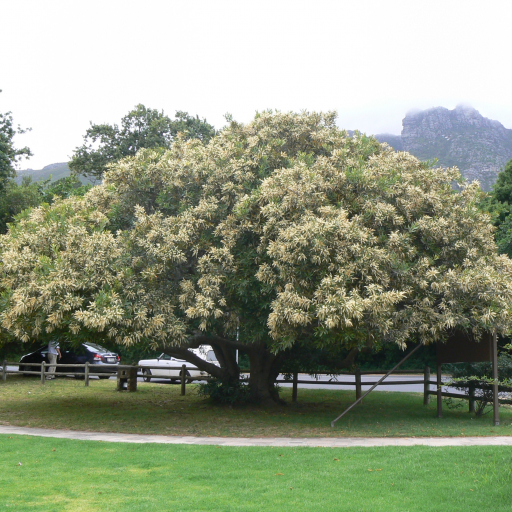
Plant Overview
Known as the Wild Almond or Bitter Almond, Brabejum stellatifolium is a legendary South African evergreen that holds a unique place in history. It was used to plant the Cape’s very first formal boundary hedge in 1660, parts of which are still alive today! While it produces fruit that looks remarkably like the almonds we eat, this plant is actually a distant, ancient relative of the Protea family.
🔍 How to Identify
- ⭐ Starry Foliage: The species name stellatifolium refers to its "star-like leaves." The leathery, tooth-edged leaves grow in whorls of six to nine, radiating from the stem like a green sunburst.
- ☁️ Fluffy Blooms: In summer, the tree produces dense, spike-like clusters of tiny white flowers that are heavily scented and highly attractive to bees and butterflies.
- brown Velvety Fruit: It bears almond-shaped nuts covered in a thick layer of reddish-brown, velvety hair. These fruits often drop into streams to be carried away by the water.
🏡 In Your Garden
- 🌊 Thirst for Water: In the wild, this plant is "riparian," meaning it naturally grows along stream banks and riverbeds. If you plant it at home, it needs a consistently moist spot or frequent watering to thrive.
- 🌳 Sprawling Habit: It doesn't just grow up; it grows out. The branches tend to lean over and can even root where they touch the ground, eventually creating a thick, impenetrable thicket that makes an excellent (but large) privacy screen.
⚠️ Safety & Toxicity
- 🚫 Toxic Seeds: WARNING. Unlike the almonds found in grocery stores, the seeds of the Wild Almond are bitter and highly poisonous if eaten raw.
- 🧪 Cyanide Risk: The seeds contain cyanogenic glycosides, which release prussic acid (cyanide). While indigenous groups historically learned to process them through a long soaking and roasting period, they should be considered strictly off-limits to pets and children.
✨ Fun Fact
The "Van Riebeeck’s Hedge," planted over 360 years ago to protect cattle, is now a National Monument in South Africa. It is one of the oldest living man-made landmarks in the country!

Detailed Care Instructions
To grow Brabejum Stellatifolium, also known as the wild almond or coastal dogwood, follow these steps:
- Obtain seeds or young plants: You can either collect seeds from existing trees if available or purchase seeds from a reputable nursery. Alternatively, obtain young plants from a nursery or garden center.
- Choose a planting location: Brabejum Stellatifolium prefers a sunny location with well-draining soil. It can tolerate various soil types but performs best in sandy or loamy soil.
- Soil preparation: Prepare the soil by loosening it with a garden fork or tiller. Remove any weeds or rocks that may interfere with root growth.
- Planting seeds or seedlings: If using seeds, plant them in seed trays or small pots filled with seed-starting mix. Sow the seeds at a depth of approximately 1 cm (0.4 inches) and provide consistent moisture. Once seedlings have developed a few sets of true leaves, transplant them into larger pots or directly into the ground.
If using young plants, dig a hole slightly larger than the root ball, place the plant in the hole, and backfill with soil. Lightly firm the soil around the plant and water thoroughly.
- Watering: Brabejum Stellatifolium requires regular watering, especially during its first year of growth. Keep the soil consistently moist but not waterlogged. After the plant is well-established, it can tolerate occasional dry spells.
- Mulching: Apply a layer of organic mulch around the base of the plant. This helps conserve moisture, suppresses weeds, and provides organic matter as it decomposes.
- Pruning: Brabejum Stellatifolium generally doesn't require much pruning. However, you can remove any dead or damaged branches to maintain its health and appearance.
- Fertilization: While not necessary, you can provide a balanced slow-release fertilizer during the growing season to promote healthy growth. Follow the package instructions for application rates.
- Protection from frost: If you live in an area prone to frost or freezing temperatures, protect your young Brabejum Stellatifolium plants by covering them with frost cloth or bringing them indoors during extreme cold spells.
- Monitor pests and diseases: Brabejum Stellatifolium is generally resilient to pests and diseases. However, keep an eye out for aphids, caterpillars, or fungal diseases. Treat any issues promptly using organic pest control methods or consult with a local horticulturist for appropriate measures.
By following these guidelines, you should be able to successfully grow Brabejum Stellatifolium and enjoy its unique foliage and attractive flowers.

Place in a bright room that is sun drenched almost all day. Or directly in a south-facing window.

The Brabejum Stellatifolium plant should be watered thoroughly every week. The soil should be allowed to dry out slightly between waterings. Avoid overwatering as this can lead to root rot. When watering, ensure that the water reaches the roots and does not just sit on the surface of the soil. It is best to water in the morning to allow the foliage to dry out during the day, which will help prevent the growth of fungal diseases. During the winter months, water sparingly as the plant enters a period of dormancy.
To fertilize the plant, you should use a balanced fertilizer with an NPK ratio of 10-10-10. Apply the fertilizer in early spring or late fall, before and after the plant's growing season. Use the recommended amount of fertilizer for the size of the plant and mix it into the soil around the root zone. Water the plant thoroughly after fertilizing to help it absorb the nutrients. Avoid over-fertilizing, as this can cause damage to the plant's roots.
To properly cultivate the plant, it is important to use well-draining soil that is rich in organic matter. The pH level of the soil should be slightly acidic, with a range between 5.5 and 6.5. The plant prefers a soil that is loamy and light, rather than heavy or clay-based. A recommended soil mix for this plant might include peat moss, composted pine bark, and perlite or sand to create a light and aerated texture. The plant also benefits from a layer of mulch around its base to help retain moisture and regulate temperature.
To propagate this plant, you will need to collect mature seeds from a healthy parent plant. The seeds can be collected by gently shaking the plant or by using a pair of pruning shears to remove the seed pods. Once you have collected the seeds, place them in a small container with damp soil. Cover the container with plastic wrap to create a mini greenhouse environment and keep the soil moist.
After a few weeks, the seeds should begin to germinate. At this point, you can transplant the seedlings into individual pots and continue to keep them in a warm, humid environment. You may also choose to transplant them directly into the ground once they have developed enough.
As your new plants grow, be sure to keep them well-watered and protected from direct sunlight until they are strong enough to withstand it. With proper care and attention, your Brabejum Stellatifolium plants should grow into healthy, mature specimens that are well-suited to thrive in your local climate.








