Plant Overview
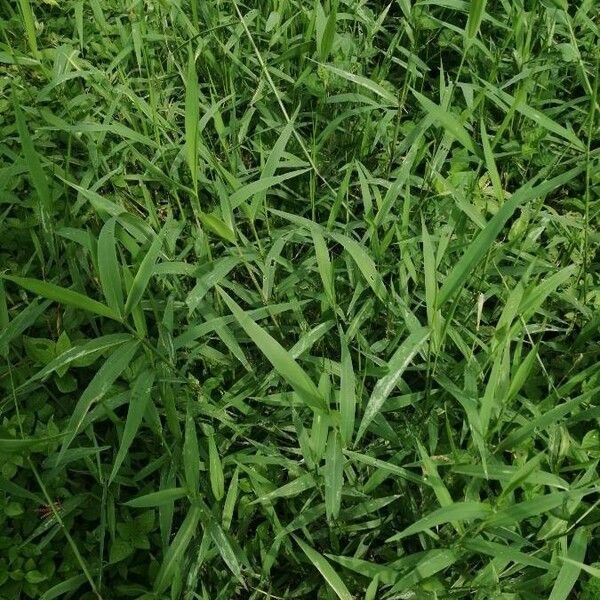
Often called Tanner Grass or African Signal Grass, this vibrant, sprawling African native is a master of the marsh. It is a resilient perennial known for its incredible ability to colonize wet areas, creating thick, emerald carpets where other grasses might drown. While it serves as a vital forage crop in many tropical regions, its aggressive nature makes it a persistent wanderer that often refuses to stay within its bounds.
🔍 How to Identify
- 🌿 Growth Habit: This is a creeping grass that spreads via long, fleshy "stolons" (runners) that root at every joint, allowing it to march across mud and water.
- 🍃 The Leaves: The blades are broad, lance-shaped, and a rich, bright green. They often have slightly wavy margins and a soft, velvety texture due to fine hairs near the base.
- 🌾 Seed Spikes: It produces distinct flower heads called "racemes," where the small seeds are arranged in neat, slightly staggered rows along the stem, looking a bit like a green zipper.
🏡 In Your Garden & Landscape
- 💧 Wetland Specialist: Tanner Grass is famous for its "wet feet." It thrives in soggy soil, riverbanks, and marshes. It can even grow out over the surface of ponds, forming dense floating mats that are strong enough for small birds to walk on.
- 🚀 Aggressive Spreader: Because it roots so easily from any fragment of its stem, it is a powerhouse for erosion control on banks. However, this same trait makes it difficult to remove once it takes hold in a garden or pond.
⚠️ Safety & Toxicity
- ✅ General Safety: This plant is non-toxic to the touch and is not known to be poisonous to humans or household pets like dogs and cats.
- 🐄 Livestock Nuance: While primarily used as cattle feed, some species in this family can cause photosensitivity (sun sensitivity) in livestock if consumed in massive quantities over a long period.
- 🚫 Ecological Warning: In many parts of the Americas and Australia, it is considered an invasive weed. It grows so densely that it can choke out native aquatic plants and reduce oxygen levels in small ponds.
✨ Fun Fact
Tanner Grass is a true survivor; it can remain completely submerged under floodwaters for several weeks. Once the water recedes, it continues growing as if nothing happened, while most other grasses would have rotted away!

Detailed Care Instructions








