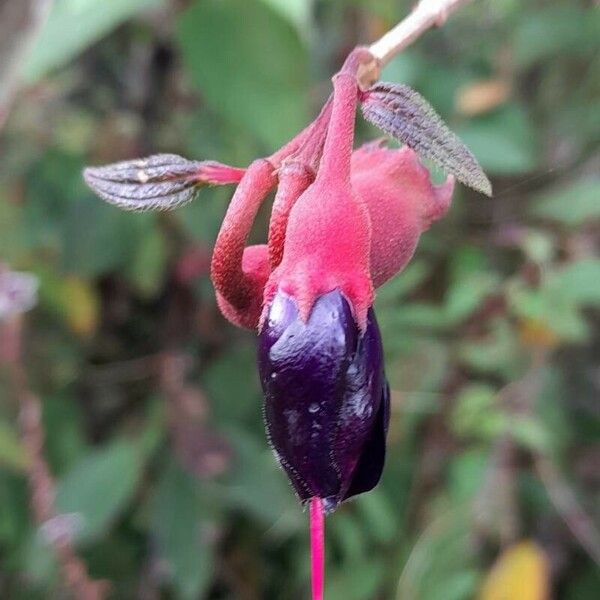
Plant Overview
Often referred to as the Jeweled Lantern of the Andes, Brachyotum microdon is a stunning, high-altitude shrub that looks like it stepped out of a botanical fairy tale. Native to the cool, misty cloud forests of South America, this plant is a member of the Melastomataceae family, prized for its unique, bell-shaped flowers that dangle like heavy silk tassels.
🔍 How to Identify
- 🔔 Jewel-Like Flowers: The most striking feature is the pendant, tubular flowers. They are typically a deep, velvety royal purple or maroon, often tightly encased in a colorful outer cup (calyx).
- 🍃 Ribbed Foliage: Like many of its cousins, the leaves feature prominent longitudinal veins that run from base to tip, giving the small, oval leaves a textured, "quilted" look.
- 🪴 Compact Stature: It grows as a dense, woody shrub, rarely exceeding a few feet in height, making it look like a naturally manicured bonsai in its native habitat.
🏡 In Your Garden
- ☁️ Cloud Forest Vibes: This plant is an "ultra-cool" grower. It thrives in high humidity and constant moisture but absolutely dislikes sweltering heat. If you live in a Mediterranean or tropical climate, it will need a very shady, cool spot to survive.
- ⛰️ Acidic Soul: Coming from the volcanic soils of the Andes, it demands well-draining, acidic soil. It is particularly sensitive to "wet feet," so ensure your pot or garden bed has excellent drainage to prevent root rot.
- 🐦 Hummingbird Magnet: In the wild, its narrow, tubular flowers are perfectly evolved for the long beaks of Andean hummingbirds. Planting one is a sure-fire way to invite pollinators to your space.
⚠️ Safety & Toxicity
- 🟢 Generally Safe: Brachyotum microdon is not currently listed as a toxic plant for humans or common household pets.
- ✋ Handle with Care: While not poisonous, the woody stems can be somewhat brittle. To keep the plant healthy and beautiful, it’s best placed in an area where it won't be frequently bumped by passing foot traffic or curious pets.
✨ Fun Fact
The genus name Brachyotum comes from the Greek words for "short ear," referring to the tiny, ear-like appendages found on the plant's stamens! It’s a tiny anatomical secret hidden inside those deep purple bells.

Detailed Care Instructions








