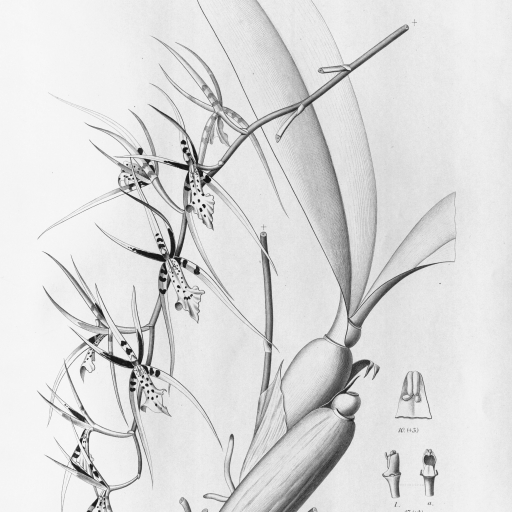
Plant Overview
Meet the "Spider Orchid," a botanical marvel that looks like it crawled straight out of a jungle myth. Found across the humid tropical forests of Central and South America, Brassia arachnoidea is famous for its dramatic, spindly blooms that resemble a cluster of long-legged spiders hanging from a branch. It is a prized possession for orchid enthusiasts who want a plant that looks less like a grocery-store find and more like a piece of living, alien art.
🔍 How to Identify
- 🕷️ Spider-Like Blooms: The most striking feature is the extremely long, narrow sepals and petals that can stretch out several inches, perfectly mimicking the thin legs of an arachnid.
- 🎨 Mottled Coloration: The flowers are typically a pale chartreuse or copper-yellow, heavily decorated with dark chocolate-brown or maroon splotches that act as camouflage in the dappled forest light.
- 🍐 Compressed Pseudobulbs: At the base of the long, strap-shaped leaves, you’ll find smooth, flattened green bulbs. These act as the plant's water reservoir, allowing it to survive between rain showers.
🏡 In Your Garden
- 🌬️ Air-Loving Roots: Because this is an epiphyte (a plant that grows on trees in the wild), it absolutely hates "wet feet." It requires a very loose bark or moss medium that allows air to circulate freely around the roots; standard potting soil will cause it to decline rapidly.
- 🌤️ Dappled Light: Think of the jungle canopy—this orchid prefers bright, indirect light. If the leaves turn a very dark green, it needs more light; if they start to yellow or bleach, it’s getting "sunburned."
⚠️ Safety & Toxicity
- 🐾 Pet Friendly: Despite its slightly "creepy" appearance, this spider doesn't bite. Brassia arachnoidea is considered non-toxic to cats and dogs, making it a safe exotic addition to a pet-filled home.
- 🛑 Gently Handle: While not poisonous, the long petals are delicate and can break easily if bumped. It is best kept in a location where tails or curious hands won't accidentally snag the "legs."
✨ Fun Fact
This orchid is a master of deception! It evolved its spider-like shape to lure in spider-hunting wasps (specifically from the Pepsis genus). The wasp sees the flower, mistakes it for a spider to sting and paralyze, and in the heat of the "attack," it inadvertently glues pollen to its head to carry to the next flower.

Detailed Care Instructions
To grow Brassia arachnoidea, also known as the Spider Orchid, follow these steps:
- Light: Place the plant in a location that receives bright, indirect light. Spider Orchids prefer filtered sunlight, so avoid placing them in direct sunlight as it can burn the leaves.
- Temperature and Humidity: Maintain a temperature range of 60-80°F (16-27°C) during the day. Spider Orchids prefer a slightly cooler night temperature of 50-60°F (10-16°C). Additionally, they prefer a higher humidity level, ideally between 50-70%. You can increase humidity by placing the orchid on a tray filled with water and pebbles or using a humidifier.
- Watering: Water the plant thoroughly when the top inch of the soil feels dry. However, ensure the pot it is planted in has proper drainage to prevent waterlogging, as orchids are susceptible to root rot. Allow excess water to drain completely before returning the plant to its growing area. Spider Orchids prefer to dry out moderately between waterings.
- Fertilizer: Feed the plant with a balanced orchid fertilizer during the growing season, typically spring and summer. Follow the package instructions for the correct dosage and frequency.
- Potting: Spider Orchids prefer to be grown in a well-draining orchid potting mix, such as a blend of fir bark, perlite or sphagnum moss, and charcoal. Repotting should be done every 1-2 years, preferably in the spring.
- Air Circulation: Good air circulation is important for Spider Orchids, as it helps prevent fungal and bacterial diseases. Avoid placing the plant in a stagnant or poorly ventilated area.
- Pests and Diseases: Keep an eye out for common orchid pests like mealybugs, spider mites, or scale insects. If detected, treat the infestation promptly with appropriate insecticides or neem oil. Additionally, good cultural practices, such as avoiding over-watering and providing adequate airflow, can help prevent diseases.
- Rest Period: After the blooming season, Spider Orchids may enter a rest period, during which they require reduced watering and fertilizer. This period allows the plant to recover and produce new growth for the next flowering cycle.
By following these care tips, you can grow a healthy and beautiful Brassia arachnoidea plant.
To water this particular plant, it is important to take into consideration its natural habitat and watering needs. This plant typically grows in areas with high humidity and rainfall, so it prefers consistently moist soil.
When watering, avoid getting water on the leaves or flowers as this can cause damage or rot. It is best to water this plant from the bottom up, using a saucer or tray to allow the roots to absorb water.
Carefully monitor the soil moisture levels and adjust watering frequency accordingly. In drier environments, it may be necessary to water more frequently, while in more humid conditions, less watering may be needed.
Ensure proper drainage in the soil to prevent waterlogging, which can lead to root rot. Empty any excess water from the saucer or tray after watering.
It is important to note that specific watering needs may vary depending on factors such as the plant's size, container size, and overall growing conditions.
To fertilize these plants, use a balanced fertilizer with equal amounts of nitrogen, phosphorus, and potassium. Use about one teaspoon of fertilizer per gallon of water, and apply it every two weeks during the growing season. During the winter months, reduce fertilization to once a month. Be sure to dilute the fertilizer in water before applying to the soil to prevent burning the roots, and avoid fertilizing when the soil is dry.
The ideal soil for the Brassia Arachnoidea plant is well-draining and rich in nutrients. It should be a mixture of organic matter, such as peat moss or compost, and inorganic matter, such as perlite or coarse sand. The soil should have a slightly acidic pH level between 5.5 to 6.5. Avoid using heavy clay soil as it retains too much moisture that might rot the roots. Additionally, it is recommended to use a potting mix designed specifically for orchids or epiphytes, which can provide adequate drainage and aeration for the plant to thrive. It is crucial to ensure that the soil never becomes waterlogged, as it can lead to root rot and other fungal diseases.
- Firstly, choose a healthy and mature plant with a well-developed root system.
- Select a healthy stem that has at least two nodes and cut it off from the mother plant with a sharp and sterile knife or scissors.
- Remove the leaves from the bottom half of the stem and dip the cut end into a rooting hormone powder.
- Prepare a potting mix of well-draining soil and perlite or sand in a 2:1 ratio.
- Make a hole in the potting mix and insert the stem cutting into it.
- Water the cutting thoroughly and cover it with a plastic bag or a transparent dome to create a humid environment.
- Place the pot in a warm and bright location that receives indirect sunlight.
- Keep the soil moist but not waterlogged and avoid direct sunlight or extreme heat.
- After 4-6 weeks, the cutting should start to develop roots and new growth.
- Once the new growth reaches a mature size, transplant it into a larger pot with well-draining soil and care for it as you would for a mature plant.








