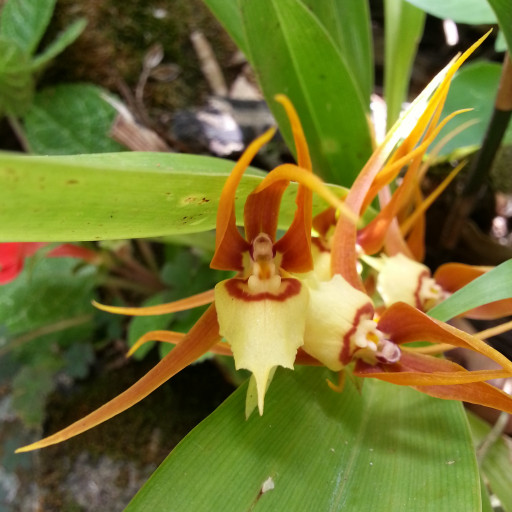
Plant Overview
Known widely as the Spider Orchid, Brassia is one of the most visually striking members of the orchid family. Native to the humid rainforests of Central and South America, these plants are famous for their long, spindly petals that look like the legs of a giant arachnid. Despite their exotic and somewhat intimidating appearance, they are beloved by hobbyists for their frequent, fragrant blooms and "alien" charm.
🔍 How to Identify
- 🕷️ Spider-like Blooms: The most defining feature is the extremely long, narrow sepals and petals that can reach up to 12 inches in length on some species.
- 🎨 Distinctive Patterning: The flowers are typically a pale greenish-yellow or creamy white, heavily decorated with dark maroon or chocolate-brown spots and blotches.
- 🍃 Flattened Pseudobulbs: At the base of the long, leathery leaves, you will find large, smooth, oval-shaped bulbs that the plant uses to store water.
🏡 In Your Garden
- 💨 The Need for Air: As epiphytes (plants that grow on trees), Brassia orchids require exceptional air circulation. They should never be planted in standard potting soil; instead, use a coarse, chunky orchid bark to allow the roots to breathe.
- 💧 Humidity over Wetness: They thrive in high humidity but are highly susceptible to root rot if left in standing water. Think of them as "air plants with an appetite"—they love a morning misting but need their "feet" to dry out between waterings.
⚠️ Safety & Toxicity
- ✅ Non-Toxic: Brassia orchids are generally considered safe and non-toxic for both humans and common household pets like cats and dogs.
- 🧤 Minor Irritation: While they aren't poisonous, the sap from a cut stem can occasionally cause very mild skin irritation for people with sensitive skin, so it's always best to wash your hands after repotting.
✨ Fun Fact
- 🐝 The Wasp Trickster: The Brassia evolved its spider-like shape to trick spider-hunting wasps! When a wasp sees the flower, it thinks it has found a spider to hunt. It dives down to sting the flower, and in the process, orchid pollen gets stuck to the wasp’s head, which it then carries to the next "spider" it tries to attack.

Detailed Care Instructions
To grow a Brassia plant successfully, follow these steps:
- Choose the right location: Brassia plants prefer bright, indirect light. They should not be exposed to direct sunlight, as it can damage their leaves. Place them near a window with filtered light or use curtains to diffuse the sunlight.
- Provide the right temperature and humidity: Brassias thrive in warm temperatures between 60-80°F (15-27°C) during the day and cooler temperatures around 50-60°F (10-15°C) at night. Maintain a humidity level around 50-70% by using a humidifier or placing a tray of water near the plant to increase humidity through evaporation.
- Use well-draining potting mix: Brassias require a well-draining growing medium. Use a potting mix suitable for orchids or create a mix of bark, perlite, and peat moss to ensure proper drainage.
- Water properly: Water your Brassia plant when the top inch of the soil feels dry. Always water thoroughly, allowing the excess water to drain from the pot. Avoid overwatering, as it can lead to root rot. To check the moisture level, stick your finger about an inch into the soil. If it feels dry, it's time to water.
- Fertilize regularly: Use a balanced orchid fertilizer diluted to half the recommended strength. Feed your Brassia plant every 2-4 weeks during the growing season (spring and summer) and reduce or stop fertilizing during the dormant period (fall and winter).
- Provide proper air circulation: Good air circulation helps prevent disease and ensures good growth. Ensure there is enough space between plants and avoid overcrowding.
- Repot when necessary: Brassias prefer to be slightly root-bound, so repot only when the roots are completely filling the pot. Repotting typically happens every 1-2 years. Use a larger pot with fresh potting mix, gently removing the old mix from the roots.
- Watch for pests and diseases: Keep an eye out for common orchid pests like aphids, mealybugs, and spider mites. Regularly inspect your Brassia plant for any signs of damage or infestation. If any pests or diseases are detected, promptly treat them with appropriate measures.
Following these guidelines should help your Brassia plant thrive and produce its beautiful and unique spider-looking blooms.

Place in a window with dappled sun or a spot in the middle of a room. Or directly in a window facing west or east.

Brassia plants require moderate watering. The soil should be kept moist, but not saturated. Overwatering can lead to root rot. In general, the plant should be watered when the top layer of soil feels dry to the touch. It is important to ensure that the water drains freely from the pot. If the plant is in a container without drainage holes, it is important to be cautious when watering to avoid waterlogging. Additionally, the water should be at room temperature before being applied to the plant. Cold water can shock the roots and cause damage. Lastly, it is beneficial to mist the plant regularly to provide humid conditions.
Apply a balanced fertilizer with equal amounts of nitrogen, phosphorus, and potassium every 2 weeks during the growing season. During the dormant season, fertilize every 6 weeks. Use a diluted solution of fertilizer and water the soil thoroughly. Avoid getting fertilizer on the leaves or flowers as it can cause damage.
Brassia plants thrive in well-draining soil with a high content of organic matter. The soil should have a slightly acidic to neutral pH, with a range between 6.0 and 7.0. It should also be able to retain moisture without becoming waterlogged, as these plants prefer consistently moist soil but are susceptible to rot if overwatered. To achieve this, a mixture of peat moss, perlite, and orchid bark is often recommended for Brassia plants. Regular fertilization is also important to ensure optimal growth and flowering.
To propagate this plant, you will need to take a cutting from the stem of the mature plant. Use a clean and sharp pair of scissors or pruning shears to make a clean cut about 4-6 inches from the tip of the stem.
Remove any leaves or additional growth from the bottom 2-3 inches of the cutting, leaving only a few leaves near the top.
Fill a small pot with well-draining potting mix and make a hole in the center. Dip the cut end of the cutting in rooting hormone powder and insert it into the hole in the potting mix.
Water the cutting thoroughly until the excess water drains from the bottom of the pot. Cover the pot with a clear plastic bag or plastic wrap to create a mini greenhouse and place it in a warm and brightly lit area, but out of direct sunlight.
Check the cutting regularly to make sure the soil remains moist but not waterlogged. In about 2-3 weeks, you should see new growth emerging from the top of the stem if the cutting has successfully rooted.
Once the new plant is established, you can transplant it into a larger pot or into the ground if you live in a suitable climate.
Common pests of the spider orchid include Scale insect, mealybugs, spider mites, thrips. Make a habit of checking your spider orchid frequently for pests so that any infestations can be caught and managed early.







