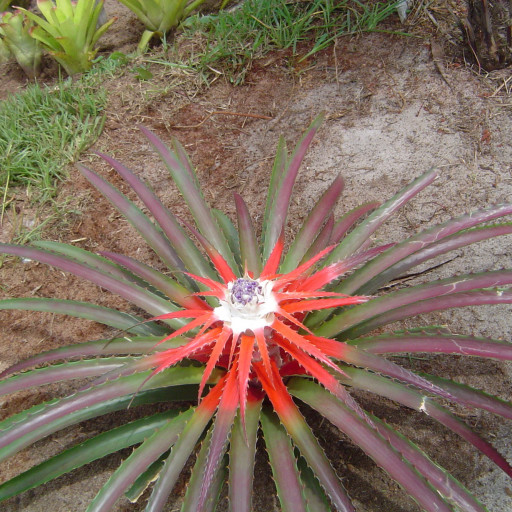
Plant Overview
Often called the "Heart of Flame," Bromelia balansae is a show-stopping terrestrial bromeliad native to the heart of South America. While it looks like a cluster of rugged, sword-like leaves for most of the year, it undergoes a dramatic transformation during its blooming cycle, with its center turning a brilliant, fiery crimson. This plant is a favorite for those looking to add a touch of the "prehistoric jungle" to their landscape.
🔍 How to Identify
- ⚔️ Sword-like Foliage: Long, arching, silver-green leaves that can grow up to 3-4 feet long. The edges are lined with incredibly sharp, recurved "cat-claw" spines.
- 🔥 The "Flame" Center: When ready to flower, the inner leaves of the rosette turn a vivid, glowing red to attract pollinators.
- 🍇 Clustered Fruit: Following the bloom, it produces dense clusters of bright orange, egg-shaped fruits that look like miniature pineapples.
🏡 In Your Garden
- 📏 Space is Key: Because of its aggressive spines and wide spread, this plant should never be placed near walkways or patios. It is best used as a "security hedge" or a focal point in the back of a garden bed.
- ☀️ Sun for Color: To get that iconic deep red center, this plant needs plenty of bright light. It is exceptionally drought-tolerant once established, thanks to its South American scrub-land origins, and prefers well-draining soil to avoid root rot.
⚠️ Safety & Toxicity
- 🛡️ Physical Hazard: While not chemically poisonous, the spines are no joke. They are hooked and can easily tear skin or snag clothing.
- 🐾 Pet Safety: The plant is generally considered non-toxic to cats and dogs if nibbled, but the sharp leaves act as a natural deterrent that keeps most animals far away.
✨ Fun Fact
In its native regions of Brazil and Paraguay, the acidic fruit of the Bromelia balansae is often used to make a refreshing, fermented beverage or a medicinal syrup believed to help with respiratory issues.

Detailed Care Instructions
To grow Bromelia Balansae plant, you can follow these steps:
- Choose a suitable location: Bromelia Balansae prefers bright, indirect sunlight. Select a spot in your home or garden where it can receive partial shade or filtered light. Avoid direct sunlight as it can scorch the leaves.
- Pot selection: Pick a pot with good drainage holes, as Bromelia Balansae prefers soil that is moist but not waterlogged. A container with a diameter of around 6-8 inches should be sufficient.
- Soil mixture: Use a well-draining potting mix. You can create a mix by combining equal parts of regular potting soil, perlite, and orchid bark or pine bark fines. This will provide good aeration and drainage for the plant.
- Planting: Carefully remove the Bromelia Balansae from its nursery pot and gently loosen the roots. Place it in the new pot, ensuring that the base of the plant is level with the rim of the container. Fill the pot with the soil mixture, pressing it down gently to secure the plant in place.
- Watering: Keep the soil slightly moist at all times, but do not let it become soggy. Water the plant thoroughly when the top inch of soil feels dry, allowing excess water to drain away. Avoid overwatering, as it can cause root rot.
- Humidity: Bromelia Balansae prefers high humidity levels. You can either mist the plant regularly or place a tray of water near it to increase humidity. Alternatively, you can use a humidifier to maintain suitable moisture levels.
- Fertilizing: Feed the plant with a diluted, balanced fertilizer every month during the growing season (spring and summer). Follow the instructions provided on the package for proper application.
- Temperature and humidity: Bromelia Balansae prefers warm temperatures ranging between 60-80°F (15-27°C). It thrives in high humidity conditions, so misting the leaves occasionally can help recreate its natural environment.
- Propagation: Bromelia Balansae can be propagated by division. As the plant grows, it produces offshoots called "pups". These pups can be separated from the parent plant using a clean, sharp knife and potted individually once they have developed roots.
- Pruning: Trim off any brown or dead leaves to maintain the plant's appearance and overall health. Use clean shears to make a clean cut close to the base of the plant.
Remember to monitor your Bromelia Balansae regularly for signs of pests, such as mealybugs or spider mites, and treat them promptly if detected.

Place in a bright room that is sun drenched almost all day. Or directly in a south-facing window.

Bromelia Balansae is a tropical plant that requires special care when it comes to watering. Here are some tips on how to water Bromelia Balansae:
1. Check the top layer of soil before watering to ensure that it has dried out. This will prevent over-watering and root rot.
2. Water the plant deeply, making sure to saturate the entire root ball. This will encourage deep root growth and prevent the plant from becoming root-bound.
3. Allow the excess water to drain out from the bottom of the pot or container. This will prevent the plant from sitting in excess water, which can also lead to root rot.
4. Do not let the plant sit in standing water. Empty any excess water from the saucer or container after watering.
5. Water the plant regularly, but not too frequently. Depending on the climate and humidity levels of the environment, this may be once a week or once every two weeks.
6. In low humidity environments, mist the plant occasionally to provide additional moisture.
Overall, the key to watering Bromelia Balansae is to ensure that the soil remains moist, but not waterlogged. With proper watering and care, this tropical plant can thrive and add a beautiful touch to any space.
- Choose a high-quality, balanced fertilizer that contains nitrogen, phosphorus, and potassium.
- Dilute the fertilizer with water according to the manufacturer's instructions.
- Apply the fertilizer solution to the soil around the plant, taking care to avoid getting it on the leaves or in the central rosette.
- Water the plant immediately after fertilizing to ensure that the nutrients are absorbed properly.
- Repeat the fertilization process every four to six weeks during the growing season (spring and summer).
- Monitor the plant for signs of over-fertilization, such as yellowing leaves or stunted growth, and adjust the fertilization schedule if necessary.
Bromelia Balansae plant requires a well-draining soil mix that is slightly acidic. The soil should have good moisture retention capacity to keep the plant hydrated but should also allow excess water to drain out effectively to prevent waterlogging. A mix of organic and inorganic materials such as peat moss, perlite, and sand can provide the ideal soil conditions for Bromelia Balansae. However, it is essential to avoid using heavy soils that can retain water for too long as it can lead to root rot. Regular fertilization with a balanced fertilizer can also promote healthy growth and vibrant foliage in the plant.
To propagate this particular plant, you will need to first identify a healthy and mature specimen. Once you have done so, carefully remove any offsets or "pups" that have formed around the base of the plant. Use a clean, sharp knife or scissors to do this, making sure to cut as close to the main plant as possible without damaging it.
Before planting the pups, allow them to callus over for a few days to reduce the risk of rotting. This can be done by placing them in a dry area out of direct sunlight.
Once the pups have callused, plant them in a well-draining potting mix, making sure to bury the base of the plant just below the soil line. Water thoroughly and place in a bright, but indirect light location.
Keep the soil consistently moist but not waterlogged, and avoid exposing the newly planted pups to extreme temperatures or direct sunlight. With proper care, the pups should begin to root within a few weeks and start producing their own leaves within a few months.








