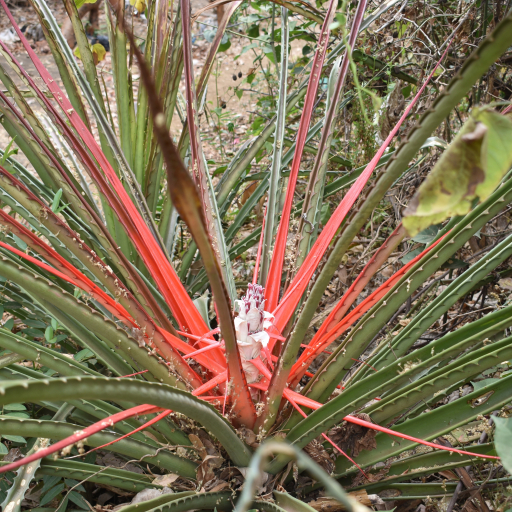
Plant Overview
Often called the "Wild Pineapple" or simply "Pinguin," this fierce tropical beauty is far from a delicate houseplant. Native to the sun-drenched regions of Mexico and the Caribbean, it is famous for its dramatic transformation, where its center turns a fiery crimson just before blooming. Historically, it has been used as a "living fence" because its formidable spines make it an impenetrable natural barrier.
🔍 How to Identify
- 🌵 Leaf Structure: Features long, sword-shaped leaves that grow in a dense rosette. The edges are lined with sharp, curved teeth that can easily snag clothing or skin.
- 🎨 Dramatic Color: While usually a dusty green, the inner leaves flush a brilliant, neon red or hot pink when the plant is ready to flower, creating a "bullseye" effect.
- 🍍 The Fruit: It produces clusters of yellow, egg-shaped fruits that look like miniature, smooth pineapples. These are highly acidic and grow from a central woody stalk.
🏡 In Your Garden
- 🛡️ The Living Security System: Because of its aggressive spines and spreading habit, it is rarely used as an ornamental centerpiece. Instead, it’s best placed along property borders where you want to discourage foot traffic.
- ☀️ Sun and Space: This plant thrives in poor, sandy soil and intense sunlight. It spreads via underground runners (stolons), so it needs plenty of room to expand; otherwise, it will quickly crowd out smaller neighbors.
⚠️ Safety & Toxicity
- ⚔️ Physical Hazard: The primary danger is the spines. They are hooked and can cause deep scratches or skin irritation. Always wear heavy-duty leather gloves when pruning.
- 👅 Irritating Fruit: While the fruit is technically edible and used in some traditional drinks, it contains high levels of the enzyme bromelain and calcium oxalate crystals. Eating it raw can cause a painful burning or "tingling" sensation on the tongue and lips.
- 🐾 Pet Safety: Keep pets away; the sharp leaves can injure curious dogs or cats, and the fruit may cause digestive upset if nibbled.
✨ Fun Fact
In Central and South America, the juice from the Pinguin fruit is sometimes used as a traditional meat tenderizer. Much like the common pineapple, its powerful enzymes break down proteins—which is also why your mouth might tingle if you try to eat the fruit raw!

Detailed Care Instructions
To successfully grow a Bromelia Pinguin plant, also known as the penguin plant or Ecuadorian air plant, you can follow these steps:
- Choose the right location: Bromelia Pinguin plants thrive in bright, indirect light. Place them near a window with filtered sunlight or in a shaded spot outdoors.
- Ensure proper temperature and humidity: The ideal temperature range for these plants is between 60-80°F (15-27°C). They prefer high humidity, so misting the plant regularly or placing a tray of water nearby can create a more favorable environment.
- Select a suitable pot or mounting surface: Bromelia Pinguin plants can be grown in pots or mounted on a piece of driftwood or cork bark. Choose a container with good drainage if using a pot to prevent waterlogging.
- Use well-draining soil or substrate: For potted plants, use a well-draining potting mix specifically designed for epiphytic plants or bromeliads. Alternatively, for mounted plants, attach the roots to the substrate using wire or non-toxic glue.
- Water correctly: Water your Bromelia Pinguin plant regularly, but allow the soil to partially dry out between waterings. For mounted plants, mist them frequently to provide the necessary moisture.
- Fertilize sparingly: Bromelia Pinguin plants are relatively low-maintenance and do not require much fertilizer. Dilute a balanced liquid fertilizer to 25% strength and apply it monthly during the growing season.
- Provide good air circulation: Adequate airflow is essential for the health of these plants. Ensure there is enough ventilation in the room or provide a small fan to promote air circulation.
- Propagation: Bromelia Pinguin plants produce offsets, also known as pups, around the base. After they reach a reasonable size, carefully detach the pups and plant them in their own containers or attach them to a substrate.
By following these steps and providing the right conditions, you can successfully grow a Bromelia Pinguin plant and enjoy its unique foliage and colorful inflorescence.

Place in a bright room that is sun drenched almost all day. Or directly in a south-facing window.

Bromelia Pinguin plant requires regular watering to maintain its health and growth. Watering must be done carefully, avoiding using hard tap water or cold water, as it may damage the plant. It is recommended to use distilled or rainwater, which is free from mineral and harmful chemicals.
One way to water Bromelia Pinguin plant is to pour the water directly into the center of the rosette, where the leaves meet, making sure not to overwater and cause the plant to rot. It is also important to make sure the water does not accumulate in the rosette, as it can attract insects or create a breeding ground for bacteria.
Alternatively, one can water the plant by placing the plant in a tray or saucer filled with water, ensuring that the roots do not come in direct contact with the water, as it can cause the roots to rot. This method of watering allows the plant to take up water through its roots, which is essential for its growth.
It is important to keep the soil moist but not waterlogged, as this can cause root rot. During the growing season, which is from spring to fall, the plant should be watered more frequently, while during the dormant season, which is from fall to spring, watering should be reduced.
Overall, Bromelia Pinguin plant requires careful and regular watering to thrive, and it is important to avoid overwatering or underwatering the plant to maintain its health and growth.
To fertilize the Bromelia Pinguin plant, use a balanced liquid or water-soluble fertilizer formulated for houseplants. Follow these instructions:
- Dilute the fertilizer according to the manufacturer's directions. Typically, a ratio of 1/4 to 1/2 strength is suitable for Bromelia Pinguin plants.
- Water the plant thoroughly before applying the fertilizer to ensure the soil is damp.
- Apply the diluted fertilizer to the soil around the plant. Avoid pouring it directly on the leaves or center cup of the plant.
- Use the recommended amount of fertilizer as directed by the manufacturer, usually once every one to two months during the growing season (spring and summer). Reduce or stop fertilizing during the plant's dormant period (fall and winter).
- After applying the fertilizer, water the plant lightly to help the nutrients reach the roots.
- Monitor the plant's response to the fertilizer. If the leaves start to burn or turn brown at the tips, reduce the amount of fertilizer or frequency of application.
Remember to read and follow the instructions on the fertilizer packaging for specific guidance on application rates and frequency.
Bromelia pinguin grows best in well-draining soil that is slightly acidic with a pH level of around 5.5 to 6.5. The soil should be rich in organic matter, such as peat moss or compost. A mix of sand, perlite, and vermiculite can also be added to improve drainage. Avoid using heavy clay soil or soils that are prone to waterlogging, as this can cause root rot. The soil should be moist but not waterlogged, with good air circulation around the roots. As Bromelia pinguin is an epiphyte, it can also be grown in a well-draining potting mix that includes bark or coconut coir. The plant also benefits from regular fertilization with a balanced, slow-release fertilizer during the growing season.
To propagate Bromelia Pinguin, you can follow these steps:
- Start by selecting a healthy parent plant that you wish to clone. Ensure that the parent plant is free from any diseases or pests and that it has reached maturity.
- Use sharp and sterilized pruning shears or a sharp knife to make a clean cut on a healthy and mature bromeliad pup. A pup is a small offshoot that typically grows at the base of the parent plant.
- Gently separate the pup from the parent plant by cutting it off at the base. Make sure to retain some of the attached roots, if possible.
- Prepare a suitable potting medium by mixing well-draining soil with organic matter such as compost or peat moss. Bromelia Pinguin prefers slightly acidic to neutral soil with good drainage.
- Fill a small pot with the prepared potting medium, ensuring that it has drainage holes at the bottom. Moisten the soil slightly, but avoid making it waterlogged.
- Make a small hole in the center of the potting medium and carefully place the pup into it, ensuring that the roots are covered and the base of the plant is level with the soil surface.
- Gently press the soil around the pup to provide support and stability. Avoid compacting the soil too firmly to allow air circulation.
- Place the newly potted pup in a bright location with indirect sunlight. Do not expose it to direct sunlight as it may cause sunburn.
- Maintain a consistent level of humidity around the plant by misting it regularly. This can be achieved by spraying water around the foliage without drenching the soil.
- Keep the soil slightly moist but avoid overwatering, as it can lead to root rot. Water only when the top inch of soil feels dry to the touch.
- With proper care and favorable conditions, the pup should start developing its own roots within a few weeks to a few months. During this time, avoid disturbing the plant unnecessarily.
By following these steps, you can successfully propagate Bromelia Pinguin and enjoy the new plant as it grows into a mature and beautiful specimen.








