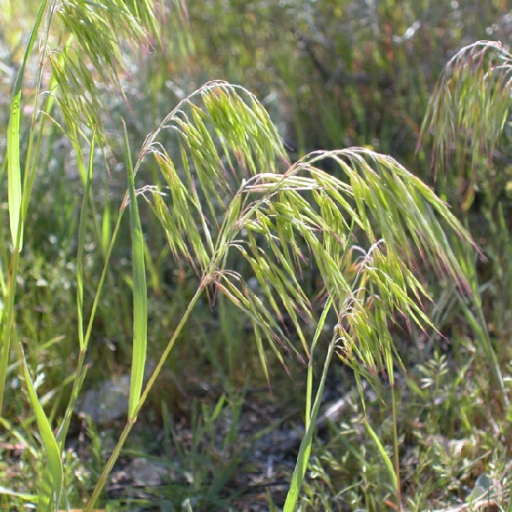
Plant Overview
Known as "Cheatgrass" or "Downy Brome," this opportunistic traveler has transformed landscapes across North America. While it starts as a soft, emerald carpet in early spring, it quickly earns its reputation as a frustrating invader. It is famous for its ability to "cheat" both farmers of their yields and native plants of their water, earning it a spot on the "most unwanted" list for many land managers.
🔍 How to Identify
- 🌾 The Droop: The seed heads (panicles) have a distinctive nodding or drooping appearance, leaning heavily to one side as they mature.
- 🌱 Downy Texture: True to its name, the leaves and sheaths are covered in soft, fine hairs (pubescence), giving the young plant a velvety feel to the touch.
- 🎨 Color Shift: It undergoes a dramatic transformation; starting bright green, it turns a striking reddish-purple in late spring before finally fading to a brittle, straw-like tan.
🏡 In Your Garden
- 🚧 The Unwelcome Guest: In a home landscape, Cheatgrass is rarely intentional. It is a pioneer species that thrives in disturbed soil, often appearing after construction or heavy weeding has left the ground bare.
- ⏳ A Head Start: As a "winter annual," it germinates in the fall or winter. This gives it a massive advantage, as it begins growing while your desired garden plants are still dormant, hogging all the spring moisture.
- 🔥 Fire Risk: In larger properties or rural gardens, this grass is a major concern. Once it dries out in early summer, it creates a "carpet of fuel" that can carry fire across a landscape with incredible speed.
⚠️ Safety & Toxicity
- 🐕 Physical Hazard: While not chemically toxic, the seeds have long, needle-like bristles called "awns." These are notorious for burrowing into dog ears, paws, and eyes, often requiring a trip to the vet for removal.
- 🧦 The Hitchhiker: The seeds are designed to hook into fur and fabric. If you walk through a patch, expect to spend time picking sharp seeds out of your socks and shoelaces.
- 🧤 Skin Irritation: The dry awns can be very prickly and can cause minor skin irritation or "splinters" if handled without gloves.
✨ Fun Fact
- 🕵️ The Name Origin: 19th-century wheat farmers in the American West coined the name "Cheatgrass" because they felt cheated when they realized this grass was stealing soil moisture and maturing so early that their actual wheat crops were left stunted and thirsty.

Detailed Care Instructions
To grow a Bromus tectorum plant, also known as cheatgrass or downy brome, you can follow these steps:
- Climate: Check if the climate in your region is suitable for growing Bromus tectorum. It is typically found in areas with temperate climates, such as the western regions of North America.
- Soil: Bromus tectorum prefers well-draining soil with a neutral pH level. Prepare the soil by removing any weeds or rocks and ensure it is loose and fertile.
- Seeds: Obtain Bromus tectorum seeds from a reputable source. This can be through purchasing them from a garden center or collecting them from mature plants. Make sure the seeds are fresh and viable.
- Planting: Sow the seeds directly into the prepared soil. Scatter them evenly over the surface and lightly rake them in, ensuring good seed-to-soil contact. Avoid burying them too deep, as they require light to germinate.
- Watering: After planting, water the area lightly to keep the soil moist but not waterlogged. Bromus tectorum is drought-tolerant once established, but it requires sufficient moisture for germination.
- Sunlight: Bromus tectorum thrives in full sun. Choose a location that receives at least 6-8 hours of direct sunlight per day.
- Maintenance: Once the plants start growing, they require minimal maintenance. Remove any competing weeds or grasses to prevent them from overcrowding the Bromus tectorum.
- Harvest: Depending on your purposes, you can harvest the seeds when they have fully matured and turned golden brown. Cut the seed heads and place them in a paper bag to dry. Shake the bag gently to release the seeds, and store them in a cool, dry place for future planting.
It's important to note that Bromus tectorum can be invasive in some regions, so be sure to check if it is recommended for your specific area before planting.

Place in a bright room that is sun drenched almost all day. Or directly in a south-facing window.

To water the plant, pour water around the base of it, being sure not to get any water on the leaves or stem. Water deeply, but allow the soil to dry out partially before watering again. Avoid overwatering, as this can lead to root rot and other problems. It is important to monitor the plant regularly to ensure it is getting the proper amount of water for its growing conditions.
To fertilize this plant, use a balanced fertilizer with an N-P-K ratio of 10-10-10. Apply the fertilizer in early spring before the plant has started actively growing. Be sure to follow the manufacturer's instructions on the amount of fertilizer to use and how often to apply it. As a general guideline, a light application of fertilizer every four to six weeks during the growing season should be sufficient. Always water the plant after fertilizing to help the nutrients reach the roots.
The ideal soil for the Bromus Tectorum plant is a well-draining loam soil that is fertile and rich in organic matter. The pH level of the soil should be between 6.5 to 7.5, which means it should be slightly alkaline. The soil texture should be sandy or loamy, and it should be able to retain moisture without getting waterlogged. This plant prefers soils that are low in salt and not too heavy in clay. The soil should also be free of stones, rocks, and other debris that may obstruct the plant's growth and development. The Bromus Tectorum plant is adaptable to various soil types, including dry and arid soils, but it prefers soils that have moderate moisture and nutrients. To ensure the best growing conditions, it is recommended to amend the soil with compost or fertilizer to provide essential nutrients for the plant's growth and development.
To propagate this plant, you will need to collect the mature seeds from the plant. These seeds will need to be stored in a cool, dry place until ready to sow. When sowing, ensure that the area is well-drained and free of weeds. The seeds should be scattered on the surface of the soil and covered lightly with a layer of soil. Water the area regularly to keep the soil damp, but not soaked. The seeds should germinate within a few days to a week, and the seedlings should be thinned out when they are about 2-3 inches tall, leaving at least 6 inches between each seedling. Once established, the plant requires very little care and will self-seed, creating a naturalized area of tall grasses.








