Plant Overview
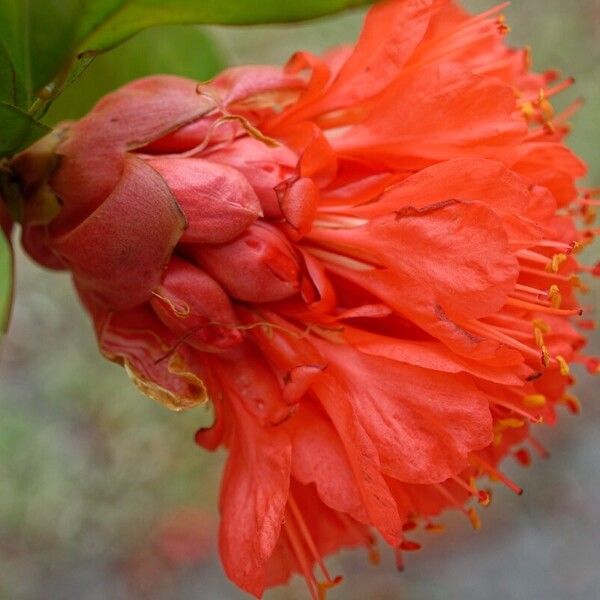
Known as the "Scarlet Flame Bean" or "Mountain Rose," Brownea coccinea is a botanical showstopper hailing from the lush rainforests of Venezuela and Guyana. It is legendary among plant collectors for its dramatic, pom-pom-like flower clusters that look like bursts of fire against its deep green foliage. Often found tucked away in tropical conservatories, it brings a touch of prehistoric mystery to any garden.
🔍 How to Identify
- 🌺 Flaming Blooms: The most striking feature is the dense, spherical clusters of scarlet-orange flowers. These heavy "roses" often hang downwards, sometimes hiding shyly beneath the canopy.
- 🍃 The "Handkerchief" Foliage: New leaves emerge in limp, pendulous tassels that are pale pink or mottled brown. They hang vertically like colorful rags, looking almost wilted until they mature and turn stiff and green.
- 🌳 Growth Habit: This is a slow-growing, evergreen small tree or large shrub. It features a spreading, umbrella-like canopy and smooth, grayish-brown bark.
🏡 In Your Garden
- 🌦️ Humidity is King: This plant is a true child of the tropics. It thrives in "steamy" conditions; if the air is too dry, the delicate new growth will shrivel and drop before it has a chance to harden.
- ☂️ The Understory Dweller: Unlike many flowering tropicals that crave scorching sun, the Scarlet Flame Bean prefers dappled shade. It is a "social" tree that enjoys the protection and filtered light provided by taller garden neighbors.
- 💧 Sensitive Roots: It dislikes being moved once established. When planting, choose a permanent spot with rich, acidic, and well-draining soil to avoid "root sulking."
⚠️ Safety & Toxicity
- ✅ Safe Status: Brownea coccinea is generally considered non-toxic to humans and common household pets like cats and dogs.
- 🧤 General Caution: While it lacks known toxins, the sap of many tropical trees can cause mild skin irritation for those with extreme sensitivities. It is always best to admire the flowers rather than ingest any part of the plant.
✨ Fun Fact
The Brownea is a master of "leaf mimicry." It intentionally makes its brand-new leaves look dead, limp, and colorless to trick hungry insects into thinking the foliage is rotten or nutrient-poor. Once the leaves develop their tough outer layer and bitter tannins, they "magically" turn green and lift toward the sun!

Detailed Care Instructions
Brownea coccinea, commonly known as the Scarlet Flame Bean or Scarlet Brownea, is a tropical flowering tree native to Central and South America. If you’re looking to grow this plant, here are some tips to help you succeed:
1. Climate and Location
- Hardiness Zone: Brownea coccinea thrives in USDA hardiness zones 10-11, where temperatures remain consistently warm.
- Sunlight: Choose a spot that receives full sun to partial shade. Ideally, it should get at least 6 hours of direct sunlight per day.
2. Soil Requirements
- Soil Type: Use well-draining, loamy soil rich in organic matter. The soil should retain moisture but not become waterlogged.
- pH Level: A slightly acidic to neutral pH (5.5 to 7.0) is ideal for Brownea coccinea.
3. Watering
- Water regularly, especially during dry periods, to keep the soil moist but not soggy. Avoid overwatering as this can lead to root rot.
- During establishment, ensure the plant gets sufficient moisture to help it acclimate.
4. Fertilization
- Provide a balanced fertilizer during the growing season (spring and summer) to promote healthy growth and flowering.
- Follow the manufacturer's instructions for application rates.
5. Pruning
- Prune the plant to shape it and remove any dead or damaged branches. This can help improve airflow and reduce the risk of disease.
6. Pests and Diseases
- Watch for common pests like scale and aphids. Use insecticidal soap or neem oil if necessary.
- Fungal diseases can affect Brownea coccinea. Ensure adequate air circulation and avoid wetting the leaves when watering.
7. Propagation
- Brownea coccinea can be propagated from seeds. Soak seeds in water for 24 hours before planting.
- Plant the seeds in a rich, well-draining soil mix and maintain humidity until they germinate.
8. Container Growing
- If you're growing Brownea coccinea in a container, choose a large pot to accommodate its root system. Ensure it has drainage holes.
- Repot every few years to refresh the soil and provide more space for growth.
9. Temperature and Humidity
- Brownea coccinea prefers warm temperatures and high humidity. If grown indoors or in a less humid area, consider using a humidifier or misting regularly.
10. Patience in Blooming
- This tree can take several years to flower, so patience is required. Factors like age, health, and environment will affect blooming.
By providing the right conditions and care, your Brownea coccinea can thrive and produce beautiful red flowers. Good luck with your gardening!
Watering the Brownea coccinea plant requires attention to its specific needs for moisture and drainage. Here are guidelines to ensure proper watering:
- Soil Moisture: This plant prefers consistently moist soil but is susceptible to root rot if overwatered. Check the moisture level by inserting your finger about an inch deep into the soil. If it feels dry at that depth, it's time to water.
- Watering Method: Water the plant thoroughly until water drains out of the bottom of the pot. This ensures that the entire root system receives moisture. Be sure to empty any saucer beneath the pot to prevent the roots from sitting in water.
- Frequency: The watering frequency may vary depending on the climate, season, and indoor conditions. Generally, during the growing season (spring and summer), you may need to water more often, approximately once or twice a week, while in the dormant period (fall and winter), reduce watering, possibly to once every two weeks.
- Water Quality: Use room-temperature water that is free from chlorine and other chemicals. If possible, let tap water sit out for 24 hours before use, allowing any chlorine to dissipate.
- Humidity: This plant thrives in humid environments. If your home has low humidity, consider misting the leaves or placing a tray of water with pebbles beneath the pot to increase humidity levels around the plant.
- Environmental Factors: Factors such as light, temperature, and soil type can affect how often the plant needs watering. Bright, indirect light may increase the plant's water uptake, while lower light and cooler temperatures may decrease it.
- Observation: Keep an eye on the plant for signs of overwatering (yellowing leaves, droopiness) or underwatering (crispy, brown leaf edges). Adjust your watering routine accordingly based on these observations.
By following these guidelines, you can ensure that the Brownea coccinea receives the right amount of water to thrive.
To fertilize Brownea Coccinea effectively, follow these guidelines:
- Type of Fertilizer: Use a balanced fertilizer with an equal N-P-K ratio (such as 10-10-10 or 20-20-20), or opt for a fertilizer specially formulated for flowering plants. Alternatively, a slow-release granule or organic fertilizer is also suitable.
- Frequency: Fertilize during the growing season, typically from spring to early fall. Apply fertilizer every 4-6 weeks, reducing frequency during the dormant winter months.
- Dilution: If using liquid fertilizer, dilute it to half the recommended strength to avoid over-fertilization.
- Application Method:
- For granular fertilizers, sprinkle the recommended amount around the base of the plant, avoiding direct contact with the stems. Water thoroughly after application to help the nutrients penetrate the soil.
- For liquid fertilizers, apply it directly to the soil, ensuring it reaches the root zone, again avoiding contact with the foliage.
- For granular fertilizers, sprinkle the recommended amount around the base of the plant, avoiding direct contact with the stems. Water thoroughly after application to help the nutrients penetrate the soil.
- Monitoring: Observe the plant for signs of nutrient deficiency (such as yellowing leaves) or excess (such as leaf burn). Adjust your fertilization schedule accordingly.
- Soil pH: Ensure that the soil pH is slightly acidic to neutral (around 6.0 to 7.0) for optimal nutrient absorption.
- Watering: Maintain consistent moisture in the soil, as both overwatering and underwatering can affect nutrient uptake. Always water first before applying fertilizer to prevent root damage.
By following these guidelines, you can support the healthy growth and flowering of the Brownea Coccinea plant.
For the Brownea coccinea plant, a well-draining, well-aerated soil mix is essential to support its growth and health. Here are the specific characteristics to look for in soil:
- Drainage: The soil should have excellent drainage to prevent waterlogging, which can lead to root rot. Incorporating materials such as coarse sand, perlite, or pumice can enhance drainage qualities.
- Organic Matter: A good mix contains a substantial amount of organic matter to provide nutrients. You can use compost or well-rotted leaf mold to achieve this. A ratio of about 30-50% organic matter within the mix is often beneficial.
- pH Level: The ideal pH range for this plant is typically slightly acidic to neutral, around 5.5 to 7.0. Testing the soil and adjusting with amendments like elemental sulfur (to lower pH) or lime (to raise pH) may be necessary.
- Water Retention: While good drainage is important, the mix should also retain some moisture. Incorporating components like coconut coir or peat moss can help retain water without becoming overly saturated.
- Aeration: Including materials such as bark fines or vermiculite can improve aeration in the soil, promoting healthy root development.
In summary, a suitable soil mix for Brownea coccinea could include a blend of potting soil, coarse sand or perlite for drainage, organic compost for nutrients, and a source of moisture retention like peat or coir. Aim for a light, fluffy texture that allows for both aeration and moisture retention.
Propagation of Brownea coccinea typically involves both seed and vegetative methods. Here are the detailed steps for each method:
Propagation by Seed
- Seed Collection:
- Harvest seeds from ripe pods when they are fully mature and dry but before they split.
- Ensure the seeds are healthy and free from pest damage.
- Harvest seeds from ripe pods when they are fully mature and dry but before they split.
- Seed Preparation:
- Soak seeds in water for 24 hours to help soften the seed coat and improve germination rates.
- After soaking, rinse the seeds to remove any residue.
- Soak seeds in water for 24 hours to help soften the seed coat and improve germination rates.
- Sowing:
- Prepare a seed-starting mix that is well-draining. A mix containing peat, perlite, and sand works well.
- Fill seed trays or pots with the seed-starting mix and moisten it lightly.
- Sow the seeds about 1-2 inches apart on the surface of the soil and cover them lightly with a thin layer of the mix.
- Prepare a seed-starting mix that is well-draining. A mix containing peat, perlite, and sand works well.
- Germination Conditions:
- Place the trays or pots in a warm location with temperatures around 70-80°F (21-27°C).
- Provide indirect light to prevent scorching the seeds.
- Keep the substrate consistently moist, but not soggy, using a spray bottle or a gentle watering method.
- Place the trays or pots in a warm location with temperatures around 70-80°F (21-27°C).
- Transplanting:
- Once seedlings emerge and develop a few true leaves (usually after several weeks to a few months), they can be transplanted into individual pots.
- Use a well-draining potting mix and continue to provide adequate light and water.
Propagation by Vegetative Cuttings
- Once seedlings emerge and develop a few true leaves (usually after several weeks to a few months), they can be transplanted into individual pots.
- Selection of Cuttings:
- Choose healthy, non-flowering stems that are semi-hardwood, typically during the growing season (spring to early summer).
- The cuttings should be 6-8 inches long and have several leaf nodes.
- Choose healthy, non-flowering stems that are semi-hardwood, typically during the growing season (spring to early summer).
- Preparation of Cuttings:
- Use a clean, sharp knife or pruning shears to make a cut just below a leaf node.
- Remove the lower leaves to reduce moisture loss and prevent rotting when planted.
- Use a clean, sharp knife or pruning shears to make a cut just below a leaf node.
- Rooting Hormone (Optional):
- Dip the cut end of the stem into rooting hormone to encourage root development. This step is optional but can enhance success rates.
- Dip the cut end of the stem into rooting hormone to encourage root development. This step is optional but can enhance success rates.
- Planting Cuttings:
- Prepare a pot with a well-draining potting mix or a mix of peat and perlite.
- Insert the cut end of the cutting into the mix, ensuring that at least one leaf node is buried in the medium.
- Prepare a pot with a well-draining potting mix or a mix of peat and perlite.
- Creating Humidity:
- To maintain humidity, cover the pot or tray with a clear plastic bag or a humidity dome without touching the cuttings. Ensure there’s some airflow to prevent mold.
- Place the setup in a location with bright, indirect light and temperatures around 70-75°F (21-24°C).
- To maintain humidity, cover the pot or tray with a clear plastic bag or a humidity dome without touching the cuttings. Ensure there’s some airflow to prevent mold.
- Watering:
- Keep the soil lightly moist, but avoid over-watering. Check for root growth after a few weeks by gently tugging on the cutting. Resistance indicates roots have developed.
- Keep the soil lightly moist, but avoid over-watering. Check for root growth after a few weeks by gently tugging on the cutting. Resistance indicates roots have developed.
- Transplanting:
- Once sufficient roots have formed (typically after 4-8 weeks), transplant the cuttings into larger pots with well-draining soil.
- Gradually acclimate them to normal conditions by removing the cover for a few hours each day before completely removing it.
By following these methods, you can successfully propagate Brownea coccinea. Good luck with your propagation efforts!
- Once sufficient roots have formed (typically after 4-8 weeks), transplant the cuttings into larger pots with well-draining soil.







