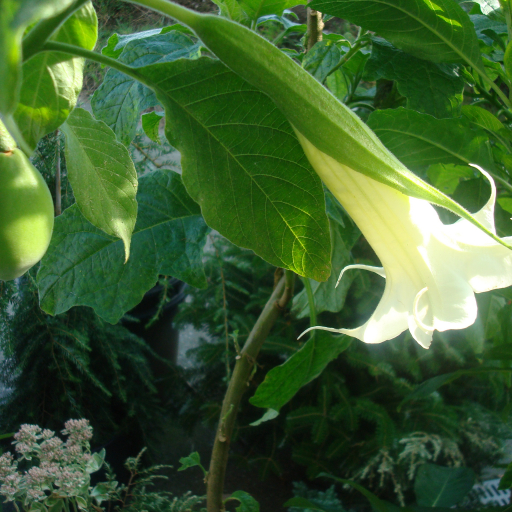
Plant Overview
Often called the "Angel’s Trumpet," Brugmansia arborea is a show-stopping woody shrub that drapes itself in massive, bell-shaped flowers. Native to the cool, misty heights of the Andes, it evokes a sense of tropical mystery and ancient folklore. It is world-renowned for its intoxicating evening fragrance that can fill an entire garden as soon as the sun sets.
🔍 How to Identify
- 🎺 The Flowers: Features large, pendulous trumpets (usually 5–7 inches long) that are typically white or cream-colored and hang vertically toward the ground.
- 🍃 The Foliage: The leaves are large, ovate, and covered in fine, soft hairs, giving them a distinct velvety texture compared to other Brugmansia species.
- 🌳 Growth Habit: This is a woody perennial that can reach the height of a small tree, often developing a sturdy, trunk-like base over several years.
🏡 In Your Garden
- 🌙 Nocturnal Perfume: The plant is "vespertine," meaning its scent is specifically evolved to attract night-pollinating moths; expect a powerful, sweet aroma to emerge only after dusk.
- 🥤 Thirsty & Hungry: These are "heavy feeders" that require high-quality fertilizer and consistent moisture to support their rapid growth and massive floral displays.
- ❄️ Frost Sensitivity: While it loves the sun, it is quite tender. Even a light frost can damage the soft wood, so gardeners in cooler climates often grow it in large pots to move indoors during winter.
⚠️ Safety & Toxicity
- 🚫 Extreme Toxicity: All parts of the Angel’s Trumpet—especially the seeds and leaves—are highly poisonous if ingested, containing potent tropane alkaloids.
- 🐾 Pets & Kids: This plant should be kept strictly out of reach of children and pets. Even simple tasks like pruning should be done with gloves, as the sap can cause skin irritation or temporary vision blurring if it comes into contact with your eyes.
✨ Fun Fact
- 🕯️ A Garden Ghost: The IUCN Red List officially classifies Brugmansia arborea as "Extinct in the Wild." It only exists today because humans have spent centuries cultivating and sharing it in gardens across the globe!

Detailed Care Instructions
To grow Brugmansia Arborea, also known as Angel's Trumpet, follow these steps:
- Choose a suitable location: Brugmansia Arborea thrives in a sunny spot with partial shade, protected from strong winds and frost. The soil should be well-draining and rich in organic matter.
- Propagation: Propagate Brugmansia Arborea from stem cuttings or seeds. Cuttings are the most common method. Take a 6-8 inch cutting from a healthy, mature plant just below a leaf node. Remove any lower leaves and dip the cut end in a rooting hormone powder. Plant the cutting in a well-draining soil mix and keep it evenly moist.
- Planting: If you are using seeds, sow them in a seed tray filled with potting mix. Cover the tray with a plastic dome or plastic wrap to create a greenhouse-like environment. Keep the soil consistently moist until the seeds germinate. Once the seedlings are a few inches tall, transplant them to individual pots or into the ground.
- Soil preparation: Prepare the soil by adding organic matter such as compost or well-rotted manure to improve its fertility and drainage. Brugmansia Arborea prefers slightly acidic soil with a pH between 5.5 and 7.
- Watering: Keep the soil consistently moist, especially during hot, dry periods. However, make sure not to overwater as excessive moisture can lead to root rot. Monitor the soil moisture by sticking your finger about an inch into the soil; if it feels dry, water the plant.
- Fertilization: Feed your Brugmansia Arborea plant regularly with a balanced, slow-release fertilizer during the growing season. Follow the manufacturer's instructions for application rates. Additionally, supplement with a high potassium liquid fertilizer during flowering to stimulate more blooms.
- Pruning: Prune the plant in early spring before new growth appears to maintain its shape and size. Remove any dead, diseased, or damaged branches. Pruning also encourages more branching, which leads to increased flower production.
- Frost protection: Brugmansia Arborea is not frost-resistant and should be protected from freezing temperatures. If you live in a cold climate, you may need to bring your plant indoors or provide winter protection, such as wrapping it with burlap or covering it with a frost blanket.
- Pests and diseases: Watch out for common pests like aphids, whiteflies, and spider mites. Treat infestations with insecticidal soap or neem oil. Monitor for signs of diseases like powdery mildew or leaf spot, and take appropriate measures to prevent or treat them.
By following these steps and providing optimal growing conditions, you can successfully grow Brugmansia Arborea and enjoy its beautiful trumpet-shaped flowers.

Place in a window with dappled sun or a spot in the middle of a room. Or directly in a window facing west or east.

1. Determine the moisture level of the soil before watering.
2. Water the plant deeply, allowing water to soak into the soil and reach the roots.
3. Avoid over-watering, as this can lead to root rot and other problems.
4. Wait until the top layer of soil is dry before watering again.
5. Use a watering can or hose with a gentle spray attachment, to avoid damaging the plant.
6. Water in the morning or evening when temperatures are cooler to help reduce evaporation.
7. During periods of high heat or drought, increase watering frequency to ensure the plant stays hydrated.
8. If the plant is grown in a container, make sure there are drainage holes in the bottom to allow excess water to escape.
9. Use a moisture meter to ensure the soil stays at a consistent moisture level, especially if the plant is grown in a container.
10. Avoid getting water on the leaves or flowers as this can cause fungal disease.
For best results with this plant, it is recommended to use a balanced fertilizer with an N-P-K ratio of 10-10-10. Fertilize every 2-3 weeks during the growing season (spring and summer) and reduce frequency during the fall and winter. Dilute the fertilizer according to the instructions on the package and apply to the soil around the plant, taking care not to get it on the foliage. Water thoroughly after applying fertilizer.
Brugmansia Arborea thrives in well-draining soil that has a neutral to slightly acidic pH level. A mix of organic matter, such as compost, and a coarse material, such as perlite or sand, should be used to ensure proper drainage. The soil should be rich in nutrients, including phosphorus and potassium, and the plant should be fertilized regularly with a balanced fertilizer. When planting, ensure that the soil is moist but not waterlogged, and that the plant is placed in a location with plenty of sunlight. It is important to avoid using soil that is too compact, as this can cause waterlogging and reduce the plant’s ability to absorb nutrients. Regular watering is essential to keep the soil moist and to prevent the plant from drying out.
The Brugmansia plant can be propagated through several methods such as stem cuttings, air layering, and root division.
To propagate through stem cuttings, select a healthy stem that is free from any signs of disease or pests. Make a clean cut below a node using a sharp sterilized knife or pruning shears. Remove the lower leaves and dip the cutting in rooting hormone powder. Place the cutting in a pot filled with well-draining soil and keep it in a warm, moist and shaded area. Keep the soil moist and allow the cutting to root and develop new growth.
To propagate through air layering, select a healthy branch and make a small cut through the bark of the stem. Apply rooting hormone to the cut and wrap the area with moist sphagnum moss. Cover the moss and stem with plastic wrap, creating a mini greenhouse. Wait for roots to emerge from the moss and then cut the branch below the rooted area and pot it in soil.
To propagate through root division, dig up the plant when it is dormant and carefully pull apart the roots to make new plants with their own root systems. Be sure to plant the new divisions in well-draining soil and water thoroughly.
Overall, it is essential to maintain a moist and warm environment for the plant to successfully propagate.
Common pests of the angel's trumpet include Scale insect, mealybugs, spider mites, aphids, thrips. Make a habit of checking your angel's trumpet frequently for pests so that any infestations can be caught and managed early.








