Plant Overview
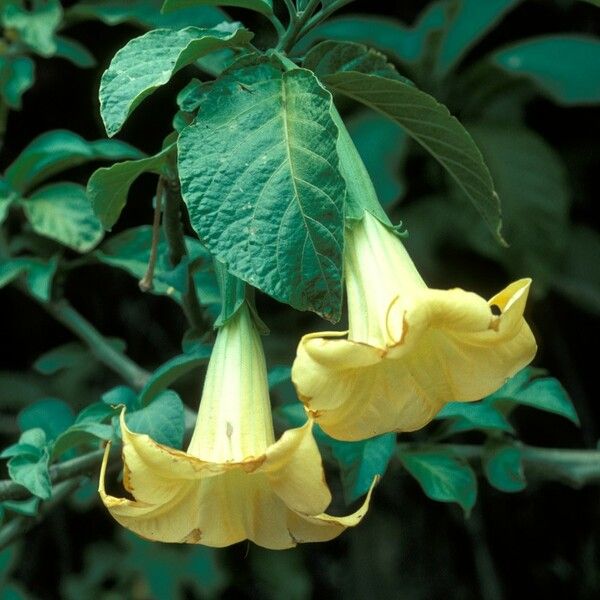
Often referred to as the "Angel’s Trumpet," Brugmansia pittieri is a botanical masterpiece of the Central American rainforests. Known for its massive, downward-hanging blooms that resemble golden bells, this plant carries a legendary reputation for both its ethereal beauty and its potent, "mystical" chemical properties. In the wild, it acts as a beacon for nocturnal pollinators, releasing a heavy, sweet perfume that dominates the night air.
🔍 How to Identify
- 🎺 The Flowers: Large, pendulous (hanging), trumpet-shaped blooms that are typically creamy white to pale yellow, featuring distinct "teeth" or points at the rim of the corolla.
- 🍃 The Foliage: Large, broad, ovate leaves that feel slightly velvety to the touch. The leaves are arranged alternately along woody, grayish stems.
- 🌳 Growth Habit: It grows as a large woody shrub or a small tree, often reaching heights of 10-15 feet, with a spreading canopy that creates a natural umbrella of flowers.
🏡 In Your Garden
- 💧 Thirsty & Hungry: Unlike many hardy shrubs, Brugmansia is a "heavy feeder." It requires frequent watering and regular fertilizing to sustain those massive flowers. If it wilts, it’s usually telling you it’s thirsty.
- 🌙 The Night Shift: To enjoy the full experience, plant it near a patio or window. The scent is almost non-existent during the day but becomes intoxicatingly strong as the sun sets to attract its primary pollinators, hawkmoths.
⚠️ Safety & Toxicity
- 🚫 Status: Extremely Toxic.
- ☣️ Details: Every part of this plant—the seeds, flowers, and leaves—contains tropane alkaloids (like scopolamine). Ingestion can cause hallucinations, paralysis, and even death. It is vital to keep this plant out of reach of curious pets and children. Always wear gloves when pruning, as the sap can irritate the skin or cause pupil dilation if it touches your eyes.
✨ Fun Fact
In the wild, Brugmansia species are technically "extinct in the wild" in their original forms; they have been cultivated and preserved by humans for thousands of years, primarily for use in shamanic rituals and traditional medicine in the Andes and Central America.

Detailed Care Instructions

Place in a window with dappled sun or a spot in the middle of a room. Or directly in a window facing west or east.

The presence of a dry surface layer of soil does not indicate that the plant requires water. Instead, stick your finger 1-2" (3-5 cm) deep in the soil to feel dampness or moisture content. If the soil seems dry, it's time to water your greens. If the soil is still moist, however, it is better not to water your plant and instead wait a day or two. Overwatering or waterlogging raises the risk of root rot. So if the soil takes longer than a week to dry, check the light conditions because it's likely that the plant isn't getting enough light. It's fine if the upper layer of soil is dry between waterings, but the deeper soil layer should always have some moisture.
These plant needs regular fertilizing during growing seasons. Fertilizing your plants in dormant state during the winter, might result in scorching or browning of the leaf tips. If mature plants display signs of nutrient insufficiency, fertilizer administration is necessary to restore the plant to its previous state.








