Plant Overview
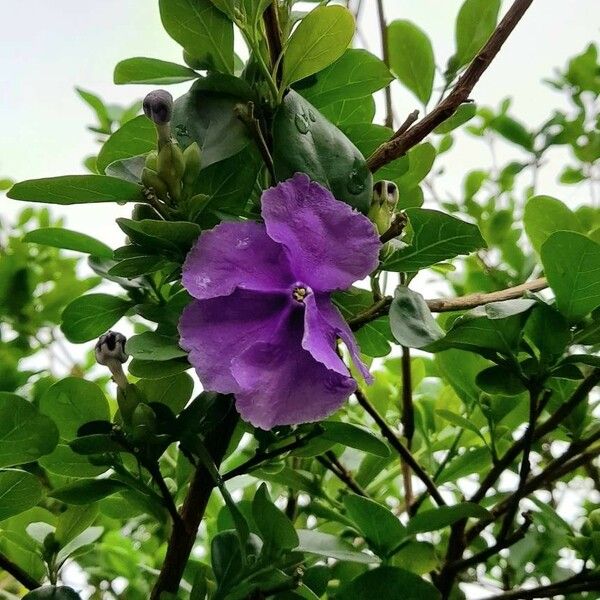
Meet the floral world’s most famous time-traveler, widely known as the "Yesterday-Today-and-Tomorrow" plant. This charming evergreen shrub is a sensory delight, beloved for its rare ability to display three different colors of flowers on a single branch simultaneously. Originating from the lush woodlands of South America, it fills the air with a sweet, jasmine-like perfume that can transform any garden into a fragrant retreat.
🔍 How to Identify
- 🌸 Triple-Toned Blooms: The most striking feature is the five-petaled flowers that emerge deep violet (yesterday), fade to pale lavender (today), and finally turn pure white (tomorrow) before falling.
- 🍃 Leathery Foliage: Its leaves are smooth, dark green, and somewhat leathery to the touch, providing a dense, lush backdrop for the colorful blossoms.
- 👃 Intense Fragrance: You will often smell this plant before you see it; the blooms release a heavy, sweet scent that is particularly potent during warm afternoons and evenings.
🏡 In Your Garden
- 🧪 Soil Sensitivity: This plant is an "acid-lover," much like Azaleas or Gardenias. If the leaves start turning yellow while the veins stay green, it’s likely a sign that the soil pH is too high and needs a boost of acidity.
- 🌤️ Light Nuance: While it craves light to produce its famous flowers, the "Yesterday-Today-and-Tomorrow" plant prefers dappled shade in hotter climates. Harsh, direct midday sun can bleach the leaves and cause the flowers to wilt prematurely.
⚠️ Safety & Toxicity
- 🚫 High Toxicity: This plant contains brunfelsamidine and hopeanine, which are potent neurotoxins. All parts are toxic, but the seed pods (which look like small green berries) are the most dangerous.
- 🐾 Pet Warning: It is exceptionally dangerous for dogs, who are often tempted by the berries. Ingestion can lead to tremors, seizures, and vomiting. Keep this plant in a fenced area or a hanging pot away from curious pets and toddlers.
✨ Fun Fact
The genus was named in honor of Otto Brunfels, a 16th-century German monk and botanist who is often called one of the "Fathers of Botany" for his work in transitioning plant study from medieval folklore to actual science!

Detailed Care Instructions
To grow Brunfelsia Australis, also known as the Yesterday, Today, and Tomorrow plant, follow these steps:
- Location: Choose a location that receives partial shade to full sun. The plant prefers a warm climate but can tolerate a wide range of temperatures.
- Soil: Select well-draining soil with a slightly acidic to neutral pH level. Amend the soil with organic matter such as compost to improve its fertility and drainage.
- Planting: Dig a hole slightly larger than the rootball of the plant. Place the plant in the hole, ensuring the crown is level with the soil surface, and backfill with soil. Water thoroughly after planting to settle the soil around the roots.
- Watering: Water the plant regularly to keep the soil moist but not waterlogged. The plant should be watered deeply but allow the top inch of soil to dry out before the next watering.
- Fertilizer: Use a balanced, slow-release fertilizer formulated for flowering plants. Apply the fertilizer according to the package instructions, typically once every 6-8 weeks during the growing season.
- Pruning: Trim back the plant after it finishes flowering to promote bushier growth. Remove any dead, damaged, or diseased branches throughout the year.
- Propagation: Brunfelsia Australis can be propagated through both seed and stem cuttings. To propagate using stem cuttings, take a 4-6 inches long cutting from a healthy branch, remove the lower leaves, and plant it in a pot with well-draining soil. Keep the soil moist and place the pot in a warm, bright location.
- Pests and Diseases: Monitor the plant for common pests like aphids, mealybugs, and spider mites. Treat any infestations promptly with insecticidal soap or organic pest control methods. Watch out for fungal diseases and avoid overhead watering to prevent leaf spotting.
By following these steps and providing the proper care, your Brunfelsia Australis plant should thrive and grow.

Place in a window with dappled sun or a spot in the middle of a room. Or directly in a window facing west or east.

To water this plant, one should begin by checking the soil moisture level. This can be done by inserting a finger into the soil, up to the first knuckle. If the soil feels dry, it is time to water the plant.
When watering, it is best to use room temperature water to avoid shock to the plant's roots. The water should be poured gently onto the soil, aiming to thoroughly wet the entire root system. It is important not to let the plant sit in standing water for an extended period of time, as this can lead to root rot.
During periods of active growth, this plant may require more frequent watering. However, it is important not to overwater, as this can also harm the plant. As a general guideline, water when the top inch of soil feels dry to the touch.
In addition to monitoring soil moisture, it is important to also consider the plant's environment. If the plant is located in an area with low humidity, it may benefit from additional humidity. This can be provided through the use of a humidifier or by placing a tray of water near the plant.
Overall, providing consistent and appropriate watering is key to maintaining a healthy Brunfelsia Australis plant.
To fertilize the plant, it is recommended to use a balanced fertilizer with equal amounts of nitrogen, phosphorus, and potassium. Use a slow-release fertilizer in the spring and summer months, and only fertilize every other month during the winter. Be careful not to over-fertilize, as this can lead to leaf burn and other damage. Water the plant thoroughly before and after fertilizing. Additionally, it is also recommended to use organic matter, such as compost or aged manure, to enrich the soil.
The best type of soil to use with this plant is a well-draining soil that is rich in organic matter. It should have a pH range of 5.5 to 6.5 and be able to retain moisture without becoming waterlogged. A mix of peat moss, perlite, and vermiculite can be used as a growing medium. It is also important to provide the plant with regular fertilization, particularly during periods of active growth.
To propagate this plant, take stem cuttings from a healthy and mature plant. Choose a stem that is about 6 inches long and has a few leaves. Remove the lower leaves on the stem, leaving only a few at the top. Dip the cut end of the stem in rooting hormone powder. Plant the stem in a pot filled with a well-draining soil mix. Water the plant thoroughly and keep it in a warm and humid environment. After a few weeks, new roots will start to develop and new growth will appear on the stem. Once the plant has established roots, it can be transferred to its permanent location.








