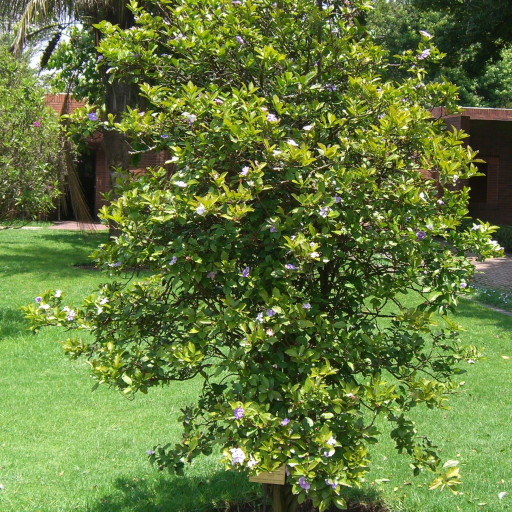
Plant Overview
Known as the "Yesterday-Today-and-Tomorrow" plant, this enchanting Brazilian shrub is a living time-lapse in your garden. It earned its poetic nickname because its fragrant flowers undergo a dramatic color transformation over three days, transitioning from deep purple to soft lavender and finally to pure white. Walking past one in full bloom is a sensory delight, offering a shifting palette of colors and a sweet, jasmine-like perfume.
🔍 How to Identify
- 🌸 Color-Shifting Blooms: Look for five-petaled, flat-faced flowers in three distinct colors (violet, lavender, and white) appearing on the same branch simultaneously.
- 🍃 Leathery Foliage: The leaves are dark green, glossy, and elliptical, providing a lush, evergreen backdrop for the vibrant flowers.
- 🌿 Growth Habit: It typically grows as a dense, rounded woody shrub that can reach 3 to 8 feet in height, though it is often pruned to stay smaller.
🏡 In Your Garden
- 🍋 Acidic Appetite: This plant is an "acid-lover" and thrives in soil with a lower pH. If the leaves begin to yellow while the veins remain green, it’s likely signaling that the soil is too alkaline for it to "eat" properly.
- 🌤️ Filter the Light: While it needs sunlight to trigger blooming, its rainforest origins mean it dislikes "hot feet" and scorched leaves. A spot with morning sun and afternoon shade is its version of paradise.
⚠️ Safety & Toxicity
- 🚫 High Toxicity: Like many members of the Nightshade family, the entire plant—especially the berries and seeds—contains poisonous alkaloids (brunfelsamidine and hopeanine).
- 🐾 Pet Alert: This plant is notoriously dangerous for dogs. The fallen berries can be tempting to scavenge, but ingestion can lead to tremors, salivation, and even seizures. It is best planted in areas inaccessible to curious pets or small children.
✨ Fun Fact
The genus Brunfelsia was named in honor of Otto Brunfels, a 16th-century German monk and physician who is often called one of the "fathers of botany" for his work in documenting medicinal herbs!

Detailed Care Instructions
| Color | Purple, Lavender, White |
| Soil Ph | <6.0 (Acidic) |
| Lighting | Full Sun |
| Toxicity | Toxic |
| Soil Type | Sandy, Silt, Loamy |
| Bloom Time | All Season Bloom |
| Plant Type | Perennial Shrub |
| Mature Size | Three To Eight Feet Height, Four To Six Feet Width |
| Native Area | Brazil |
| Sun Exposure | Full Sun To Part Shade |
| Hardiness Zones | 9-11 |
To grow Brunfelsia pauciflora, also known as Yesterday, Today, and Tomorrow plant, you can follow these steps:
- Choose the right location: Brunfelsia pauciflora thrives in full sun to partial shade. Choose a spot in your garden or patio that receives at least 4-6 hours of sunlight daily.
- Prepare the soil: Brunfelsia pauciflora prefers well-draining soil. Amend the soil by adding organic matter like compost or well-rotted manure to improve drainage and provide nutrients.
- Planting: Dig a hole slightly larger than the root ball of the plant. Place the plant in the hole and backfill with soil, gently firming it around the roots. Water thoroughly after planting.
- Watering: Water the plant regularly, keeping the soil consistently moist but not waterlogged. During hot and dry periods, increase watering frequency.
- Fertilizing: Apply a balanced, slow-release fertilizer during the growing season, following the package instructions. This will provide essential nutrients to support healthy growth.
- Pruning: Prune Brunfelsia pauciflora after it finishes flowering to maintain its shape and size. Remove any dead or damaged branches and trim lightly if needed.
- Mulching: Apply a layer of organic mulch around the base of the plant to help retain moisture, suppress weeds, and regulate soil temperature.
- Winter protection (where necessary): In colder climates, provide winter protection for Brunfelsia pauciflora by covering it with a frost cloth or moving it indoors during freezing temperatures.
- Pest control: Monitor the plant for common pests like aphids, spider mites, and whiteflies. If necessary, treat them with an appropriate insecticide or use organic pest control methods.
- Propagation: Brunfelsia pauciflora can be propagated through softwood stem cuttings in spring or early summer. Remove a 4-6 inch long cutting, remove lower leaves, dip the end in rooting hormone, and place in a pot filled with well-draining soil. Keep the cutting moist and provide moderate indirect light until roots develop.
By following these steps, you can successfully grow Brunfelsia pauciflora and enjoy its beautiful blooms.

Place in a window with dappled sun or a spot in the middle of a room. Or directly in a window facing west or east.

To water this plant, make sure to always check the soil moisture level before proceeding. Allow the soil to dry out slightly between watering, as overwatering can lead to root rot. Use room temperature water when watering, and water slowly to allow for absorption. Do not allow the plant to sit in standing water, as this can also lead to root rot.
- Choose a balanced fertilizer with equal amounts of nitrogen, phosphorus, and potassium.
- Dilute the fertilizer to half-strength according to the package instructions.
- Apply the fertilizer to the soil around the base of the plant.
- Avoid getting fertilizer on the leaves or flowers of the plant.
- Water the plant thoroughly after fertilization to help distribute the nutrients.
- Fertilize the plant once every two months during the growing season.
- Reduce frequency of fertilization during the winter months when the plant is dormant.
It is recommended to use a well-draining soil mix for this particular plant. The soil mix should consist of equal parts of peat moss, coarse sand, and perlite or vermiculite. This will ensure that the soil does not become waterlogged and allows air to circulate through the soil. It is advisable to avoid using heavy clay soils or soils that retain too much moisture as it may lead to root rot. In addition, it is recommended to add organic matter to the soil mix to improve its nutrient content and overall soil structure.
- Collect Plant Cuttings: To propagate Brunfelsia Pauciflora plants, you need to start by collecting plant cuttings of healthy plants. Select cuttings that have at least two to three nodes and are 4 to 6 inches long. Make sure there are no flowers or buds on the cutting.
- Prepare the Cuttings: Once you have collected the cuttings, remove the leaves from the lower part of the stem. Then, dip the cut end of the stem in rooting hormone powder. This hormone encourages root growth and improves the chances of successful rooting.
- Plant the Cuttings: After preparing the cuttings, plant them in a pot filled with well-draining soil. You can use a mixture of peat moss, perlite, and sand. Plant the cutting deep enough so that the node is buried in the soil. This will encourage the plant to produce roots from the node.
- Water the Cuttings: Once the cuttings are planted, water them thoroughly and ensure that the soil remains moist. You can cover the pot with a clear plastic bag or wrap to create a greenhouse effect. This will help keep the soil moist and create a humid environment for the cuttings to root.
- Monitor the Cuttings: Check the cuttings regularly for signs of rooting. This should happen within four to six weeks. Once you see new growth or roots forming, you can gradually reduce the humidity and remove the plastic bag or wrap. Continue to water the cuttings as needed.
- Transplant the Cuttings: Once the cuttings have developed a strong root system, you can transplant them into individual pots. You can also plant them directly into the ground if the soil and climate are suitable for their growth. Be sure to provide adequate light and water for your newly propagated Brunfelsia Pauciflora plants.
Common pests of the yesterday today and tomorrow include Aphids, whiteflies. Make a habit of checking your yesterday today and tomorrow frequently for pests so that any infestations can be caught and managed early.








