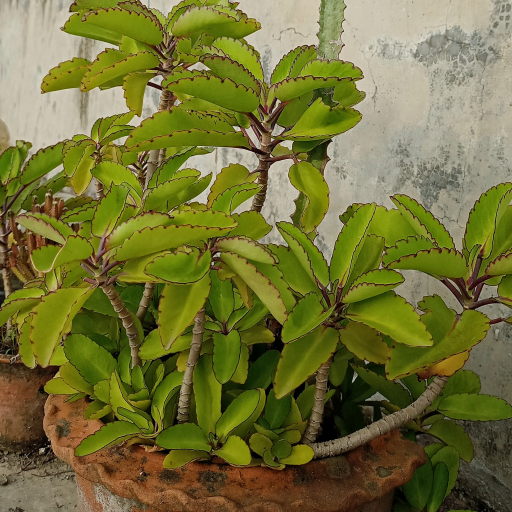
Plant Overview
Known as the "Leaf of Life," "Air Plant," or "Miracle Leaf," Bryophyllum pinnatum is a succulent superstar famous for its incredible ability to produce miniature plantlets along its leaf margins. Originally hailing from the island of Madagascar, this resilient traveler has found its way into gardens and windowsills worldwide, earning a reputation for being nearly "immortal."
🔍 How to Identify
- 🍃 Fleshy Foliage: The leaves are thick, succulent, and oval-shaped with scalloped or "crenate" edges. Young leaves are simple, while older ones often divide into three to five leaflets.
- 🌱 Leaflet Babies: In a process called "vivipary," tiny, fully formed plantlets sprout from the notches along the leaf edges, especially if a leaf falls to the ground.
- 🔔 Pendant Flowers: When it blooms, it sends up a tall stalk featuring clusters of nodding, bell-shaped flowers that transition from pale green to a dusty pink or purple.
🏡 In Your Garden
- 🏜️ The Drainage Rule: Like most succulents, this plant is a "rot-risk" if left in standing water. It prefers sandy, well-draining soil and will forgive you for skipping a watering session much faster than for over-watering.
- ☀️ Sun-Seeker: While it loves bright, indirect light, it can tolerate some direct sun. If the leaf edges turn slightly reddish, it’s often a sign the plant is getting plenty of sunlight (and producing protective pigments).
- 🌿 Spreading Nature: Be mindful if planting in the ground in tropical climates. Because every leaf that touches the soil can turn into dozens of new plants, it can quickly become an enthusiastic groundcover that outcompetes its neighbors.
⚠️ Safety & Toxicity
- 🐾 Pet Warning: Bryophyllum pinnatum contains cardiac glycosides (specifically bufadienolides). It is toxic to cats, dogs, and livestock if ingested.
- 🤢 Human Risk: While it has a long history in traditional medicine, it should never be consumed without professional guidance, as it can cause heart palpitations, nausea, and vomiting in humans.
- 🧤 Skin Contact: Generally safe to touch, though some sensitive individuals may experience mild skin irritation from the sap.
✨ Fun Fact
The famous German poet and scientist Johann Wolfgang von Goethe was so obsessed with this plant that he grew it extensively and sent its "miracle" leaves in letters to his friends, viewing the plantlets as a profound symbol of the infinite creative power of nature. Because of this, it is still known in some parts of Europe as the "Goethe Plant."

Detailed Care Instructions
To grow Bryophyllum Pinnatum, also known as the Miracle Leaf or Kalanchoe Pinnata, you can follow these steps:
- Obtain a mature plant: You can get a Bryophyllum Pinnatum from a local nursery, garden center, or online. Make sure to choose a healthy and well-established plant.
- Select a suitable pot: Choose a pot with drainage holes to prevent waterlogging. The size of the pot depends on the size of the plant you have or intend to grow.
- Soil: Use well-draining soil that is rich in organic matter. A mix of peat moss, perlite, and regular potting soil can be a good choice.
- Planting: Gently remove the plant from its container and loosen the roots. Place it in the prepared pot, ensuring it is at the same level it was in its original container. Fill the remaining space with soil and firm it gently around the plant.
- Light and temperature: Bryophyllum Pinnatum prefers bright indirect light. Place it near a window where it can receive bright, filtered sunlight. The plant also thrives in temperatures between 60°F to 75°F (15°C to 24°C).
- Watering: This plant prefers slightly dry conditions. Water it thoroughly but infrequently, allowing the top inch of soil to dry out before watering again. Overwatering can lead to root rot.
- Fertilizer: Use a balanced liquid fertilizer diluted to half strength during the growing season, approximately every 4-6 weeks. Avoid fertilizing during winter.
- Propagation: Bryophyllum Pinnatum is easy to propagate from leaf cuttings. Simply cut a healthy leaf and let it dry for a few days. Once dry, place the leaf in a pot with well-draining soil, burying the cut end. Keep the soil slightly moist until new shoots emerge.
- Pruning: To encourage bushier growth, prune the plant by pinching off the tips of the stems. This will stimulate lateral growth and promote a compact shape.
- Pests and diseases: Keep an eye out for common pests like aphids and mealybugs. If infestation occurs, treat the plant with an appropriate insecticide or wipe it clean with a mild soap solution.
By following these steps, you should be able to successfully grow and care for a Bryophyllum Pinnatum plant.

Place in a bright room that is sun drenched almost all day. Or directly in a south-facing window.

To water this particular plant, it is best to use a watering can with a small spout or a spray bottle to ensure that water is applied directly to the soil and not the leaves. Water the plant thoroughly, allowing the water to soak in until it begins to drain from the bottom of the pot. It is important to avoid overwatering, as this can lead to root rot. It is recommended to wait until the top inch of soil is dry before watering again. The plant prefers well-draining soil, and it is best to avoid letting it sit in standing water. Additionally, it is important to keep the plant in an area with adequate sunlight but to avoid placing it in direct sunlight for extended periods.
To fertilize this plant, use a balanced liquid fertilizer diluted to half strength. Apply the fertilizer once a month during the growing season and reduce to every two months during the winter season. Water the plant thoroughly before and after fertilizing and avoid getting the fertilizer on the leaves or stem.
Bryophyllum Pinnatum plant prefers a well-draining and nutrient-rich soil. The soil should be loose and airy to allow for proper aeration and facilitate water movement. It is recommended to use a soil mix comprising of equal parts of perlite, sand, and organic potting soil. The perlite and sand aid in drainage, while the organic potting soil provides nutrients. The pH of the soil should be slightly acidic, between 6 to 7.5. Avoid using heavy soil that can retain moisture for an extended period of time, as it can lead to root rot.
To propagate this plant, you will need to carefully remove the small offsets or "baby plants" that grow from the sides of the mature plant. These offsets will have their own roots, so gently separate them from the mother plant and plant them in a pot with well-draining soil.
Keep the newly propagated plants in a warm, lightly shaded area and water them regularly. Over time, they will establish themselves and begin to grow. You can also propagate this plant by using leaf cuttings or stem cuttings, but these methods require a bit more skill and attention to detail.
Common pests of the goethe plant include Scale insect, mealybugs, aphids, thrips. Make a habit of checking your goethe plant frequently for pests so that any infestations can be caught and managed early.








