Plant Overview
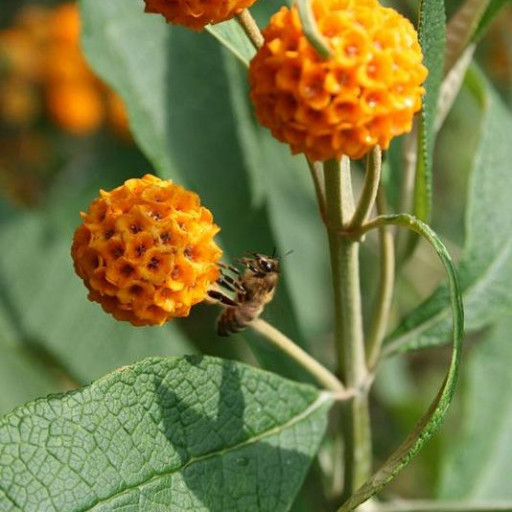
Known as the "Orange Ball Tree," Buddleja globosa is a semi-evergreen marvel that looks like it stepped out of a Dr. Seuss illustration. Native to the temperate rainforests and mountain slopes of Chile and Argentina, it brings a burst of citrus-colored sunshine to the garden. While most people are familiar with the cone-shaped "Butterfly Bush," this species offers a much more architectural and exotic aesthetic that serves as a high-protein buffet for local pollinators.
🔍 How to Identify
- 🟠 The "Golf Balls": The most striking feature is the clusters of tiny, honey-scented blossoms tightly packed into perfect, spherical globes of bright orange or deep yellow.
- 🍃 Wrinkled Foliage: The long, lance-shaped leaves have a distinct "rugose" (wrinkled) texture on top, while the undersides are covered in a soft, silvery-white felt.
- 🌳 Upright Stature: It grows as a large, multi-stemmed shrub or small tree, reaching much higher than common garden varieties, often displaying a fountain-like shape.
🏡 In Your Garden
- ☀️ Sun Seeker: This plant thrives in full sun and well-draining soil. Because it is native to the Andes, it is surprisingly hardy but appreciates a spot sheltered from harsh, drying winds that can tatter its large leaves.
- ✂️ Pruning Timing: Unlike the common purple Buddleja, this species flowers on old wood (growth from the previous year). If you prune it heavily in late winter, you will accidentally cut off all the flower buds for the coming summer. Always prune immediately after the orange balls fade.
⚠️ Safety & Toxicity
- ✅ Non-Toxic: Buddleja globosa is generally considered non-toxic to humans, dogs, cats, and horses.
- 🐶 Mild Irritant: While it won't cause poisoning, the rough, felted texture of the leaves can sometimes cause minor skin irritation for sensitive gardeners or mild mouth irritation if a pet decides to chew on the branches.
✨ Fun Fact
In its native Chile, the Mapuche people have utilized the leaves of the Orange Ball Tree for centuries in traditional medicine. Known locally as Pañil, it is highly regarded for its ability to help heal skin wounds and soothe internal ulcers.

Detailed Care Instructions
To grow Buddleja Globosa, also known as the orange ball tree, follow these steps:
- Choose a suitable location: Buddleja Globosa prefers full sun to partial shade. Select a site with well-draining soil that is fertile and enriched with organic matter. The plant can tolerate a range of soil types, including clay, as long as it is well-drained.
- Prepare the soil: Before planting, remove any weeds or grass from the area. Loosen the soil with a garden fork or tiller to a depth of about 12 inches (30 cm). Add organic matter, such as compost or well-rotted manure, to improve soil fertility and drainage.
- Dig a hole: Dig a hole that is slightly larger than the plant's root ball. Make sure the hole is deep enough so that the top of the root ball is level with the ground surface when planted.
- Planting: Carefully remove the Buddleja Globosa plant from its container, being gentle with the roots. Place the plant in the hole and backfill with soil, firming it gently around the roots. Do not plant the tree too deep as it can cause rotting. Water the plant thoroughly after planting.
- Watering: Keep the soil consistently moist but not waterlogged. Water deeply once a week during dry periods, providing about an inch (2.5 cm) of water. Avoid overwatering, as this can lead to root rot.
- Mulching: Apply a layer of organic mulch, such as shredded bark or wood chips, around the plant. Mulch helps conserve moisture, suppresses weed growth, and regulates soil temperature.
- Pruning: Buddleja Globosa benefits from regular pruning to maintain its shape and promote new growth. Prune in late winter or early spring, before new growth begins. Remove any dead, damaged, or crossing branches. You can also trim back the plant after flowering to encourage bushier growth.
- Fertilizing: Apply a balanced, slow-release fertilizer in early spring to promote healthy growth. Follow the manufacturer's instructions for application rates.
- Pest and disease control: Buddleja Globosa is generally resistant to pests and diseases. However, keep an eye out for common garden pests like aphids, caterpillars, or spider mites. Use organic insecticides or other appropriate measures to control infestations if necessary.
- Enjoy the blooms: Buddleja Globosa produces stunning clusters of orange, scented flowers in summer. Sit back and admire the beautiful blooms while attracting butterflies and other pollinators to your garden.

Place in a bright room that is sun drenched almost all day. Or directly in a south-facing window.

To water the plant, it is important to ensure that the soil is moist but not waterlogged. This can be achieved by checking the soil regularly and watering when the top inch of soil feels dry to the touch. When watering, it is recommended to give the plant a deep soak rather than a light surface watering to encourage the roots to grow deeper and stronger. The plant should be watered at the base rather than overhead to avoid getting the foliage wet, which can lead to fungal diseases. It is also important to avoid letting water sit in the saucer beneath the pot or the plant's roots can become waterlogged. During periods of drought or hot weather, the plant may require more regular watering to avoid stress and maintain healthy growth.
For proper fertilization of this plant, it is recommended to use a balanced fertilizer with equal amounts of nitrogen, phosphorus, and potassium. Apply the fertilizer during the growing season, which is typically from spring to fall. Be sure to follow the instructions on the fertilizer packaging carefully to avoid over-fertilizing, which can damage the plant. Additionally, it is important to water the plant adequately and maintain good soil health for optimal growth.
Buddleja globosa is a plant species that belongs to the family of Scrophulariaceae. It is a woody shrub that is native to Chile and Argentina and can grow up to 5 meters in height. The plant is tolerant of different climatic conditions and soil types, but it thrives best in well-draining soils that are rich in organic matter.
When selecting soil for Buddleja globosa, it is important to consider the soil's texture. The plant prefers soils that are sandy or loamy, as these types of soils provide adequate drainage while retaining enough water to keep the plant hydrated. Avoid soils that are too clayey, as they tend to retain water and may lead to root rot.
It is also essential to ensure that the soil is well-aerated and has a slightly acidic to neutral pH level. The ideal pH range for Buddleja globosa is between 6.0 to 7.5, although the plant can tolerate slightly acidic to slightly alkaline soils.
To prepare the soil for planting Buddleja globosa, it is recommended to mix in organic matter such as compost or well-rotted manure. This will help to improve soil fertility and provide essential nutrients for the plant's growth.
In summary, Buddleja globosa thrives in well-draining soils that are sandy or loamy, slightly acidic to neutral, and enriched with organic matter. By providing these soil conditions, you can ensure that your plant grows healthily and produces vibrant blooms.
To propagate this plant, you will need to take semi-hardwood cuttings from the current year's growth in late autumn or early winter. Cuttings should be around 10cm long and have several nodes. Remove the lower leaves and dip the cutting in rooting hormone before planting it in compost. Keep the cutting in a warm, humid environment and mist it regularly until it establishes roots. Afterward, it can be transplanted into its permanent growing location.
Common pests of the orange-ball-tree include Spider mites, larvae. Make a habit of checking your orange-ball-tree frequently for pests so that any infestations can be caught and managed early.








