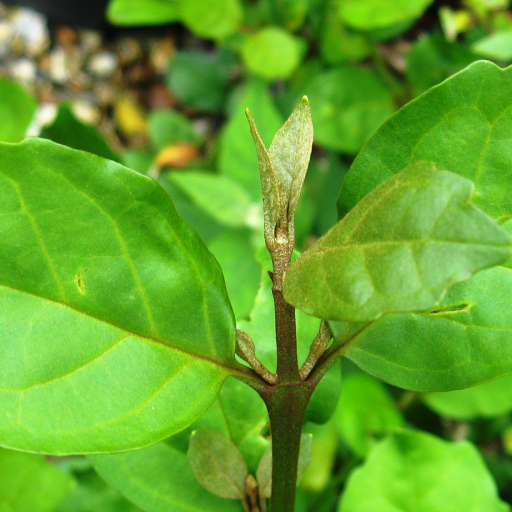
Plant Overview
The Buddleja indica, often known by the charming nickname "Oak-leaved Buddleja" or "Nicodemia," is a botanical shapeshifter from the lush forests of Madagascar. While most people associate Butterfly Bushes with towering outdoor shrubs and purple spikes, this species is a refined, evergreen relative that is frequently welcomed indoors. With its glossy, deeply lobed leaves that mimic the look of an English Oak, it adds an air of ancient forest mystery to any plant collection.
🔍 How to Identify
- 🍃 Lobed Foliage: The most striking feature is its leaves—deeply incised and scalloped, they look remarkably like miniature oak leaves, varying from dark forest green to a bronze-tinted hue.
- 🪵 Woody Scrambler: It has a flexible, woody stem that can either be trained to climb a trellis or pruned into a compact, bushy shrub.
- 🌼 Subtle Blooms: Unlike its showy cousins, its flowers are tiny, tubular, and pale yellow or greenish-white, often hiding tucked away among the dense foliage.
🏡 In Your Garden & Home
- 🌞 The Light Balance: Coming from the understory of Madagascar, it thrives in bright, filtered light. Too much direct sun can scorch those intricate leaves, while too little will make the stems "leggy" as they reach for the window.
- 💧 Humidity Lover: This plant craves moisture in the air. If you are growing it indoors, it will appreciate a pebble tray or a nearby humidifier to prevent the leaf tips from turning brown and crispy.
- ✂️ Shape Shifting: Because it is a vigorous grower, it benefits from regular "pinching out" of the growing tips. This encourages the plant to grow outward rather than upward, resulting in a much fuller, more lush appearance.
⚠️ Safety & Toxicity
- 🟢 Generally Safe: Buddleja indica is not known to be highly toxic to humans or common household pets.
- 🐾 Precautionary Care: While it isn't listed as a major hazard, it is always best to keep curious cats or dogs from chewing on the foliage, as ingesting large amounts of any non-food plant can cause mild stomach upset or lethargy.
✨ Fun Fact
Despite its name and its family lineage, the Buddleja indica is one of the few "Butterfly Bushes" that is grown almost exclusively for its leaves rather than its flowers. In the Victorian era, it was a prized "stove house" plant, kept in heated glasshouses to show off its unique, oak-like texture!

Detailed Care Instructions
To grow Buddleja Indica, also known as Indian Butterfly Bush, you can follow these steps:
- Select the right location: Choose a spot in your garden with full sunlight exposure. Buddleja Indica requires at least 6-8 hours of direct sunlight each day.
- Prepare the soil: Make sure the soil is well-draining and fertile. If the soil is heavy clay or compacted, amend it by adding organic matter like compost or well-rotted manure to improve drainage and nutrient content.
- Planting: Dig a hole twice as wide and as deep as the plant's root ball. Place the plant in the hole, ensuring the top of the root ball is level with the ground. Backfill the hole with soil, gently firming it around the roots. Water thoroughly after planting.
- Watering: Buddleja Indica prefers regular watering but can tolerate some drought once established. Water deeply, allowing the soil to dry slightly between waterings. Avoid overwatering, which can lead to root rot.
- Mulching: Apply a layer of organic mulch around the base of the plant to conserve moisture, suppress weeds, and improve soil health. Avoid piling mulch against the stem to prevent rot.
- Pruning: Prune Buddleja Indica in early spring to remove dead or damaged branches and maintain its shape. You can also prune to control its size if necessary. Encouraging regular pruning will help promote blooming and prevent the plant from becoming too lanky.
- Fertilizing: Apply a balanced, slow-release fertilizer in early spring and again in early summer to provide nutrients for healthy growth and abundant blooms. Follow the package instructions for the proper application rate.
- Pests and diseases: Buddleja Indica is generally resistant to pests and diseases. However, keep an eye out for common garden pests like aphids, caterpillars, or spider mites. If necessary, treat with appropriate insecticides or insecticidal soap.
- Propagation: Buddleja Indica can be propagated through stem cuttings or seeds. Take hardwood cuttings in late winter or early spring, or collect seeds from the plant and sow them in seed-starting mix to germinate.
- Winter care: In areas with mild winters, the plant can survive without extra protection. However, if you live in a cold climate, consider providing mulch around the base and covering the plant with a protective layer of burlap or frost cloth during the winter months to prevent damage from freezing temperatures.
Remember to check local regulations before planting, as Buddleja Indica can be considered invasive in some regions.
To properly water the Buddleja Indica plant, there are a few essential factors to keep in mind:
- Soil Moisture: Check the soil moisture level before watering to avoid overwatering or underwatering. Insert your finger about an inch into the soil near the plant's base; if it feels dry, it's time to water.
- Watering Frequency: Buddleja Indica plants prefer moist soil, but excessive moisture can lead to root rot or other fungal diseases. Water deeply and thoroughly, but only when the top inch of soil has dried out.
- Watering Method: To ensure proper water drainage and prevent waterlogging, consider using well-draining soil for your Buddleja Indica plant. Use a watering can or a gentle stream of water to wet the soil evenly around the plant's base, rather than directly on the leaves or flowers.
- Morning Watering: It is generally recommended to water your Buddleja Indica plant in the morning. This allows excess moisture to evaporate during the day, reducing the risk of fungal diseases. Also, the plant will have sufficient moisture to endure the heat of the day.
- Adjusting for Weather: During hot summer months, you may need to increase the frequency of watering, keeping in mind that the soil should still be allowed to dry out between waterings. On the other hand, during colder months or dormant periods, you can reduce watering to prevent water accumulation in the soil.
- Environmental Factors: Assess the plant's location to evaluate how much water it might need. Factors such as humidity, temperature, and exposure to direct sunlight can all affect the plant's water requirements. Adjust your watering routine accordingly.
Following these guidelines will help you establish a suitable watering routine for your Buddleja Indica plant, promoting healthy growth and vibrant blooms.
To fertilize Buddleja Indica, follow these instructions:
- Choose a balanced, slow-release fertilizer labeled for flowering plants.
- Dilute the fertilizer according to the package instructions, or use a liquid fertilizer at half the recommended strength.
- Apply the fertilizer during the active growing season, typically in spring and summer.
- Before applying the fertilizer, ensure the soil is moist but not saturated.
- Using a watering can or a sprayer, evenly distribute the fertilizer around the base of the plant.
- Avoid applying the fertilizer on the leaves or flowers, as it may cause damage.
- After applying fertilizer, water the plant thoroughly to help nutrients penetrate the soil.
- Repeat the fertilization process every four to six weeks during the growing season.
- Monitor the plant for signs of over or under-fertilization, such as yellowing leaves or stunted growth.
- Adjust the fertilizer amount or frequency if needed based on the plant's response.
Remember to always read and follow the instructions provided by the fertilizer manufacturer for the specific product you are using.
For optimal growth and development, Buddleja Indica plants thrive in well-draining soil that is rich in organic matter. The ideal soil composition for Buddleja Indica should be loamy or sandy, allowing water to drain freely. This type of soil prevents waterlogging and reduces the risk of root rot.
The soil pH for Buddleja Indica should ideally range between slightly acidic to neutral, with a pH level of around 6 to 7. This range ensures that the plant can effectively absorb the necessary nutrients from the soil.
To provide maximum nutrients for the plant's growth, it is recommended to incorporate organic matter such as compost or well-rotted manure into the soil prior to planting. This enhances the soil's fertility and improves its ability to retain moisture, promoting healthy root development.
It is important to note that Buddleja Indica plants are adapted to harsh environmental conditions, such as rocky or gravelly terrain. Therefore, they can tolerate slightly poorer soil as long as it is well-draining and not excessively compacted.
Regular monitoring of soil moisture levels is essential for Buddleja Indica's health. Overwatering should be avoided, as it can lead to root rot and other fungal diseases. Additionally, using mulch around the plant's base can help conserve soil moisture and prevent weed growth, which can compete for nutrients.
Overall, selecting a well-draining soil rich in organic matter, maintaining an appropriate pH level, and avoiding overwatering are key factors to ensure the healthy growth and vitality of Buddleja Indica plants.
Buddleja indica is a flowering plant that can be propagated through various methods. Here is a detailed explanation of how you can propagate Buddleja indica:
- Propagation by Seeds:
- Collect ripe seeds from the Buddleja indica plant. They are small, light brown, and papery.
- Fill a seed tray or small pots with a well-draining potting mix.
- Sprinkle the seeds over the surface of the soil, ensuring they are evenly distributed.
- Lightly cover the seeds with a thin layer of fine soil or vermiculite. Do not bury them too deep.
- Mist the soil with water to moisten it gently.
- Place the tray or pots in a warm, well-lit area, avoiding direct sunlight.
- Ensure the soil remains consistently moist but not waterlogged during germination.
- Germination may take anywhere from a few weeks to a couple of months.
- Once the young seedlings have developed several leaves, carefully transplant them into individual pots.
- Propagation by Cuttings:
- Select a healthy, non-flowering stem from the parent plant.
- Using a sharp, clean pair of pruners, cut a 4-6 inch (10-15 cm) section of the stem just below a leaf node.
- Remove the leaves from the bottom half of the cutting.
- Dip the cut end of the stem in a rooting hormone to stimulate root growth (optional).
- Prepare a well-draining potting mix or a mixture of peat moss and perlite.
- Create a hole in the potting mix using a pencil or your finger.
- Insert the cutting into the hole, ensuring at least two leaf nodes are buried in the soil.
- Gently press the soil around the cutting to secure it.
- Place the pot in a warm, bright location with indirect light.
- Keep the soil evenly moist but not overly wet.
- Mist the cutting occasionally to maintain humidity around the leaves.
- After a few weeks, you should notice signs of new growth, indicating successful rooting.
- Propagation by Layering:
- Select a lower branch of the Buddleja indica plant that is flexible and easily reached.
- Gently bend the selected branch towards the ground, making sure it remains attached to the parent plant.
- Prepare the soil by removing any weeds or debris and loosening it.
- Use a small garden spade or a stick to make a shallow groove in the soil where the bent branch will lie.
- Place the bent branch in the groove and cover it with soil, leaving the tip exposed.
- Secure the branch in place using U-shaped pins or small rocks.
- Water the area thoroughly to settle the soil around the branch.
- Keep the soil consistently moist to encourage root formation.
- After a few months, check the buried section for roots by gently tugging on the branch. If it resists, it means rooting has occurred.
- Once significant root development is observed, carefully separate the rooted branch from the parent plant, ensuring the roots remain intact.
- Transplant the new plant to a suitable location or pot.
Remember to provide adequate care and nourishment to the newly propagated plants, including regular watering, appropriate sunlight exposure, and fertilization, as Buddleja indica prefers well-draining soil and partial shade.








