Plant Overview
Known as the "Mendoza Butterfly Bush," this hardy shrub hails from the rugged, arid landscapes of the Argentine Andes and Chile. Unlike its more common garden cousins, Buddleja mendozensis is a specialist of dry mountain foothills, built to survive where other plants might wither under the sun. It acts as a fragrant magnet for local pollinators, bringing life to rocky terrain with its honey-scented, nectar-rich blooms.
🔍 How to Identify
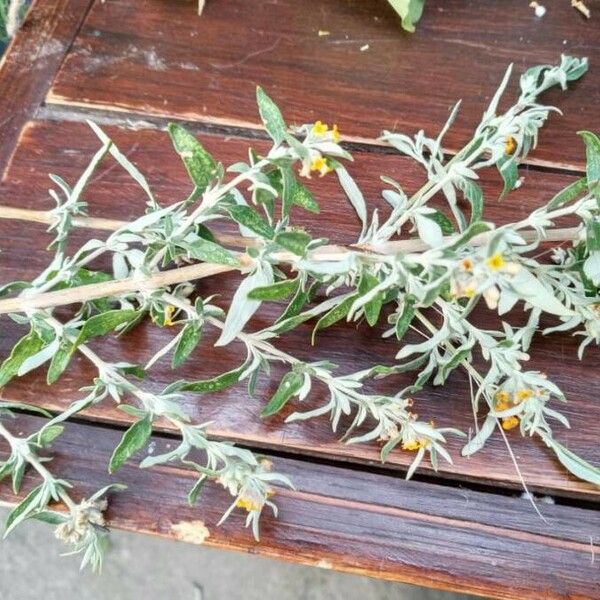
- 🌿 Silvery Foliage: The leaves are small, lance-shaped, and covered in a fine, velvety grey "fuzz" (tomentum) that helps the plant reflect intense sunlight and conserve moisture.
- 🌸 Flower Clusters: It produces dense spikes of tiny, tubular flowers that are usually creamy white or pale lavender, often featuring a tiny, bright orange "eye" at the center of each floret.
- 🪵 Growth Habit: This is a multi-stemmed, woody shrub with a wild, architectural silhouette, typically reaching about 3 to 6 feet in height with a slightly arching or fountain-like form.
🏡 In Your Garden
- 🏔️ Mountain Roots: Because it originates from high-altitude, rocky regions, this plant absolutely demands excellent soil drainage. It is highly susceptible to root rot if left in heavy, waterlogged clay; it thrives best in "neglected" or gravelly soil.
- ☀️ Sun & Resilience: This species is a true sun-seeker and is exceptionally drought-tolerant once established. It is an ideal choice for xeriscaping or rocky embankments where regular irrigation is difficult to provide.
⚠️ Safety & Toxicity
- 🐾 Non-Toxic: Buddleja mendozensis is generally considered safe and non-toxic for dogs, cats, and horses, making it a worry-free addition to a pet-friendly landscape.
- 👐 Mechanical Irritation: While not poisonous, the fine silvery hairs on the leaves can occasionally cause mild skin itching or sneezing in sensitive individuals during heavy pruning.
✨ Fun Fact
The "fuzz" on the leaves isn't just for decoration—it acts like a natural sunscreen and windbreaker, creating a micro-layer of still air around the leaf to prevent the harsh Andean winds from sucking out the plant's hydration.

Detailed Care Instructions








