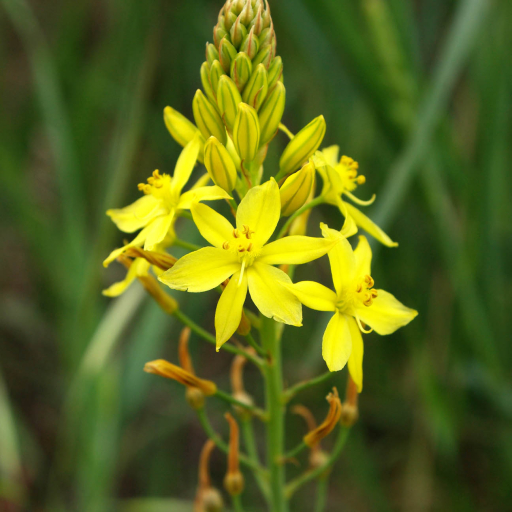
Plant Overview
Often called the Bulbine Lily or Native Leek, this resilient Australian native brings a burst of sunshine to grassy woodlands and home rockeries alike. While its base looks remarkably like a common kitchen leek, its crown is a spectacular spire of starry yellow blooms. It is a favorite for those seeking a low-maintenance, drought-tolerant plant that looks delicate but acts tough.
🔍 How to Identify
- 🌼 Starry Blooms: Each flower features six bright yellow petals with distinctively "bearded" or feathery yellow filaments in the center.
- 🌱 Leek-like Foliage: Long, fleshy, succulent-green leaves that are often hollow and circular in cross-section, emerging from the base like a thick tuft of grass.
- 📏 Flower Spikes: A tall, leafless central stem (raceme) that can reach up to 50cm, carrying dozens of flower buds that open sequentially from the bottom to the top.
🏡 In Your Garden
- 🏜️ Drought Strategy: Because it grows from a thick, tuberous "bulb," it is an expert at water storage. In peak summer heat or during severe drought, the plant may go dormant and die back to the ground, only to reappear vibrant and green once the rains return.
- 🦋 Pollinator Magnet: The "fluffy" stamens aren't just for show; they are highly attractive to native bees and hoverflies. It is a perfect choice for gardeners looking to support local biodiversity in a small space.
- 🪨 Versatile Placement: It thrives in rockeries or as a border plant. Unlike many lilies, it isn't fussy about soil, provided it isn't sitting in a stagnant bog.
⚠️ Safety & Toxicity
- 🟢 Safe Status: Bulbine bulbosa is generally considered non-toxic. Historically, the plump, round tubers were a source of food for Indigenous Australians, who would roast them before eating.
- 🐾 Pet & Child Friendly: It does not contain the deadly toxins found in "True Lilies" (Lilium species). However, as with any ornamental plant, keep an eye on pets to ensure they don't make a meal of the foliage, which can cause mild digestive upset in large quantities.
✨ Fun Fact
The name "Bulbine" comes from the Greek word bolbine, used to describe a bulbous plant, but this plant is a master of disguise—it isn't a true lily or a true leek, but a member of the Asphodel family, making it a close relative of Aloe Vera!

Detailed Care Instructions
To successfully grow a Bulbine Bulbosa plant, follow these steps:
- Choose a suitable location: Bulbine Bulbosa plants prefer full sun or partial shade. Make sure the soil is well-draining and slightly acidic.
- Prepare the soil: Loosen the soil and remove any weeds or debris. If the soil is heavy or clay-like, mix in some organic matter such as compost or peat moss to improve drainage.
- Plant the bulbs: Plant the bulbs at a depth of about 1-2 inches (2.5-5 cm), with the pointed end facing upwards. Space them about 6-12 inches (15-30 cm) apart to allow for their growth.
- Water regularly: Keep the soil moist but not overly saturated. Water the plant deeply about once a week, and adjust the frequency depending on the weather conditions. Avoid overwatering, as this can cause root rot.
- Fertilize sparingly: Bulbine Bulbosa plants do not require heavy fertilization. You can feed them with a balanced, slow-release fertilizer once at the beginning of the growing season. Follow the instructions on the fertilizer packaging for application rates.
- Mulch around the plants: Apply a layer of organic mulch around the base of the plant to help conserve moisture, suppress weed growth, and regulate soil temperature.
- Prune as needed: Bulbine Bulbosa plants generally do not require heavy pruning. However, you can trim off any dead or damaged foliage to maintain the plant's appearance.
- Protect from frost: If you live in a region with frost, it's important to protect the plant during cold periods. Cover the plant with a frost cloth or move it indoors to a warmer location.
- Watch for pests and diseases: Bulbine Bulbosa plants are generally pest and disease resistant. However, keep an eye out for common garden pests such as aphids or snails, and take appropriate measures if necessary.
By following these guidelines, you can successfully grow a Bulbine Bulbosa plant and enjoy its beautiful flowers and foliage.

Place in a bright room that is sun drenched almost all day. Or directly in a south-facing window.

Bulbine Bulbosa is a species of plant that belongs to the Asphodelaceae family. It thrives in well-draining soils with compost or organic matter and prefers full sun exposure. To water the plant properly, you should wait until the top layer of soil is dry before watering it. When watering, make sure you water the soil around the base of the plant and avoid wetting the leaves. Overwatering can cause root rot and other problems, so be cautious not to water the plant excessively. A good watering schedule for this plant is to water it once a week during the growing season and less during the winter dormant season.
To fertilize this plant, mix a balanced fertilizer (such as a 10-10-10) at half strength and water the soil around the base of the plant. Apply the fertilizer once every four weeks during the growing season, which is typically from spring to summer. Be sure not to over-fertilize as this can cause damage to the roots.
Bulbine Bulbosa plant prefers a well-draining soil that is loose and aerated. The soil should be moderately fertile, with a slightly acidic to neutral pH level ranging from 6.0 to 7.0. It is recommended to use a mix of sandy-loamy soil with coarse gravel and perlite to provide good drainage. Additionally, the soil should be slightly moist but not waterlogged, as the plant can be susceptible to root rot in overly wet conditions. It is also important to avoid using soil that is heavily compacted or has a high clay content, as this can prevent proper drainage and oxygen flow to the plant's roots. Fertilization should be done sparingly, using a balanced fertilizer applied during the growing season.
To propagate this plant, you will need to collect its seeds. Wait until the plant has finished flowering and the seed pods have turned brown and dried out. Gently remove the seed pods from the plant and split them open to collect the small, black seeds.
Prepare a pot of well-draining soil and scatter the seeds evenly on the surface. Cover the seeds with a thin layer of soil and mist the surface with water.
Place the pot in a warm, well-lit location, but avoid direct sunlight which can scorch the delicate seedlings. Keep the soil evenly moist and within a few weeks, you should see tiny green shoots emerging from the soil.
Once the seedlings have grown to around 2-3 inches in height, you can gently transplant them to individual pots or into a larger container. Be gentle when handling the young plants as their roots are delicate.
Continue to grow the plants in a warm, well-lit location and water when the soil feels dry to the touch. With proper care, your Bulbine bulbosa plants should grow strong and healthy, ready to be enjoyed in your garden or shared with friends and family.








