Plant Overview
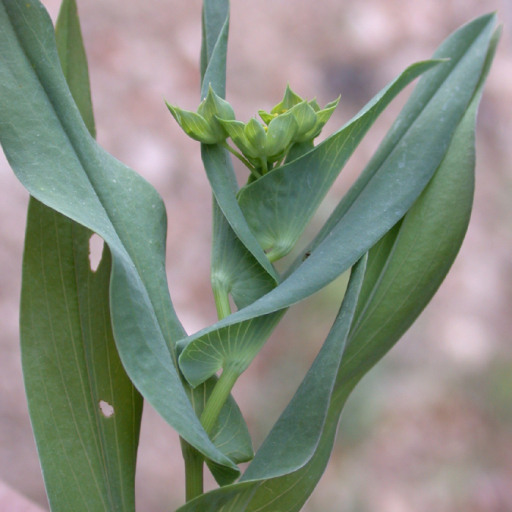
Known commonly as the False Thorough-wax, this Mediterranean native looks like something plucked straight from a botanical illustration or a surrealist painting. Its most striking feature is the way its stems appear to spear directly through the center of its rounded, waxy leaves. Often appearing as a "hitchhiker" in birdseed or wildflower mixes, it has gained a cult following among floral designers for its architectural elegance and unique lime-green palette.
🔍 How to Identify
- 🍃 Perfoliate Leaves: The most distinct feature is the "perfoliate" leaf—the stem passes right through the middle of the leaf blade, making the foliage look like green discs threaded onto a string.
- 🌼 Lime-Yellow Umbels: It produces tiny, star-shaped yellow flowers clustered in flat-topped groups (umbels), which are surrounded by large, leafy bracts that look like tiny cups.
- 💎 Glaucous Texture: The entire plant has a smooth, waxy, blue-green (glaucous) coating that gives it a sophisticated, "frosted" appearance and helps it retain moisture.
🏡 In Your Garden
- ✂️ The Florist's Secret: While it is technically a "weed" in some agricultural contexts, it is highly prized in cutting gardens. It acts as the perfect structural "filler," providing a cool, architectural backdrop that makes vibrant flowers like poppies or dahlias pop.
- ☀️ Sun and Drainage: This plant is a true child of the Mediterranean; it thrives in full sun and well-drained, even slightly poor soil. It has a deep taproot, which means it dislikes being moved once planted, so pick its home carefully!
- 🌱 Self-Seeding Habit: As an annual, it lives fast and dies young. However, if you leave the seed heads to dry, it will happily drop seeds for the following year, creating a natural, effortless colony in your garden beds.
⚠️ Safety & Toxicity
- ✅ Generally Safe: Bupleurum subovatum is not known to be highly toxic to humans or common household pets.
- 🧤 Skin Sensitivity: Like many members of the Apiaceae (carrot) family, some individuals may experience mild skin irritation (phytophototoxicity) if the sap gets on the skin and is then exposed to direct sunlight. It’s always wise to wear gloves when pruning a large amount.
✨ Fun Fact
The False Thorough-wax is a master of disguise in the floral world. Because of its waxy, blue-green leaves and stiff stems, it is frequently mistaken for a species of Eucalyptus when used in professional bouquets, earning it the nickname "Mediterranean Eucalyptus."

Detailed Care Instructions
To water the Bupleurum Subovatum plant, it is important to consider the soil moisture and humidity levels. The best practice is to keep the soil moist but not too wet, as overwatering can lead to root rot and other fungal diseases. Water the plant once a week, or whenever the top inch of soil feels dry to the touch.
When watering the plant, avoid getting water on the leaves and stem, as this can encourage diseases and pests. Instead, water the soil around the base of the plant, using a watering can or a hose with a gentle stream. Allow the water to soak into the soil, and then remove any excess water that drains out of the bottom of the pot.
In addition to regular watering, it can be beneficial to mist the plant occasionally to increase humidity levels. This can be done by spraying the leaves with a fine mist of water using a spray bottle. This can help to prevent the leaves from drying out and improve overall plant health.
Overall, the key to watering the Bupleurum Subovatum plant is to maintain consistent, moderate moisture levels and avoid overwatering. With proper care, this plant can thrive and add beauty to any indoor or outdoor space.
When planting Bupleurum Subovatum, it is important to use a soil that is well-draining and rich in organic matter. The soil should be loamy and slightly acidic, with a pH range of 5.5 to 6.5. The plant prefers soil that is moist but not waterlogged, so it is important to avoid overwatering. When planting, it is also recommended to mix in some compost or other organic matter to help improve the soil's fertility and drainage. Additionally, the plant should be grown in a location that receives full to partial sunlight, with protection from strong winds.








