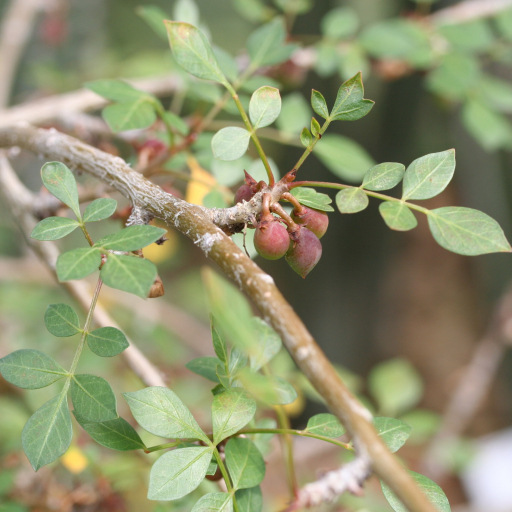
Plant Overview
Known as the Fragrant Elephant Tree or "Copal," this desert gem is a living piece of the ancient Mexican landscape. It earns its nickname from its thick, succulent trunk that stores water, allowing it to survive in harsh, arid climates while looking like a miniature, weathered giant. If you gently rub the leaves or bark, it releases a spicy, citrusy scent that has been prized for centuries.
🔍 How to Identify
- 🌳 The Bark: Its most striking feature is the papery, exfoliating bark that peels away in thin, cream-to-copper sheets, often revealing a bright green photosynthetic layer underneath.
- 🍃 The Leaves: It features small, compound leaves with tiny leaflets that look like delicate green feathers, providing a soft contrast to the rugged trunk.
- 🐘 The Trunk: The plant naturally develops a "caudex"—a swollen, water-storing base—giving it the "Elephant" appearance that makes it a favorite for bonsai enthusiasts.
🏡 In Your Garden
- ☀️ The Sun Worshiper: This tree thrives on neglect and intense heat. To keep its growth compact and its bark peeling beautifully, place it in the brightest spot possible; it loves a "baking" environment.
- 💧 Winter Sleeping: It is a deciduous species, meaning it will drop all its leaves in the winter. This is its natural resting phase—resist the urge to "save" it with water, as too much moisture during dormancy will lead to root rot.
- 🪨 Rocky Roots: In the wild, it grows in rocky crevices. In a pot, it requires extremely fast-draining soil. Use a mix heavy in pumice or lava rock to mimic its volcanic mountain origins.
⚠️ Safety & Toxicity
- ✅ Safe Status: Bursera fagaroides is generally considered non-toxic to humans and pets. It is a popular choice for indoor growers because it lacks the dangerous spines found on many other desert plants.
- 🧴 Sticky Resin: When the bark is cut or the leaves are crushed, the tree leaks a sticky resin. While not poisonous, this sap can be difficult to wash off and may cause mild skin irritation for those with sensitive skin.
✨ Fun Fact
The resin from this tree is a type of "Copal," which was burned as sacred incense by the Aztecs and Mayans. It was believed that the smoke carried prayers to the heavens and helped purify the soul.

Detailed Care Instructions
| Lighting | Full Sun |
| Hardiness Zones | Min 9B |
To grow a Bursera Fagaroides plant, also known as the torchwood or elephant tree, you can follow these steps:
- Climate and soil requirements: Bursera Fagaroides plants are native to arid regions of Mexico. They thrive in well-draining soil that is sandy or loamy. The plant requires a dry climate with minimal rainfall and can tolerate high temperatures. Make sure your location meets these conditions for successful growth.
- Propagation: Bursera Fagaroides can be grown from seeds or cuttings. If using seeds, collect fresh seeds from a mature plant and soak them in warm water for 24 hours prior to planting. Sow the seeds in a well-draining potting mix and keep it moist, but not overly wet. Germination may take several weeks, so be patient.
- Planting: Choose a location in your garden or a large pot where the plant will receive full sun. Dig a hole slightly larger than the root ball and place the plant in it. Backfill the hole with well-draining soil and firm it gently around the base of the plant. Water thoroughly after planting, and then allow the soil to dry out before watering again.
- Watering and care: Once established, Bursera Fagaroides plants are drought-tolerant and require minimal watering. Water sparingly, allowing the soil to dry out between waterings. Overwatering can lead to root rot. Use a layer of organic mulch around the base of the plant to retain moisture and protect the roots.
- Pruning and shaping: Bursera Fagaroides plants have a unique, sculptural growth pattern, but they can be pruned lightly to maintain a desired shape. Prune any dead or damaged branches, and trim the tips of branches to encourage bushier growth.
- Protection from cold: Bursera Fagaroides is susceptible to frost damage, so if you live in a colder climate, you may need to provide protection during winter months. Consider covering the plant or moving it indoors if temperatures drop significantly.
- Pest and disease control: Torchwood plants are generally quite resilient and not prone to serious pest or disease issues. However, keep an eye out for common garden pests like aphids or mealybugs. Treat infestations with organic insecticidal soap or neem oil.
Remember that Bursera Fagaroides is a slow-growing plant, so be patient as it establishes itself. With proper care and attention, you can enjoy the unique beauty of this desert tree in your garden.

Place in a bright room that is sun drenched almost all day. Or directly in a south-facing window.

To properly water this plant, it is recommended to first check the soil moisture level by sticking a finger about 2-3 inches into the soil. If the soil is dry, it is time to water. However, if the soil is still moist, wait a few days before checking again.
When watering, it is important to water deeply and thoroughly to promote healthy root growth. Water until the soil is evenly moist but avoid overwatering and creating standing water as this can lead to root rot.
It is also recommended to water in the morning or early evening to avoid losing moisture to evaporation during the heat of the day.
During the summer months, when the plant is actively growing, it may require more frequent watering than during the winter months when it is in a dormant state.
In addition to watering, it is important to provide adequate drainage to prevent water from sitting in the pot or in the soil around the plant.
To fertilize this plant, use a balanced fertilizer with an N-P-K ratio of around 10-10-10 or 20-20-20. Apply the fertilizer at a rate of one tablespoon per square foot of soil, and water thoroughly after application. Fertilize once every two to three months during the growing season, but avoid fertilizing during the winter months when the plant goes dormant. Be sure to follow the manufacturer's instructions for application and dosage, and always water the plant well after fertilizing to prevent burning the roots.
The ideal soil for Bursera Fagaroides plant should be well-drained and should contain a balanced amount of nutrients. It should have a pH level of around 6 to 7.5. The soil should be able to retain moisture but should not be too wet as the plant can be susceptible to root rot. Adding organic matter to the soil can be beneficial as it can help increase its moisture-retaining capacities, boost nutrient levels, and improve the soil's structure. A mixture of equal parts of peat moss, perlite, and sand can be an effective soil blend for this plant. Additionally, these plants are native to warm and dry regions, so the soil should be capable of tolerating heat and drought conditions.
To propagate this particular plant species, you will need to follow certain steps. First, you will need to locate a mature and healthy plant from which to take cuttings. Once you have located a viable plant, select some healthy stems and make sure they are free of any disease or pests.
Next, take a clean, sharp cutting tool and make a straight cut through the stem, just below a leaf node. The cutting should be about 6 inches long and should typically include at least two nodes (the areas on the stem where the leaves are attached).
After you have taken your cuttings, it's time to prepare the stem for propagation. You will need to remove any leaves from the bottom half of the stem and treat the cut end of the stem with rooting hormone. This will help the stem to establish a healthy root system.
Once the stem has been treated with rooting hormone, you can then plant it in a pot or in a prepared area of soil. It's important to keep the soil moist but not overly wet. Over time, the stem will establish roots and begin to develop new growth at the top.
It may take several weeks or even months for the stem to fully establish itself and begin to grow, but with proper care and attention, you should be able to successfully propagate the plant.








