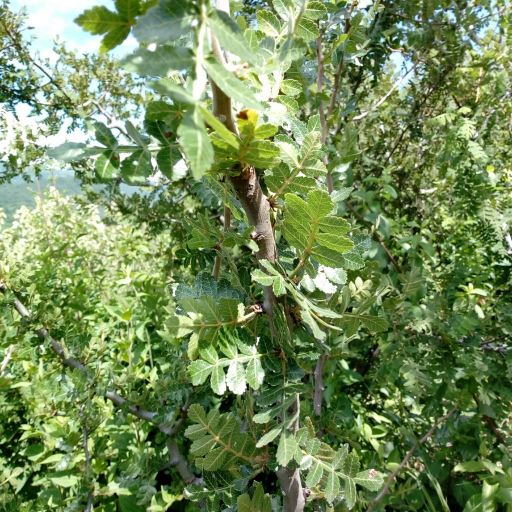
Plant Overview
Known affectionately as Copalillo or the Mexican Linaloe, this aromatic tree is a cornerstone of Mexican cultural history. It is the primary wood used to breathe life into "Alebrijes"—those vibrant, fantastical wood carvings famous in Oaxaca. Beyond its artistic value, the tree is prized for its fragrant resin, which has been burned as sacred incense in traditional ceremonies for centuries.
🔍 How to Identify
- 🍃 Feathery Foliage: It features pinnate leaves composed of small, serrated leaflets that give the canopy a delicate, airy, and fern-like appearance.
- 🪵 Smooth Gray Bark: The trunk is characterized by remarkably smooth, grayish bark that occasionally peels in paper-thin, translucent layers, revealing a green hue underneath.
- 👃 Scented Sap: If a leaf is crushed or the bark is lightly scratched, it releases a potent, pleasant aroma—a complex mix of citrus, lavender, and spice.
🏡 In Your Garden
- 🌞 Drought Hero: This species is a master of water conservation. It thrives in rocky, poor-quality soil and is exceptionally drought-tolerant, making it an ideal "set-and-forget" tree for arid landscapes or xeriscaping.
- 🍂 Seasonal Dormancy: It is a deciduous tree that follows a strict seasonal rhythm. Do not be alarmed if it drops every single leaf in the winter; it is simply entering a deep sleep to survive the dry season, standing like a beautiful silver sculpture until the spring.
⚠️ Safety & Toxicity
- 🐾 Safe Status: Bursera glabrifolia is generally considered non-toxic to humans, dogs, and cats, making it a "worry-free" addition to a family backyard.
- 💧 Sticky Resin: While not poisonous, the sap is incredibly resinous and sticky. If you are pruning the tree, the resin can be difficult to wash off skin and may cause very mild irritation to those with hypersensitive skin.
✨ Fun Fact
The wood of the Copalillo tree is so soft and easy to work with when fresh that Oaxacan artisans can carve an entire intricate spirit animal from a single branch using only hand tools, before the wood hardens as it dries!

Detailed Care Instructions








