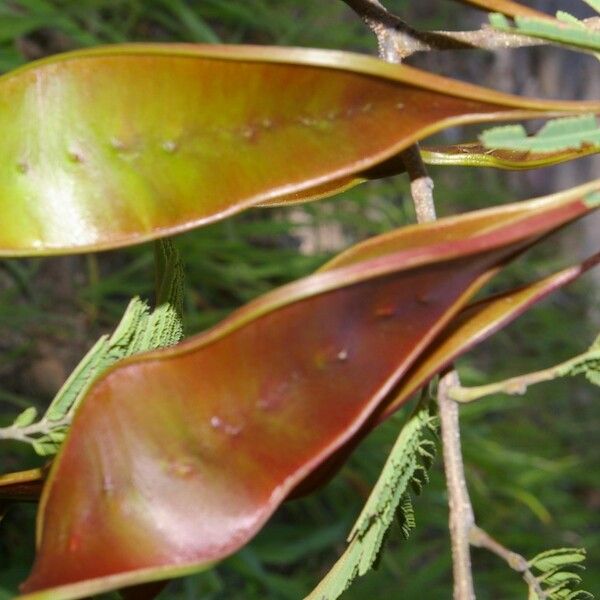
Plant Overview
Often called the "Palo Mulato" or "Red Gumbo Limbo," Bursera grandifolia is a striking tree famous for its "sunburned" appearance. Native to the dry forests of Mexico and Central America, it is a close relative of the trees that produce Frankincense and Myrrh. It is widely loved in tropical landscaping for its dramatic, peeling bark and its incredible ability to survive intense droughts by storing water in its thick, succulent-like trunk.
🔍 How to Identify
- 🍂 The "Paper" Bark: The most iconic feature is its reddish-bronze bark that peels away in paper-thin, translucent sheets, revealing a green, photosynthetic layer underneath.
- 🌿 Large Compound Leaves: As the name grandifolia suggests, it sports large, pinnate leaves. Each leaf is made up of several pairs of velvety, oval-shaped leaflets that release a resinous, citrusy scent when crushed.
- 🌳 Stout Architecture: The tree typically has a short, thick trunk and a wide, spreading canopy, giving it a sturdy and ancient silhouette even when young.
🏡 In Your Garden
- 🏜️ Drought Specialist: This tree is the ultimate "low-water" plant. It thrives in rocky, well-draining soil and actually prefers to be left alone during the dry season, dropping its leaves to conserve energy.
- 🌱 The "Live Fence" Effect: In its native lands, Bursera grandifolia is famous for its vitality; a large branch cut from the tree and stuck into the ground will often sprout roots and grow, which is why it is frequently used to create "living fences."
⚠️ Safety & Toxicity
- 🟢 General Safety: This tree is generally considered non-toxic to humans and common household pets.
- 💧 Resinous Sap: While not poisonous, the tree produces a thick, terpene-rich resin. If the bark is damaged, the sticky sap can cause mild skin irritation or "contact dermatitis" in people with sensitive skin. It is best to wear gloves if pruning.
✨ Fun Fact
The resin of the Bursera family is known as "Copal." For centuries, the Maya and Aztecs harvested this fragrant resin to burn as sacred incense, believing the smoke carried their prayers to the heavens.

Detailed Care Instructions
To grow Bursera grandifolia, also known as the gumbo-limbo tree, you can follow these steps:
- Obtain seeds or cuttings: You can obtain seeds or cuttings from a local nursery or garden center. Make sure to choose healthy and viable seeds or cuttings.
- Prepare the planting area: Find a sunny location with well-draining soil. Remove any weeds or grass from the area and loosen the soil to a depth of at least 12 inches.
- Planting seeds: If using seeds, soak them in warm water for 24 hours before planting. Then, plant the seeds in the prepared soil, about 1/2 inch deep. Water the area lightly and keep the soil consistently moist, but not overly saturated.
- Planting cuttings: If using cuttings, make sure they are about 6-8 inches long. Prepare a planting hole in the soil, dip the cut ends of the cuttings in rooting hormone powder (optional), and plant them in the hole. Water the area lightly and keep the soil consistently moist but not overly saturated.
- Watering: Water regularly to keep the soil moist but not waterlogged. Avoid letting the soil dry out completely between watering sessions. Bursera grandifolia prefers slightly moist conditions.
- Fertilizing: Apply a balanced slow-release fertilizer in early spring and mid-summer to provide necessary nutrients. Follow the instructions on the fertilizer packaging for the correct dosage.
- Pruning: Periodically prune any dead or damaged branches to maintain a healthy shape and encourage new growth. Avoid excessive pruning, as the gumbo-limbo tree has a natural, elegant shape.
- Protection from cold temperatures: If you live in a region with cold winters, protect young Bursera grandifolia trees from frost by covering them with a frost cloth or bringing them indoors during freezing temperatures.
- Mulching: Apply a layer of organic mulch around the base of the tree to help retain moisture, suppress weed growth, and provide nutrients as it decomposes.
- Patience: Gumbo-limbo trees grow relatively slowly, but with proper care and patience, they will begin to flourish and develop into beautiful specimens. Be sure to provide consistent care, such as watering, fertilizing, and protection from extreme conditions.
Remember to consult local gardening experts or extension services for specific advice tailored to your region and climate to ensure the best possible growth and care for the Bursera grandifolia plant.
To water this particular plant, the soil should be moist but not waterlogged. It is best to water deeply once a week, rather than shallowly multiple times per week. It is important to make sure that the water is able to penetrate beyond the top layer of soil to reach the roots. To check if the plant needs water, stick a finger about an inch into the soil – if it feels dry at that depth, it is time to water. Additionally, it is recommended to use room temperature or lukewarm water rather than cold water.
To fertilize the plant, use a balanced fertilizer with equal amounts of nitrogen, phosphorus, and potassium. Apply the fertilizer once a month during the growing season, which is typically from spring to early fall. Water the plant thoroughly before and after fertilizing. Avoid fertilizing in the winter when the plant is dormant. Always follow the instructions on the fertilizer package and do not over-fertilize as it can damage the plant.
The ideal soil for this plant should have good drainage and a slightly acidic pH level. It should be rich in organic matter, but not too heavy. A mixture of sand, perlite, and peat moss may be suitable. The soil should be well-aerated to prevent waterlogging and root rot. It should also be moist, but not constantly wet. Adding some slow-release fertilizer or compost to the soil can help provide nutrients for the plant.
To propagate this plant, you will need to begin by carefully removing a stem or branch from a healthy parent plant. The cutting should be approximately six inches in length and should have several healthy leaves attached at the top.
Next, remove the bottom two leaves of the cutting and dip the end in rooting hormone. Then, plant the cutting in a small container filled with moistened soil, making sure that the bottom two leaves are buried in the soil.
Place the container in a warm and bright location, but out of direct sunlight, and mist the cutting with water daily to keep the soil moist. Be patient and wait several weeks for the roots to develop.
Once the cutting has established roots, it can be transplanted into a larger pot or planted outdoors in a suitable location. Take care to continue misting the young plant regularly until it has adapted to its new environment.








